Redaction, Video Redaction, Redactor
Redacting Dash Cam, Body Cam and Drone Footage From a Moving Camera
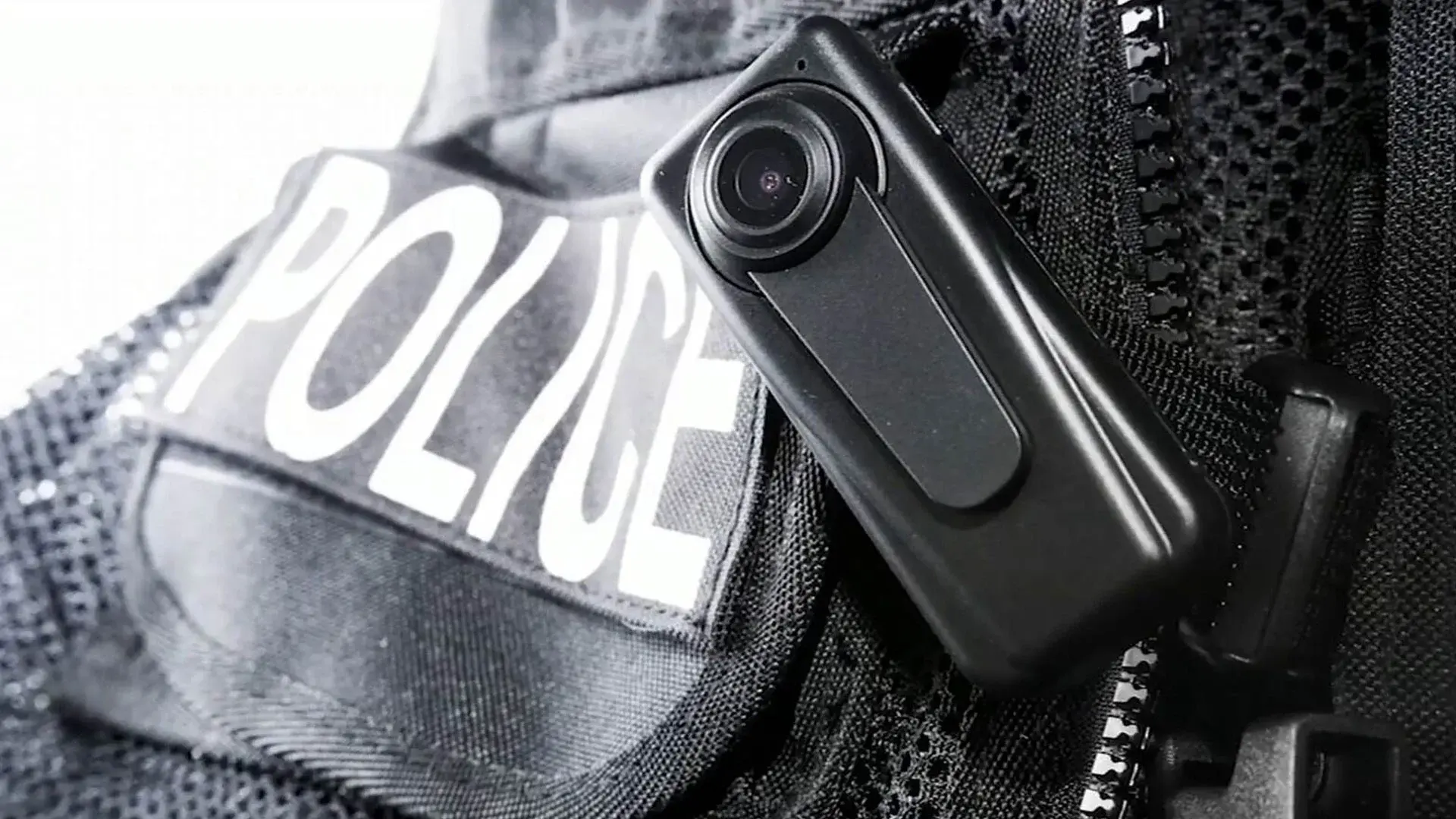
A fleet claims manager preparing crash footage for an insurer and defense counsel is doing a different job from a records clerk redacting a fixed security camera. On a dash cam nothing in the frame holds still, and body cams and drones add their own kinds of motion. Dash cam redaction has to keep up with plates and faces that cross the windshield at speed, filmed by a camera that is itself moving.
The failures every video shares, from frame timing to fail-safe output, are set out in our guide to video redaction best practices. A moving camera adds its own on top of them, and because each device puts the risk in a different place, the map of where to look comes first here and the reasons follow it.
Where to look first on each device
Review of a moving-camera recording should start where the risk concentrates, and that depends on what the camera was mounted on.
| Device | Where to look | What to confirm before release |
|---|---|---|
| Dash cam | Plates on vehicles crossing at speed, faces through the windshield, reflections in the glass, the back-seat camera and its audio | Every plate is masked on each frame where it is readable, reflected faces are covered, and in-car conversation has been reviewed |
| Body cam | Faces at arm's length, moments when the wearer's arm or a door hides someone, bystanders, and phone screens or identification cards shown during a stop | Masks cover faces that fill much of the frame, both edges of every occlusion are masked, and screens and documents are covered |
| Drone | Small and top-down figures, backyards and private property, minors | People identifiable by body and clothing are covered as well as faces, and location data in the file has been accounted for |
What a moving camera does to the footage
A fixed closed-circuit television (CCTV) camera gives redaction software its easiest case, with a steady frame, a known scene and people crossing at similar sizes. Mount the camera on an officer's chest, a windshield or a drone, and faces enter from the edge of the frame, sit close to the lens and change size within a second. Motion smears features, quick pans blur whole frames, and light swings from headlights to shadow.
A subject close to the lens changes what the mask has to do as well as what the detector sees. A face that fills a third of the frame keeps far more detail under a light blur than one across the street, so a filter setting that hides one can leave the other recognizable. That is the everyday situation at arm's length on a body cam, and it is one reason a solid fill is the safer style for close subjects.
Changes of scale and pose are also the detection problems that face benchmarks single out, as our article on where tracking breaks describes. High-resolution footage does less for small faces than its pixel count suggests, because detection usually runs on a reduced copy of the frame. There a face a few dozen pixels tall in 4K dash cam or drone footage shrinks to a handful of pixels. Camera shake, motion blur and headlight glare cost detection more on top of that, whichever system is doing the detecting, so the fast and dim stretches are where review time belongs.
Field recorders also produce files that misreport their own timing, which matters because a mask timeline is built on that timing. The recordings in our test corpus whose frame counts were furthest from their headers were all body cam, dash cam or CCTV files, as our article on variable frame rate video describes.
In one body camera file, the container reported a duration of about three hours, which was the length of the audio track. The video stopped 7,751 seconds earlier, more than two hours before the sound did, so any frame count computed from that duration included more than two hours of frames that did not exist. Counting the frames a file actually contains is the only safe basis for a mask timeline on recordings like these.
Dash cams: plates, windshields and fleets
Dash cam footage puts most of its sensitive detail on the far side of a windshield, where plates and faces pass quickly and a reflection can carry a face from inside the car. A plate on a vehicle crossing at speed may be legible for a handful of frames, so a single missed detection can fall on the one frame where it can be read. In-car cameras facing the back seat add passengers and detainees to the picture, and their audio can capture conversations that need redacting too.
Night footage sets a particular trap for plates, because headlight glare on a reflective plate can wash it out in most frames and leave it readable in one or two as the angle changes. The frames around a passing car therefore need a step-through even when the plate looks unreadable at speed.
Fleet footage has its own release path, and it runs through people outside the company. After a crash, video often leaves the company as ad hoc downloads to insurers and defense counsel, and every copy carries every bystander, driver and plate the camera saw. Our article on video redaction for transportation covers the operators who handle this footage at volume.
The same crash video can also need different redactions for different recipients, because an insurer assessing liability may need to see the driver while a public release may not. Keeping the original untouched and producing a separate redacted copy for each recipient means every release starts from the full record, with no earlier recipient's masks to undo.
Body cams: arm's length and the wearer's own arms
Body-worn cameras record from the officer's chest, so subjects stand at arm's length and faces fill much of the frame. The wearer's own arms, a car door or a doorway hide a face for a moment and then reveal it again. The frames on both sides of each of those moments need a mask, the edge problem our article on tracking explains. Bystanders, phone screens and identification cards shown during a stop add detail that has nothing to do with the incident and still identifies someone. The sound carries its own exposure, since names, dates of birth and addresses read aloud at the roadside or over the radio have to come out of the audio as well as the picture.
Review a body cam recording frame by frame at the moments the wearer turns, because a fast turn blurs the whole frame and brings faces back at a different size and position. Those few seconds hold more of the recording's risk than the minutes of steady footage around them.
The redaction workload does not end with the police records unit that releases the video. In the Center for Evidence-Based Crime Policy's 2016 national survey of state prosecutors' offices, 90.4% of the offices that were receiving body-worn camera video had to perform at least some of their own redactions.
Drones: people seen from above, and data that travels with the file
A drone often sees people from far away and from above, where a face may be tiny or not visible at all. The person can still be recognized, and the National Institute of Standards and Technology (NIST) report on de-identification of personal information notes that "research has shown that bodies can be identifiable without faces." It adds that "clothing, body pose, or geo-temporal setting might make the person identifiable by associates," which is why masking only faces in aerial footage can leave people identifiable.
Detectors built mainly around faces seen from the front or the side have little to work with when a camera looks straight down. In aerial footage the whole person is often the thing to find and mask, along with anything that ties them to a place.
Aerial footage over neighborhoods also catches backyards, windows and private property that no one set out to record, so the redaction decision covers places as well as people. The Department of Homeland Security's best practices for drone programs ask for safeguards so that images of people "incidentally recorded who are not relevant to an operation are not disseminated or viewed unnecessarily." The same passage calls this "especially important for recordings that include images of minors not relevant to an operation."
Location can travel inside a drone or body camera file as well as appear in its picture. These recordings can carry Global Positioning System (GPS) position and time as embedded metadata or in a separate telemetry file. A blurred face in a file that still records a precise location can point straight to a home. Check what the file and any telemetry beside it carry before release, because the decision has to cover that data as well as the pixels. Redactor's metadata step covers documents and DICOM files rather than video, so location data in a video's container or telemetry has to be checked and cleared separately.
Principles for every moving camera, and how Redactor applies them
The same few rules keep a moving-camera redaction intact whatever device recorded it, and each one answers a problem described above.
- Track each person as one continuous identity, so a frame where motion blur defeats the detector becomes a short gap to fill rather than a break in the track.
- Mask the frame before and the frame after every gap in a track.
- When a subject moves fast between two known positions, cover both positions for that interval, as our article on frame-by-frame redaction explains.
- Place masks by each frame's own timestamp, because field recorders are where the timing anomalies in our corpus concentrated.
- Spend review time where motion is fastest and faces are smallest.
VIDIZMO Redactor applies the timing and gap rules on this list to every video, including the conversion of variable frame rate recordings to a constant rate before masking. Faces, people, vehicles and license plates can be detected in the same pass. The bystanders and plates a dash cam or body cam catches then reach the reviewer together, as tracks to confirm, correct or add to.
Fleets and agencies sharing crash and traffic-stop video can see the full workflow on the dash cam redaction page.
TopicsRedactionVideo RedactionRedactor
About the author
Nabeel Ali is a Senior Product Analyst at VIDIZMO, with five years at the company. An engineer by profession, Nabeel works on audio, video and DICOM redaction in Redactor, and has also worked on AI Intelligence Hub and AI Live Insight. The role sits where customers and engineering meet: hearing from customers, customer success, and the sales and marketing teams what goes wrong in real deployments, then working with the engineers until the product answers it.
You may also like
Video Redaction Best Practices: Motion, Frame Rates, Tracking and Failing Safe
I led our video redaction project for a county public safety agency where two people handled every disclosure, and ...
Why Frame-Rate Headers Lie: Redacting Variable Frame Rate Video
A video file keeps time frame by frame, and the frames-per-second figure a player displays is a summary of that timing, ...
Redacting 360-Degree Video and Images: Distortion, Seams and Playback
Open a 360-degree photo in an ordinary image viewer and it looks like a warped panorama, with the ceiling smeared along ...
See it on your own content
Tell us what you are trying to solve and we will show you how it works on your infrastructure.