
Redact 911 Calls and Dispatch Recordings with AI Redaction Software
911 calls capture caller identities, victim details, medical information, and investigation data that must be redacted before release. VIDIZMO Redactor processes emergency audio and dispatch transmissions so agencies can meet public records deadlines without manual review.
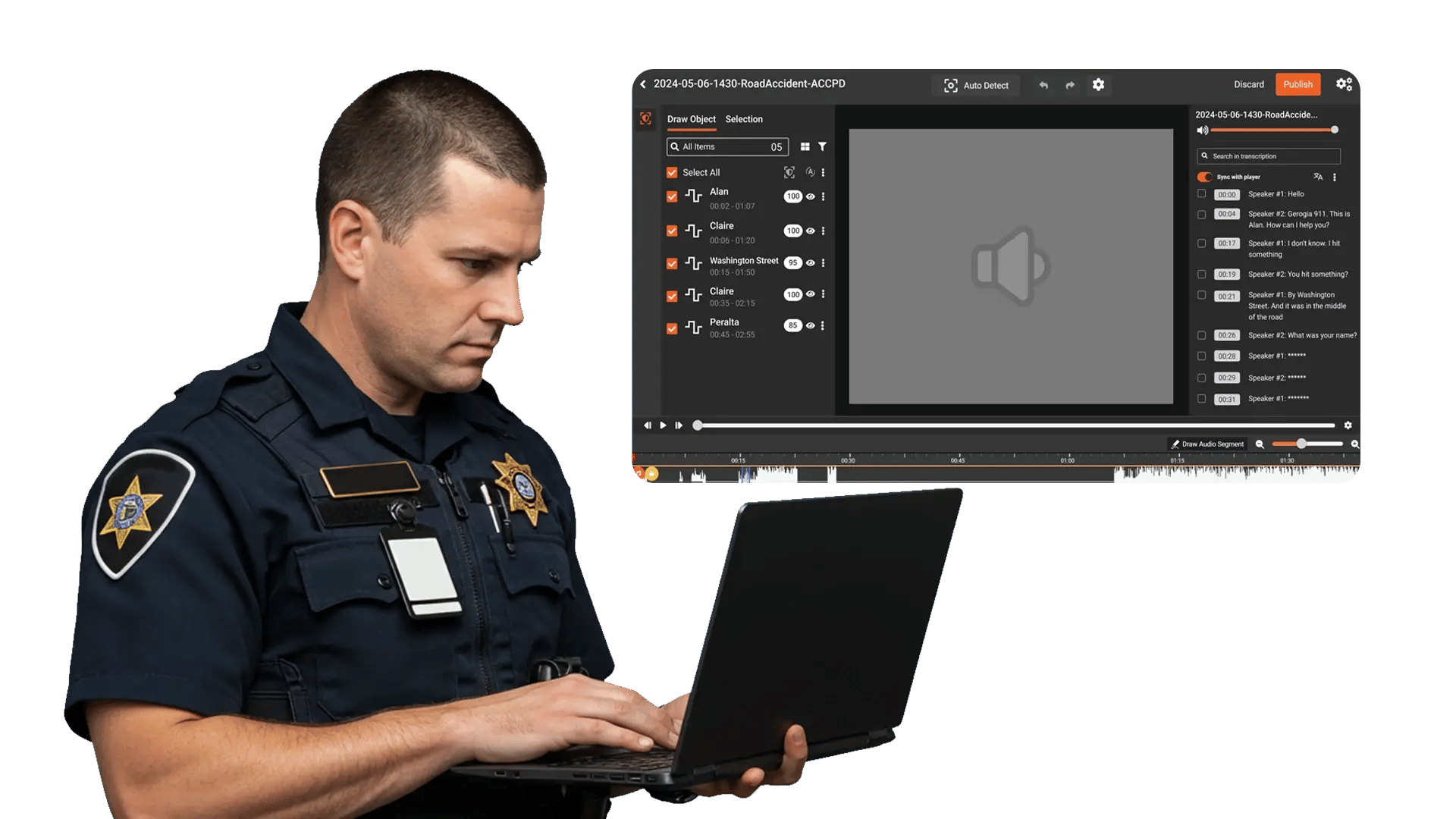






Different content in every call
A domestic violence call has victim identity. A medical emergency has health details. A crime report has suspect and witness names. Each recording needs different exemptions applied.

Different rules in every state
Some states treat 911 audio as public. Others require court orders or caller consent before release. The same recording may be released in one jurisdiction and restricted in another.

More requests than staff can review
High-profile incidents generate dozens of simultaneous requests. Routine requests continue alongside them. Manual review cannot meet statutory deadlines at this volume.

Caller identity and contact information
Name, phone number, and callback number of the person calling 911. Protected to prevent retaliation, harassment, and unwanted exposure of individuals reporting emergencies.

Location and address data
Home addresses, cross streets, apartment numbers, and GPS coordinate. Links directly to where the caller or victim lives.

Victim and witness details
Callers identify victims and witnesses by name during the call. This information is protected under federal and state privacy laws.

Medical information disclosed to dispatchers
Callers describe injuries, symptoms, medications, and medical conditions in real time. May trigger state health privacy protections depending on jurisdiction and agency role.

Minor identity
Calls involving children as callers, victims, or subjects receive heightened protection. States like Georgia specifically protect "speech in distress of a caller who was a minor at the time of the call."

Active investigation and CJI data
Suspect descriptions, case file references, confidential informant identities, undercover officer details, and criminal history information. Protected under CJIS Security Policy and law enforcement exemptions.
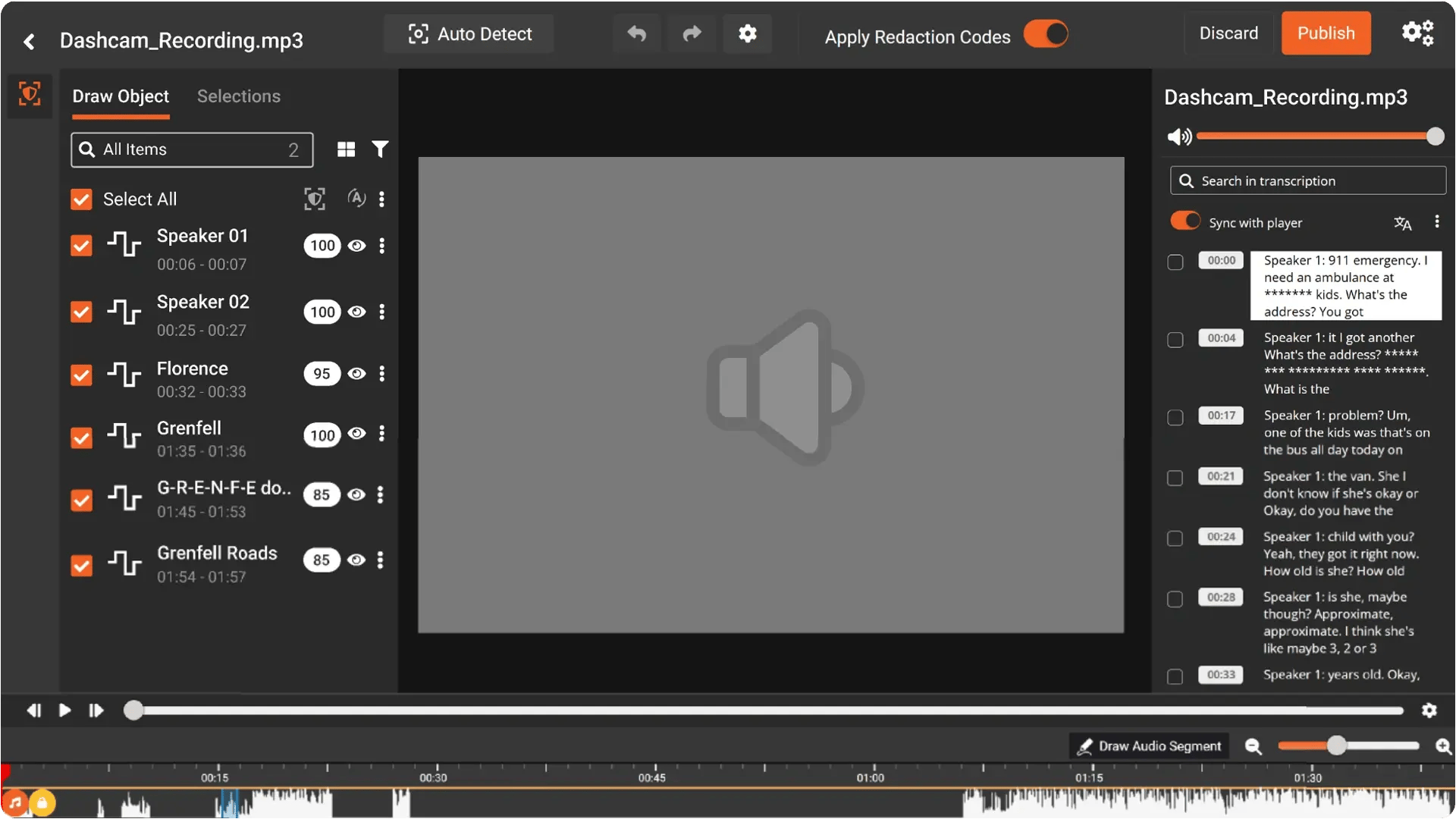
Distressed audio transcription
Handles emotional speech, background noise, sirens, crosstalk, and poor audio quality common in emergency recordings.
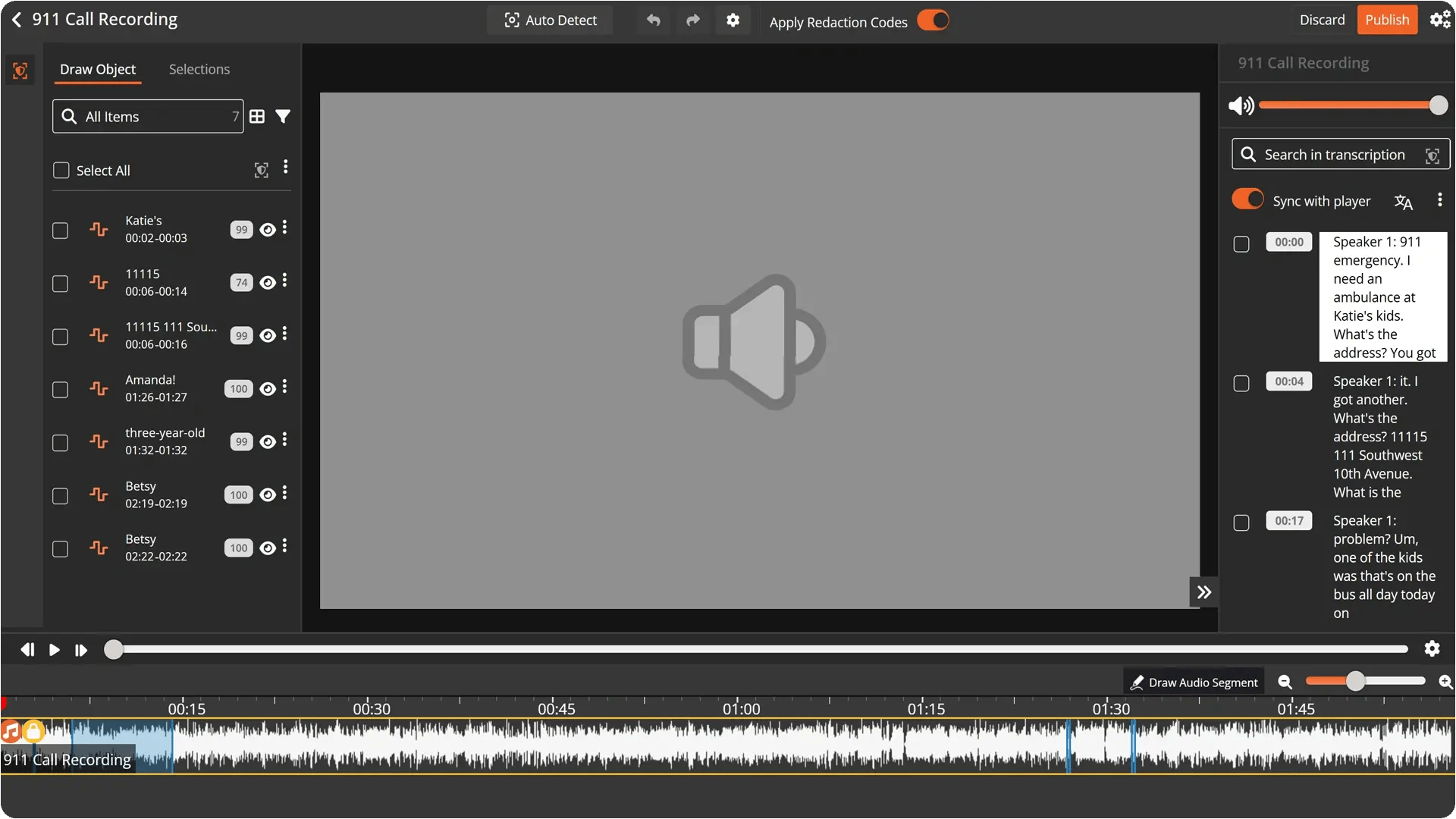
Emergency-specific detection
Caller identity, location data, victim names, medical details, minor references, and investigation data identified across 33+ categories.
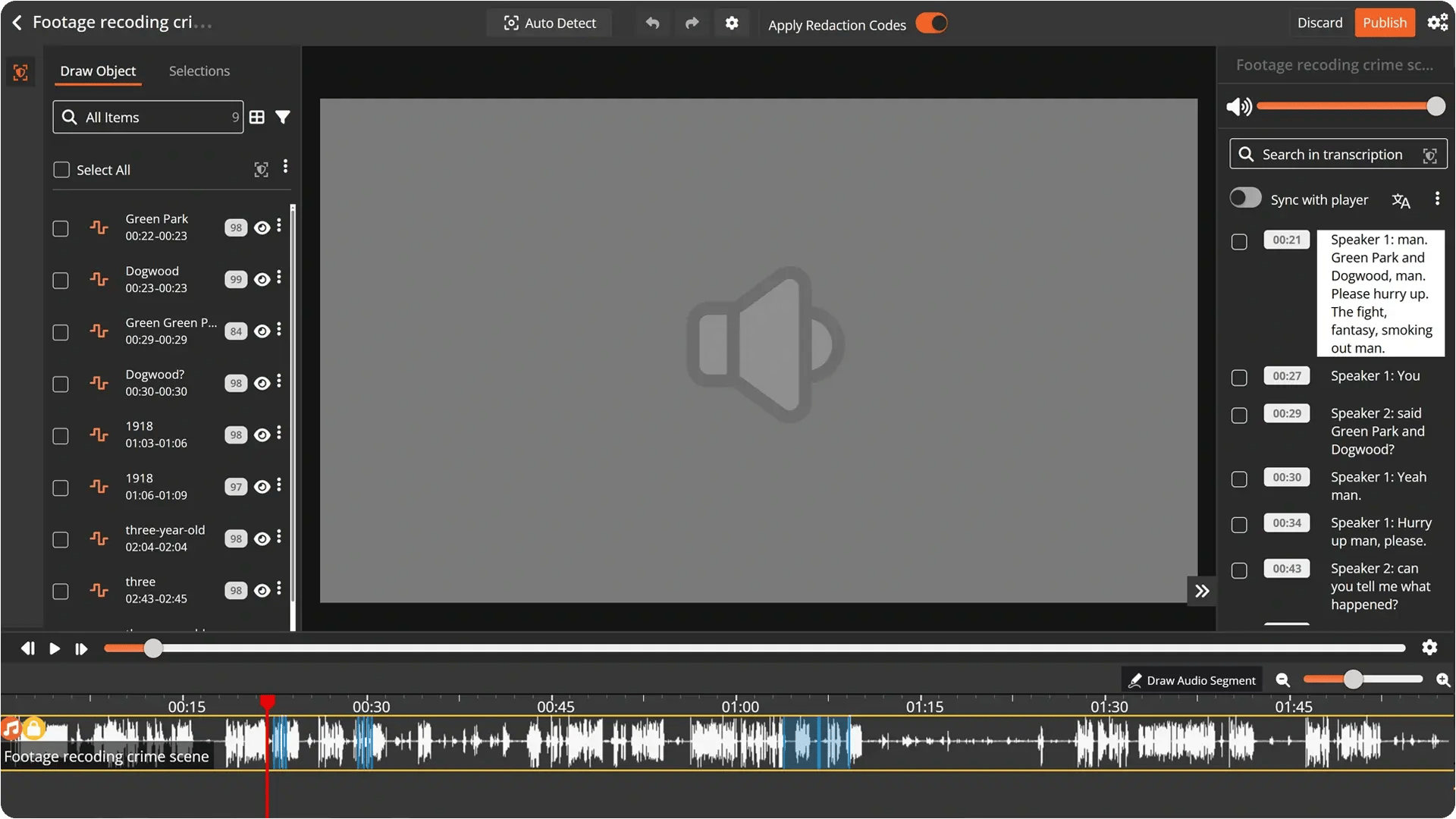
Exemption code tagging
Tag each redaction with federal FOIA exemptions or state-specific public records exemptions. Exemption logs generated automatically with every export.
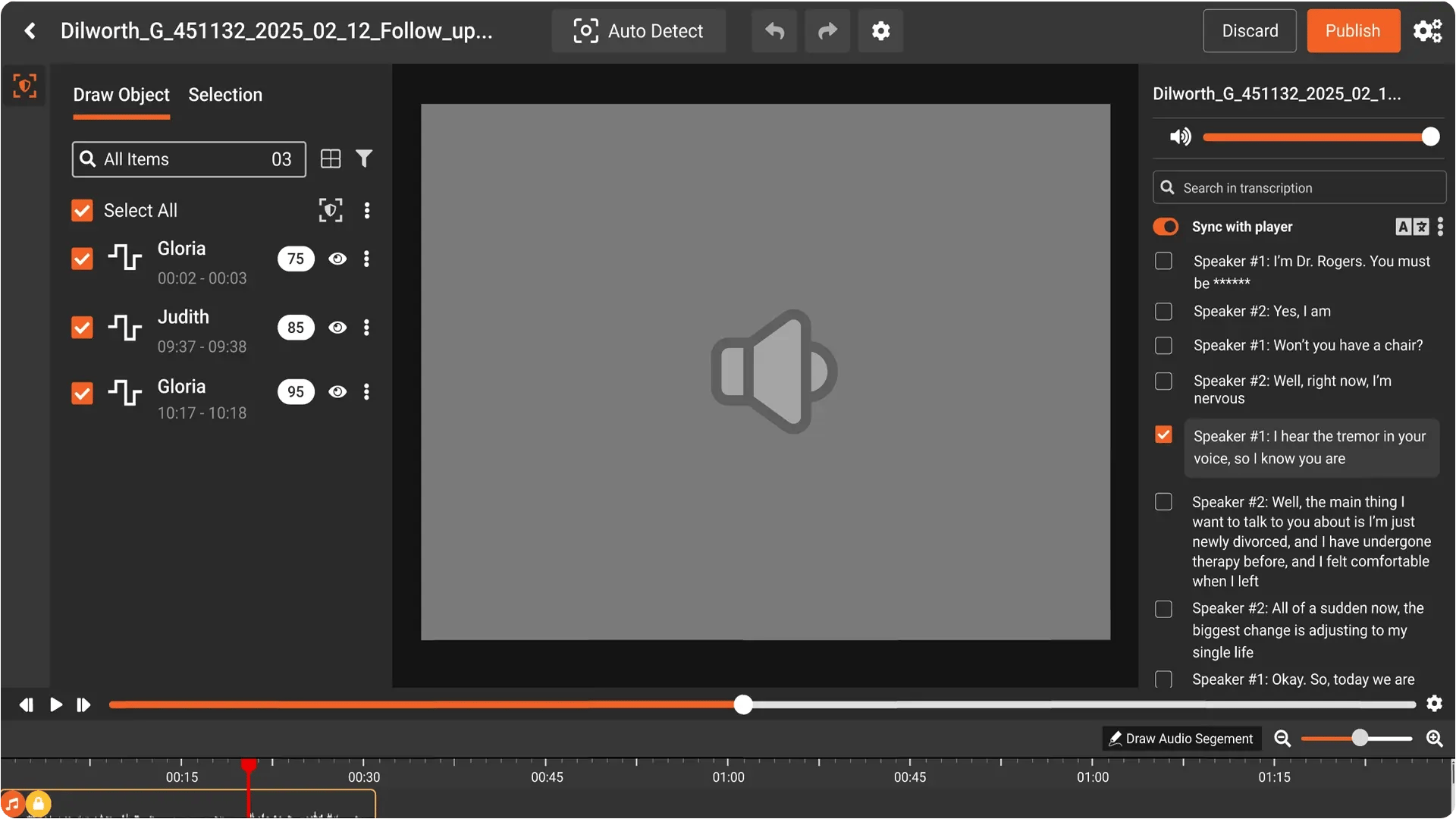
Dispatch and CAD-linked audio
Process dispatch-to-officer radio transmissions and CAD-linked recordings alongside 911 caller audio in one workflow.
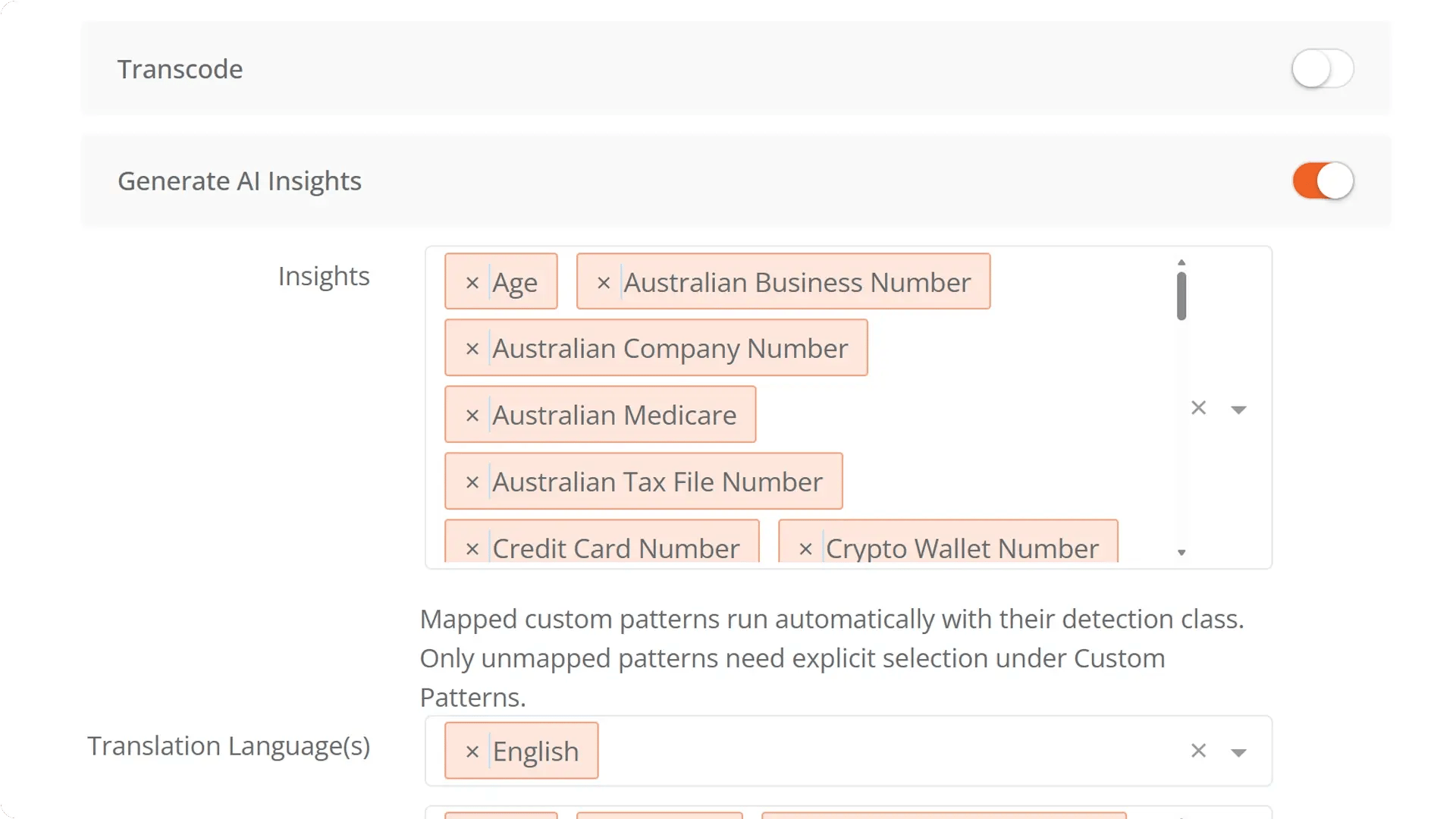
Bulk processing for high-request periods
Upload dozens or hundreds of 911 recordings during surge periods. Configure settings once, process the full queue without per-file manual work.
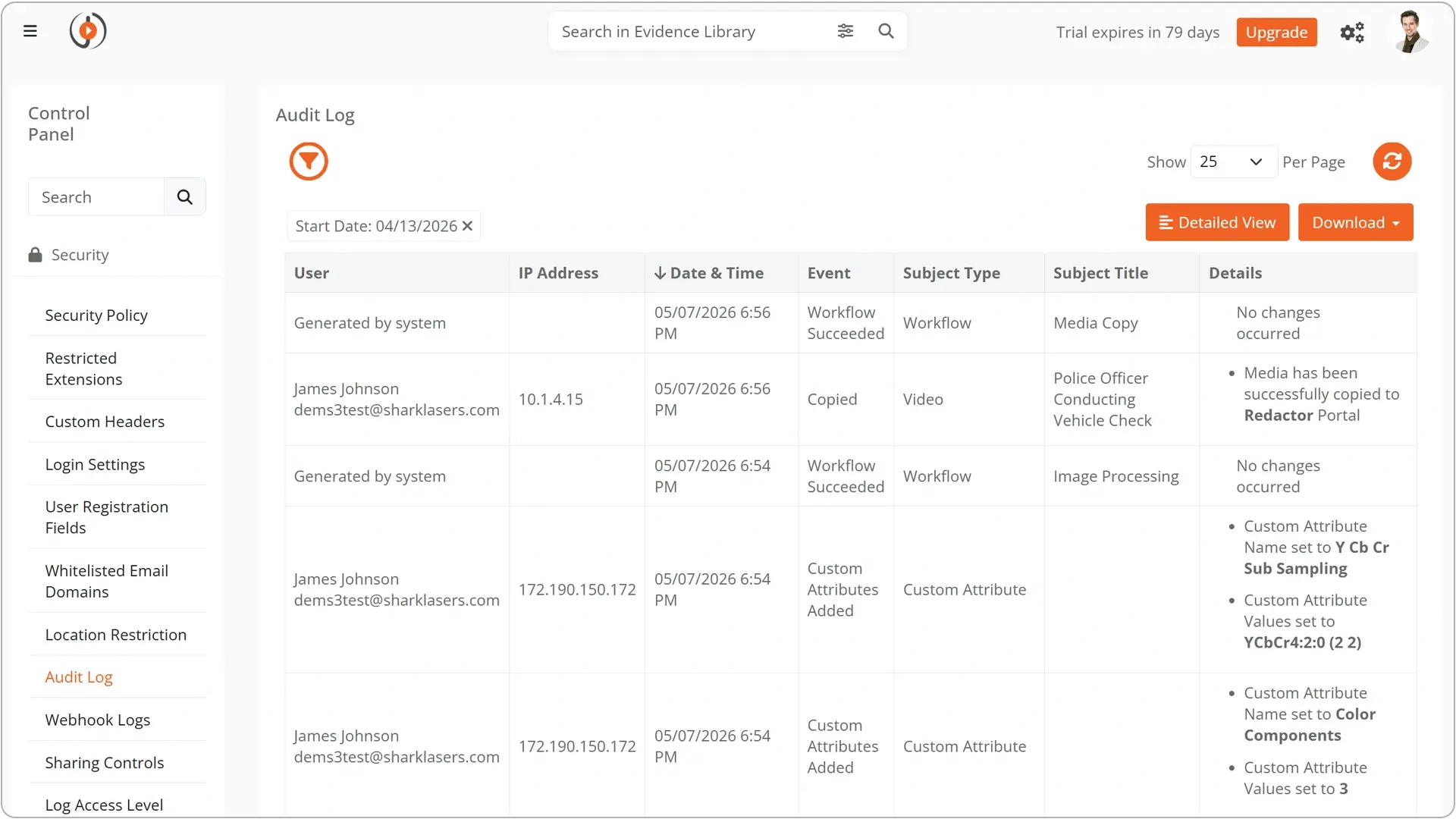
Appeals-ready audit trail
Every redaction logged with protected category, exemption code, reviewer, confidence score, and timestamp. Formatted for public records appeals and court proceedings.

Public records and media requests
911 audio is requested under state open records laws, especially after critical incidents. Protected content must be removed before release within statutory deadlines.

Court subpoenas and discovery
911 audio submitted as evidence requires redaction of protected information. The audit trail documents every redaction decision for legal defensibility.

Internal QA and incident review
Supervisors reviewing call handling and response times need access to recordings without exposing caller and victim identities.

Multi-agency sharing
Recordings shared between dispatch centers, law enforcement, and prosecutors must be redacted per CJIS dissemination rules before transfer.
