
FOIA Redaction Software for Video, Audio, and Documents
Automate redaction across video, audio, images, and documents to release public records faster. VIDIZMO Redactor detects and removes PII from all file types in one platform so agencies meet disclosure deadlines without manual bottlenecks.
.webp?width=960&height=540&name=Hero%20Section%20(2).webp)
Why FOIA Requests Break Traditional Redaction Workflows
FOIA and public records requests are increasing every year. At the same time, the nature of records has changed. Video and audio are now standard. Body-worn cameras, CCTV, dash cams, emergency calls, and recorded meetings are routinely requested. These formats are harder to review and redact than text documents.
Traditional redaction workflows were not designed for this scale or complexity. Manual review creates slow turnaround times. Human error leads to missed PII. Re-releases expose agencies to legal and reputational risk. Staff are stretched thin managing backlogs instead of serving the public.
What FOIA-Compliant Redaction Actually Requires
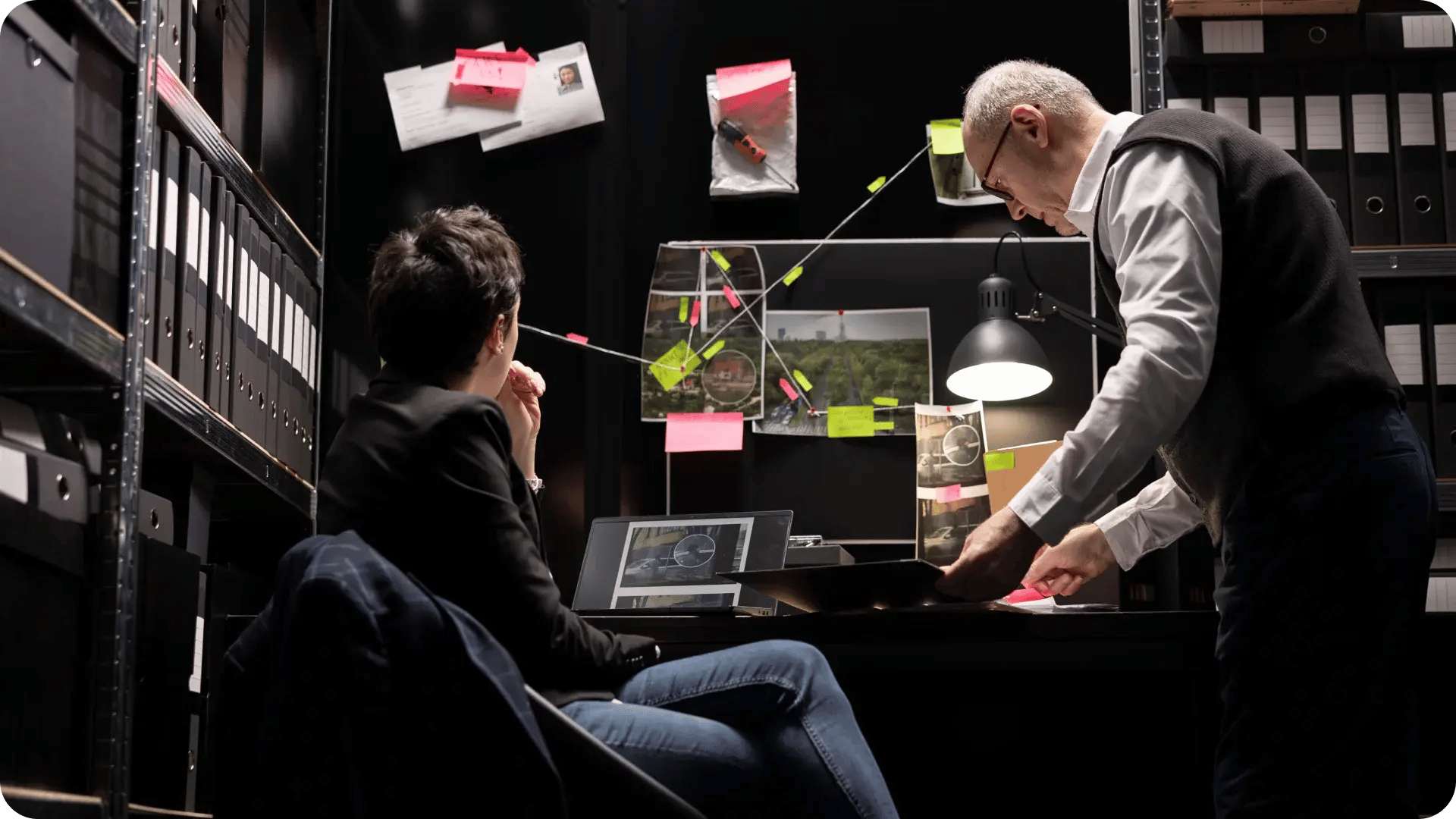
FOIA-ready redaction is not just about hiding information. It requires consistent, defensible processes. Agencies need accurate detection of personally identifiable information such as faces, license plates, spoken names, phone numbers, and addresses. This must work across video, audio, images, and documents, not just one format.
Redaction must be applied consistently across large batches of records. Reviewers need full control to verify and adjust results. Every action must be logged to support audits, appeals, or court review. Agencies must also be able to re-redact files when requests are revised or challenged.
Video Redaction
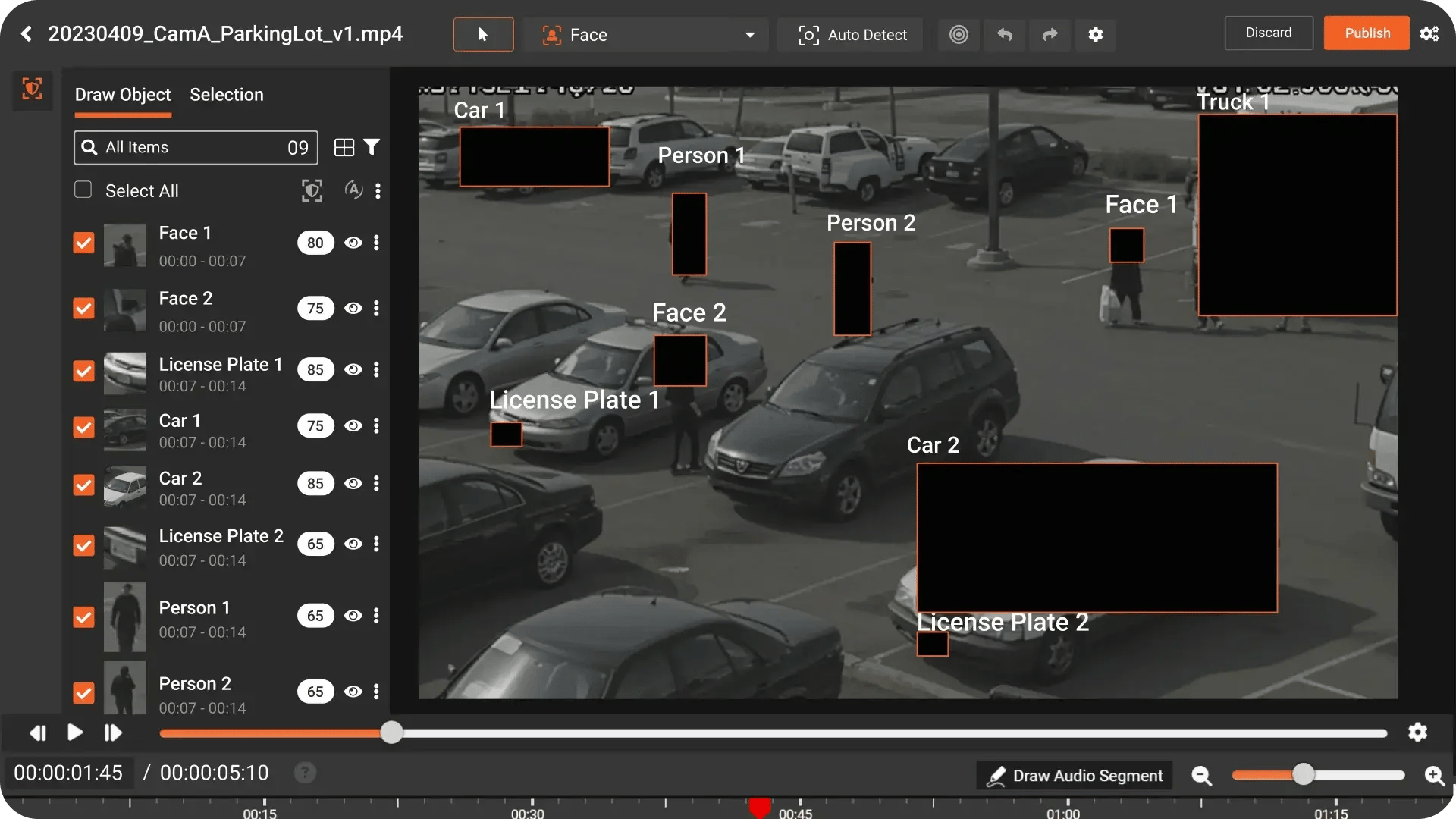
Body camera, dashcam, and surveillance footage often contain multiple identifiable individuals across long recordings.
VIDIZMO Redactor detects and masks faces, plates, weapons, and screens automatically. Masking tracks movement across frames.
Explore More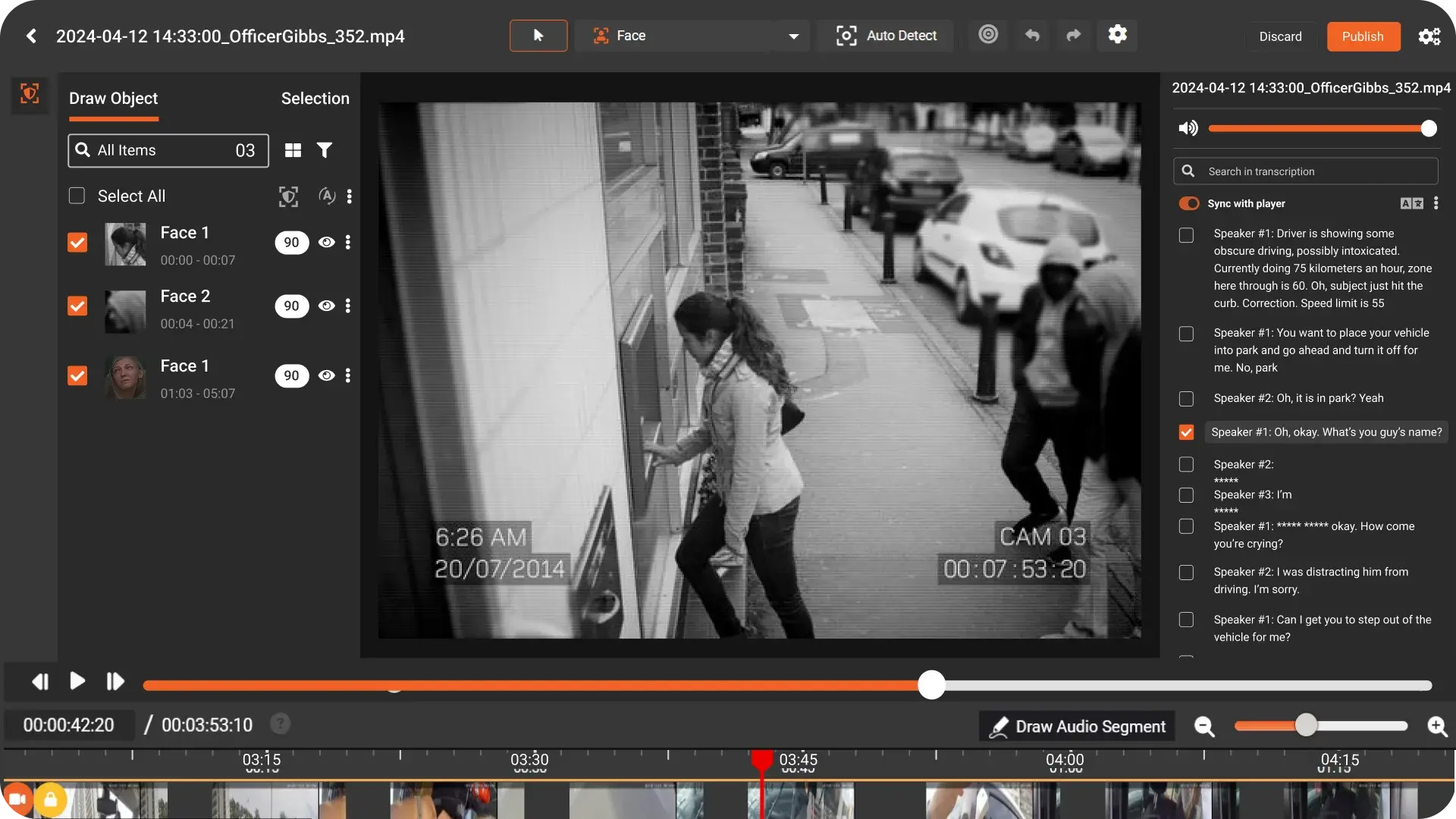
Audio Redaction
Emergency calls, recorded meetings, and interviews contain spoken PII.
VIDIZMO Redactor transcribes the audio, detects names, addresses, phone numbers, and other PII, and applies muting or bleeping. Reviewers verify from the transcript panel.
Explore More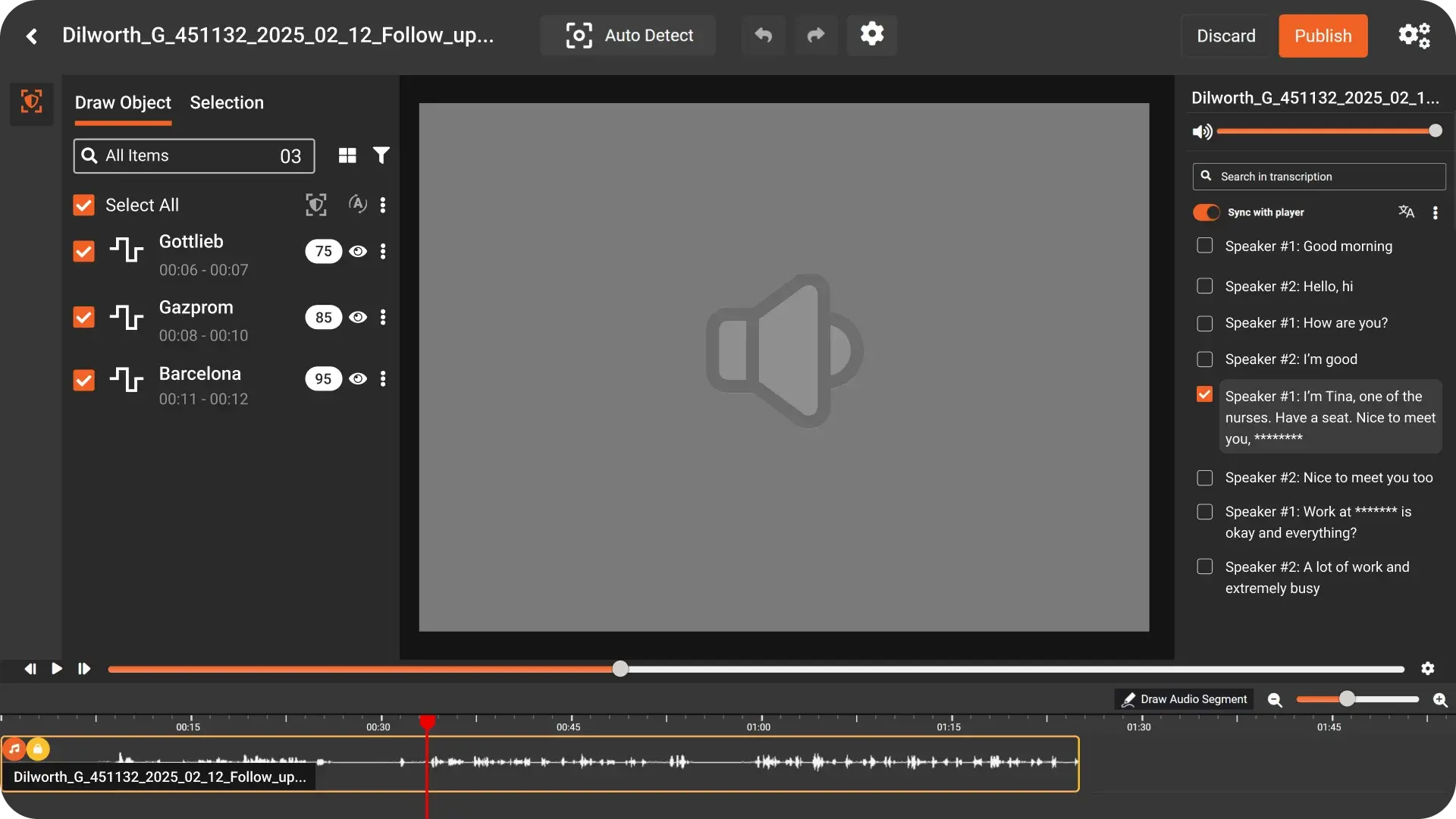
Image Redaction
Photographs, scanned exhibits, screenshots, and diagrams may contain faces, plates, or text-based PII.
VIDIZMO Redactor detects and masks sensitive visual elements. Reviewers fine-tune before release.
Explore More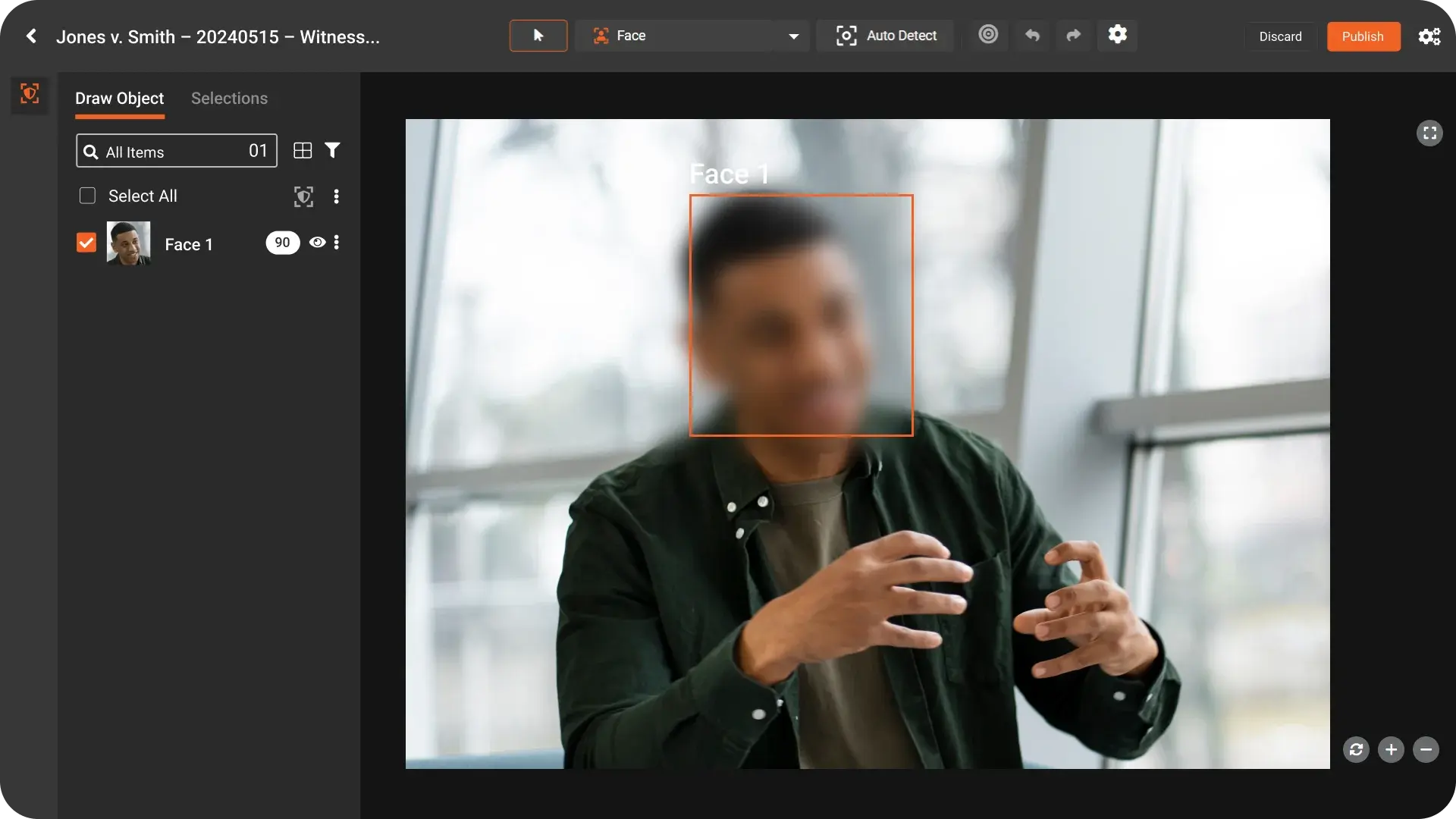
Document Redaction
Reports, forms, emails, and case files contain names, addresses, SSNs, and other PII in structured and unstructured text.
VIDIZMO Redactor identifies sensitive text across PDFs, scanned files, and digital documents. Redactions apply consistently across large document sets.
Explore More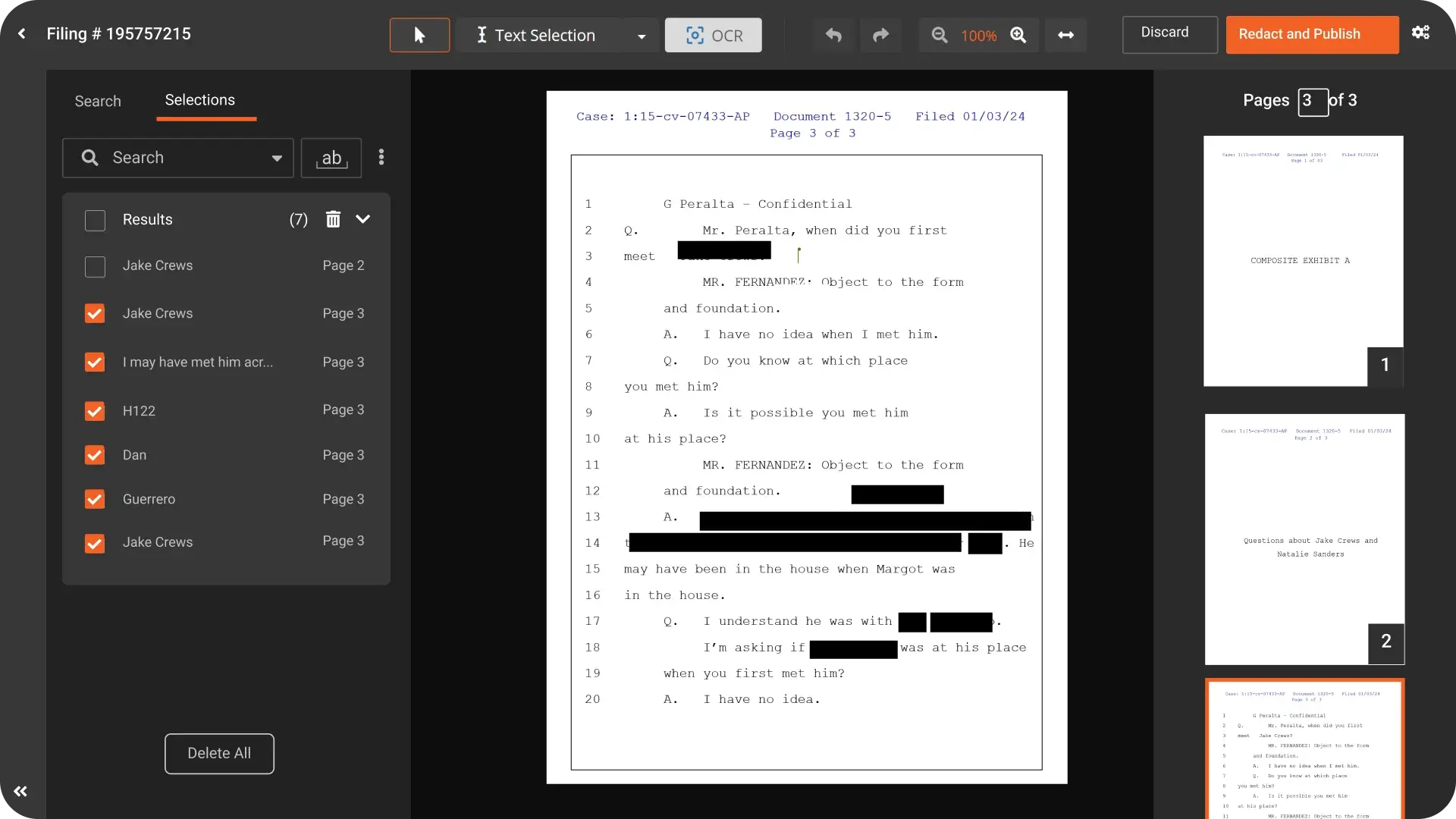
People Also Ask
Any record containing personally identifiable information. This includes faces and license plates in video, spoken names and addresses in audio recordings, and SSNs, phone numbers, and addresses in documents. Images such as photographs and scanned exhibits may also contain visual PII that requires masking.
Yes. VIDIZMO Redactor processes video, audio, images, and documents within one platform. All file types are redacted under the same workflow with a single audit trail, eliminating the need to switch between separate tools.
Bulk upload and batch processing allow hundreds of files to be queued simultaneously. Detection settings are configured once and applied across the entire batch. Processing can run overnight without manual intervention.
Yes. Requesters can appeal redaction decisions through the agency or in court. VIDIZMO Redactor generates audit reports documenting every redaction decision, reviewer identity, exemption code, and timestamp. This documentation supports the agency's position during appeals. Files can also be re-redacted with updated rules if a request is revised.
Yes. Reviewers can tag redactions with state-specific exemption codes in addition to federal FOIA exemptions. The platform accommodates varying disclosure requirements across jurisdictions.
