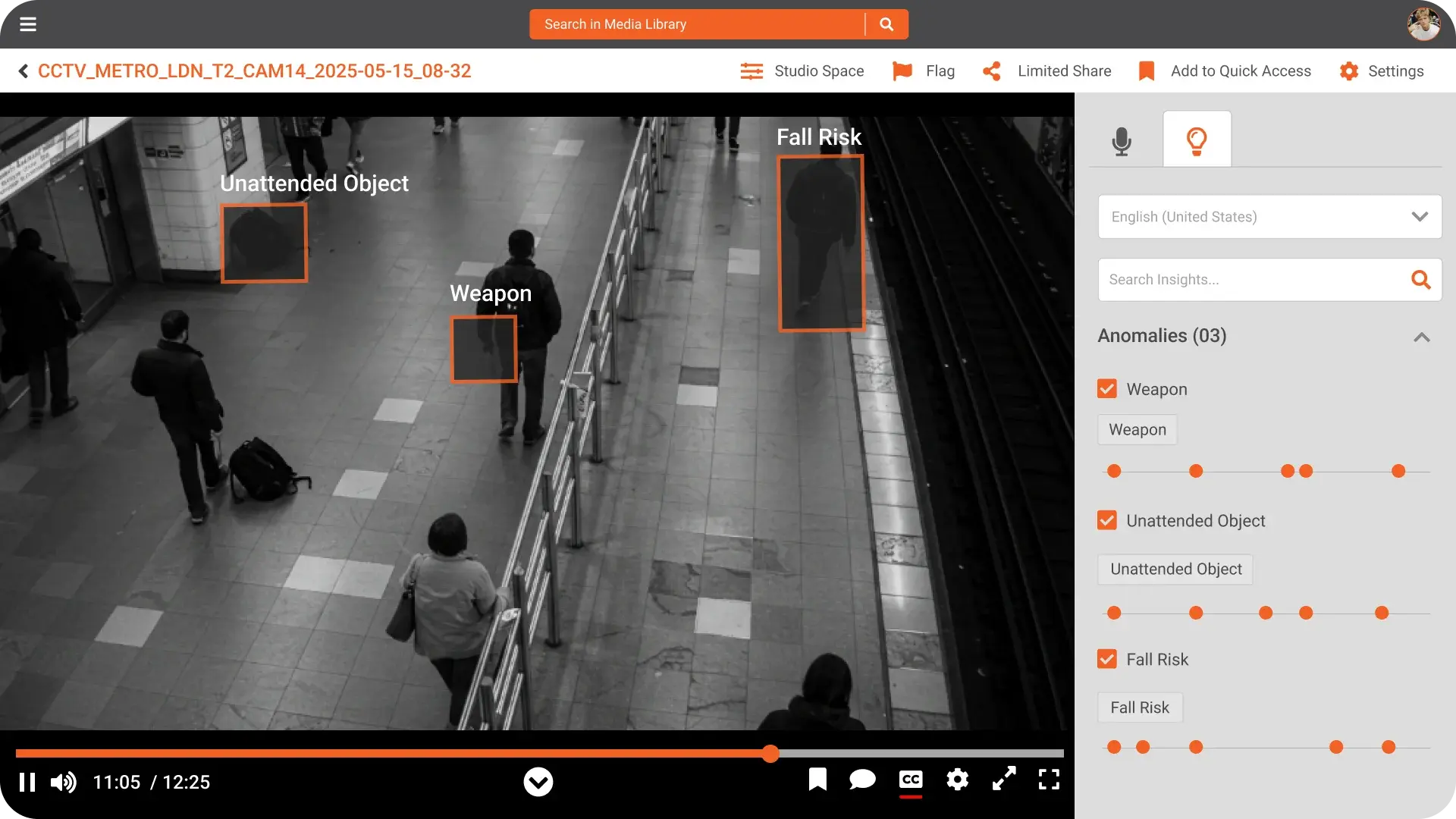
You already know the feeling. A shoplifting dispute, a slip and fall claim, a workplace incident. Everyone wants the CCTV footage right now. Security pulls the clip, downloads it, and shares it in a hurry. No CCTV redaction. No controls. Just raw video with every face, badge, and screen in full view.
On the surface, it looks like fast, responsive operations. Underneath, it is an unmanaged risk channel that quietly exposes customer and employee PII in every frame.
This is the business pain many retailers underestimate. You invest heavily in loss prevention, store operations, and compliance, yet your surveillance workflows leak sensitive data every time someone exports and emails a file. The more incidents you handle, the larger that exposure grows.
In modern retail environments, CCTV redaction is not a nice to have feature. It is a privacy and compliance control that sits between your video archive and the outside world. Without it, your incident response process can turn into an evidence trail of privacy violations.
How unredacted CCTV exposes customer and employee PII
Retail CCTV footage is dense with personal data. Once you start mapping that data, the risk picture changes quickly.
Typical PII and sensitive elements captured by store cameras include:
- Customer faces and body characteristics
- Employee faces, uniforms, and name badges
- Payment terminals and card surfaces
- Loyalty card numbers displayed at POS
- Car license plates in parking lots
- Patient or prescription details in pharmacy settings
- Computer screens and printed documents at service desks
Without retail video redaction, every time you share a clip, you distribute all of this data, not just the relevant incident. That matters because different recipients need different views of the same event.
For example:
- Law enforcement may need clear views of a suspect but not of bystanders
- Insurance adjusters may need to see the fall, not the faces of everyone in the aisle
- Vendors or contractors may need to review an operational issue without exposure to customer PII
- Internal stakeholders may need to analyze patterns without seeing identifiable individuals
When you skip CCTV redaction, you force every viewer to see more than they should. That overexposure increases legal, contractual, and reputational risk with no operational benefit.
Business scenarios where CCTV redaction is now non negotiable
For many retail leaders, the tipping point comes when the volume and variety of video sharing increases. What used to be the occasional export becomes a daily workflow involving multiple stakeholders.
Common use cases where CCTV redaction is critical include:
- Incident review and loss prevention: Sharing clips with regional asset protection, store managers, or HR for behavioral review without exposing uninvolved customers
- Law enforcement requests: Providing evidence while masking minors, bystanders, and sensitive products that are not relevant to the case
- Insurance and liability claims: Supplying proof of events while avoiding unnecessary exposure of customer faces, payment information, or health related details
- Workplace investigations: Conducting internal reviews of employee behavior while protecting witnesses and uninvolved staff
- Training and coaching: Using real store footage to teach best practices without breaching retail CCTV privacy obligations
- Vendor and partner collaboration: Sharing footage with maintenance providers, merchandising partners, or safety consultants while respecting customer privacy in retail settings
In each of these scenarios, the need is the same. You must redact sensitive footage so that the video shows only what is necessary for the task at hand. Anything more creates unnecessary exposure.
Privacy regulations that make retail video redaction essential
Even if you have not seen a complaint yet, regulations have already changed the rules around surveillance footage. Privacy laws treat identifiable individuals in video as personal data.
Depending on your region and footprint, CCTV redaction helps you align with requirements from laws such as:
- EU GDPR and UK GDPR for identifiable individuals in surveillance
- CCPA and CPRA for California consumer privacy
- Other state privacy laws with similar treatment of biometric and visual data
- Sector specific guidelines for pharmacy, healthcare retail, or financial services in store
Key regulatory expectations that touch retail CCTV privacy include:
- Limited purpose use of personal data captured on cameras
- Data minimization when sharing or disclosing surveillance footage
- Secure handling of PII and restricted access to identifiable data
- Data subject rights, including access requests for footage that contains them
Retailers that cannot perform precise PII redaction on video have fewer options when responding to regulators, data subjects, or legal requests. You either share too much and risk non compliance, or you refuse to share and appear uncooperative. Neither outcome is healthy for long term regulatory relationships.
Operational and reputational costs of skipping CCTV redaction
It is easy to see CCTV redaction as one more step in an already busy process. Many teams think they do not have the time. In reality, not redacting often creates larger hidden costs.
Common downstream impacts include:
- Reputational damage: Viral clips that expose shoppers or staff in embarrassing or sensitive situations, even when the original intent was internal only
- Customer trust erosion: People who learn their image was shared widely for an incident they were not involved in, especially in communities where brand perception is critical
- Regulatory scrutiny: Investigations triggered by complaints about surveillance misuse or over sharing
- Legal exposure: Claims tied to mishandling of PII, including video of minors or vulnerable individuals
- Internal friction: Employees who feel they are under constant observation without safeguards, which can affect retention and engagement
- Inefficient manual workarounds: Teams trying to redact sensitive footage frame by frame with consumer tools, which is slow, inconsistent, and hard to audit
From a risk management standpoint, consistent CCTV redaction is cheaper than the combination of disputes, complaints, and manual fixes that follow unmanaged sharing.
How CCTV redaction protects customer privacy in retail operations
When done correctly, CCTV redaction changes your default posture from over sharing to controlled disclosure. You still use video aggressively for operational and security purposes, but you do it without broadcasting everything your cameras capture.
Key protections that CCTV redaction adds to your retail workflows include:
- Face anonymization: Automatic detection and blurring of customer and employee faces that are not essential to the incident
- License plate masking: Hiding vehicle identifiers in parking lot or drive through footage
- Screen and document obfuscation: Concealing on screen data or printed records at service counters and back offices
- Zone based redaction: Targeting areas of the frame that always contain sensitive information, such as pharmacy counters
- Role based visibility: Generating different versions of the same clip for different audiences, tailored to what they need to see
Retailers that systematize retail video redaction often see an unexpected side benefit. Teams become more confident using video for cross functional collaboration because they know there is a privacy guardrail in place. Incident analysis becomes safer to scale.
Practical steps for implementing retail video redaction
You do not need to redesign your entire surveillance strategy to improve retail CCTV privacy. Instead, you can embed CCTV redaction into the touchpoints where footage leaves your core environment.
A practical approach for retail stakeholders includes:
- Map your sharing workflows: Identify who requests footage, why they need it, how it is delivered, and where it ultimately lives
- Define redaction policies: For each use case, decide what must always be redacted, what can be shown, and what requires case by case judgment
- Standardize approval steps: Require a quick review and sign off for any export that contains customer or employee PII, especially if leaving the organization
- Introduce dedicated tools: Move away from ad hoc consumer editors and toward software that is built for CCTV redaction and pii redaction
- Train store and security teams: Ensure the people who pull footage understand when and how to redact sensitive footage before sharing
- Audit and document: Keep a record of what was shared, with whom, and which retail video redaction measures were applied
These steps turn CCTV redaction from a one off activity into a repeatable privacy control. The goal is not to burden teams but to create clear lanes so they can move quickly without overexposing the business.
How retailers use CCTV redaction tools like AI based redactors
Many retailers now rely on AI assisted tools to handle the scale and complexity of CCTV redaction. Manual workflows do not keep up with hundreds of cameras, multi hour clips, and short response windows.
Using a solution such as VIDIZMO Redactor or similar platforms, retail teams can:
- Automatically detect faces, license plates, and other objects across large volumes of footage
- Apply blur or pixelation consistently frame by frame rather than editing manually
- Search for specific individuals or events to speed up incident review
- Produce multiple versions of a clip, each with different levels of redaction, for different stakeholders
- Maintain logs that show who redacted what and when, which supports compliance reviews
The point is not the specific tool but the capability. Without scalable CCTV redaction, teams either cut corners or spend disproportionate time on low value editing work.
AI supported retail video redaction lets you treat privacy as a standard part of the video lifecycle, not a special project for complex cases only. Over time, this reduces friction with legal, privacy, and HR stakeholders, because they can see that PII redaction is embedded in daily operations.

FAQ
Frequently Asked Questions
What is CCTV redaction in a retail context?
CCTV redaction in retail is the process of obscuring or anonymizing identifiable information in surveillance footage before sharing it. This typically includes faces, license plates, computer screens, and any other visual elements that reveal customer or employee PII.
When should retailers redact sensitive footage before sharing?
Retailers should apply CCTV redaction whenever footage leaves their direct control. Common triggers include sharing with law enforcement, insurers, legal counsel, external investigators, vendors, or cross functional teams that do not need full visibility of every person in the scene.
Is retail video redaction required by law?
Most privacy regulations do not mention CCTV redaction by name, but they require protection of personal data. Since individuals in video are often identifiable, CCTV redaction becomes a practical way to meet requirements for data minimization, limited disclosure, and secure handling of PII.
What types of PII are most critical to redact in retail CCTV footage?
The highest priority elements for PII redaction in retail include customer and employee faces, name tags, license plates, payment card details, loyalty card numbers, medical or prescription information, and sensitive on-screen data captured near service desks or offices.
How does CCTV redaction affect incident investigation quality?
Done correctly, CCTV redaction does not weaken investigations. It allows investigators to see what matters while removing irrelevant identifiers. You can keep a secure original version for internal use and share a redacted version externally, so you preserve evidence quality without oversharing PII.
Can store teams handle CCTV redaction without technical expertise?
Modern CCTV redaction tools are designed for non-technical users. They typically offer automatic detection of faces and license plates, simple workflows for selecting areas to redact, and guided export options. Training is still important, but day to day use does not require specialist video editing skills.
What is the risk of relying on manual or ad hoc video editing?
Manual editing is slow, inconsistent, and hard to audit. It increases the chance of missed faces or frames, and it often leads to shortcuts under time pressure. From a governance perspective, it is difficult to prove that retail CCTV privacy obligations were met when redaction is handled informally in consumer tools.
How does CCTV redaction support customer trust in retail?
Customers increasingly expect retailers to respect their privacy, both online and in store. When you treat CCTV redaction as a standard practice, you reduce the risk of harmful exposure and demonstrate that surveillance is used for safety and operations, not for careless distribution of their images.
Where does CCTV redaction fit within a broader privacy program?
CCTV redaction sits alongside data retention policies, access controls, and consent practices. Together, these measures define how your organization collects, stores, uses, and shares surveillance data. Treating CCTV redaction as part of your core privacy framework makes it easier to align legal, compliance, and operations.
TopicsRedaction
About the author
Hassaan Mazhar is a B2B SaaS content strategist at VIDIZMO specializing in AI redaction, compliance technology, and enterprise content marketing. He builds trust-driven narratives for legal, public sector, and enterprise audiences navigating data privacy and video intelligence challenges.
You may also like
Video Redaction Best Practices: Motion, Frame Rates, Tracking and Failing Safe
I led our video redaction project for a county public safety agency where two people handled every disclosure, and ...
Redacting Dash Cam, Body Cam and Drone Footage From a Moving Camera
A fleet claims manager preparing crash footage for an insurer and defense counsel is doing a different job from a ...
Why Frame-Rate Headers Lie: Redacting Variable Frame Rate Video
A video file keeps time frame by frame, and the frames-per-second figure a player displays is a summary of that timing, ...