Key Takeaways
- Video object detection uses AI to recognise sensitive visual elements such as faces and license plates.
- Automated video redaction relies on object detection to protect privacy and meet regulatory requirements.
- Manual redaction is time-consuming and prone to human error, especially at scale.
- VIDIZMO Redactor leverages AI-powered object detection to deliver fast, accurate, and consistent video redaction.
What Is Object Detection in Video?
Object detection in video is an artificial intelligence-driven capability that identifies specific objects within video frames and understands what those objects represent. Unlike basic motion detection, object detection applies contextual intelligence, allowing software to distinguish between people, vehicles, documents, and other sensitive elements.
Modern video object detection systems can automatically recognize a wide range of objects, including:
- Human faces
- License plates
- Vehicles
- Identification cards and documents
- Computer and mobile screens
This functionality is critical for organizations working with surveillance footage, body-worn camera recordings, dashcam videos, or internal meeting recordings where sensitive information must be protected before sharing or disclosure.
Start your free trial today and see how VIDIZMO Redactor works. No credit card required
How Object Detection Powers Automated Video Redaction
Video redaction involves concealing sensitive visual information to prevent unauthorised exposure. Object detection is the engine that makes automated redaction possible.
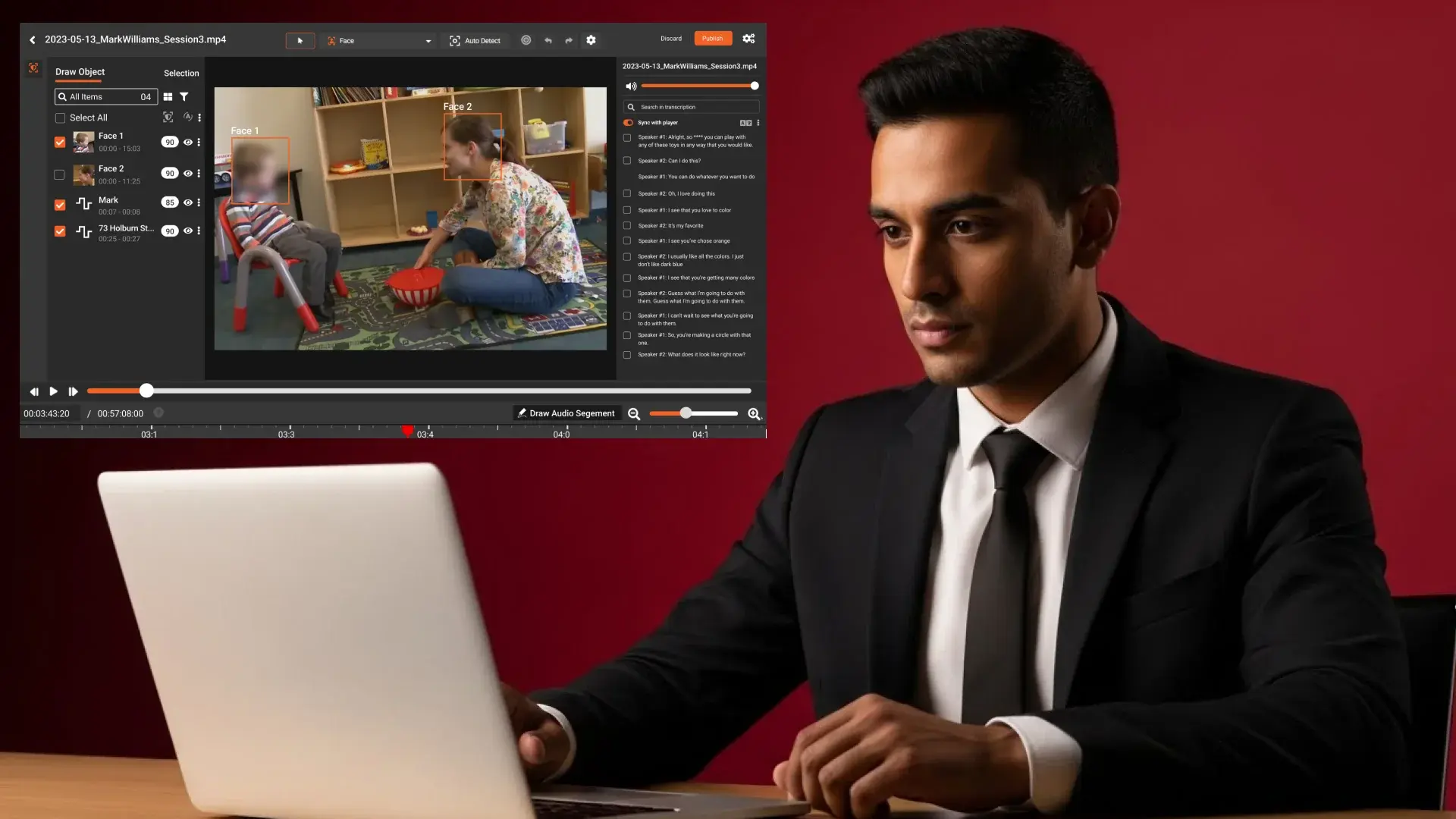
The process begins when AI scans the video to identify predefined object categories such as faces or license plates. Once detected, these objects are continuously tracked across frames—even as they move, change size, or briefly leave the field of view. Redaction effects such as blurring or masking are then applied automatically and consistently.
This eliminates the need for frame-by-frame manual editing and ensures that sensitive elements remain protected throughout the entire video.
Why Automated Video Redaction Matters
As video becomes a primary source of evidence, communication, and documentation, the risks associated with sharing unredacted footage continue to grow. Exposing personal or confidential information can result in legal penalties, compliance violations, and reputational damage.
Manual redaction is slow, resource-intensive, and susceptible to oversight. Automated object detection and redaction address these challenges by delivering:
- Rapid processing of large volumes of video
- Consistent and accurate redaction across frames
- Reduced risk of missed sensitive details
- Simplified compliance with regulations such as GDPR, HIPAA, and CJIS
- Safer video sharing with internal and external stakeholders
Different Types of Object Detection
Not all object detection works the same way. Video redaction tools use different approaches to identify sensitive information, depending on the complexity of the video and the level of accuracy required.
Basic Object Detection
Some systems detect objects by looking for general visual patterns, such as shapes or contrasts. This approach works in simple videos where objects are clear and easy to see. However, it can struggle when videos include movement, poor lighting, or crowded scenes.
Because of these limitations, basic detection is not ideal for videos that require reliable and consistent redaction.
AI-Powered Object Detection
Modern video redaction software uses AI to recognise objects more intelligently. Instead of relying on simple visual cues, AI learns how faces, license plates, and documents appear in real-world videos.
This allows the software to identify sensitive items even when they are partially visible, moving quickly, or captured from different angles. As a result, redaction becomes more accurate and dependable across the entire video.
Fast Detection vs. Detailed Detection
Some object detection methods focus on speed, while others prioritise accuracy.
- Faster detection is useful when processing large volumes of video in a short time.
- More detailed detection is important when privacy and compliance are critical and no sensitive information can be missed.
Effective video redaction solutions balance both, ensuring videos are processed quickly without sacrificing privacy protection.
Detection That Follows Movement
In videos, sensitive objects rarely stay still. Once an object is identified, the system must continue recognising it as it moves from frame to frame.
This ensures that faces, license plates, or other sensitive details remain hidden throughout the entire video, not just in a single moment.
Why This Matters for Video Redaction
Using the right type of object detection allows video redaction software to protect privacy automatically and consistently. This reduces manual work, minimises errors, and ensures sensitive information stays hidden before videos are shared.
How VIDIZMO Redactor Streamlines Video Object Detection and Redaction
VIDIZMO Redactor combines advanced AI with enterprise-grade security to simplify video redaction at scale. The platform automatically detects sensitive objects and applies redaction intelligently across entire videos.
With VIDIZMO Redactor, organisations can:
- Automatically identify faces, license plates, and other sensitive objects
- Apply uniform redaction throughout long or complex videos
- Minimise manual effort and reduce turnaround times
- Securely distribute redacted videos without compromising privacy
The solution is purpose-built for law enforcement agencies, enterprises, and regulated industries that require reliable, scalable, and defensible video redaction workflows.
Common Use Cases for VIDIZMO Video Redaction
VIDIZMO Redactor supports a wide range of real-world scenarios, including:
- Redacting body-worn camera and dashcam footage
- Protecting identities in surveillance and security videos
- Masking confidential documents and screens in recorded meetings
- Preparing video evidence for public disclosure or legal proceedings
Smarter, Faster, and More Secure Video Redaction
Object detection in video is the foundation of modern, automated video redaction. By intelligently identifying and masking sensitive objects, organisations can protect privacy while maintaining operational efficiency.
VIDIZMO Redactor delivers AI-driven object detection and video redaction in a single, secure platform, enabling organisations to redact videos confidently, efficiently, and in full compliance with regulatory requirements.
Start Your Free Trial Today - No Credit Card Needed

FAQ
Frequently Asked Questions
What types of objects can automated video redaction detect?
AI-powered video redaction tools can detect faces, license plates, vehicles, ID cards, documents, and computer or mobile screens. VIDIZMO Redactor identifies these objects across entire videos automatically, even when they are partially visible or moving, so no sensitive detail is missed before sharing footage.
How is AI-powered object detection different from basic object detection in video?
Basic detection relies on simple visual patterns and struggles with movement, poor lighting, or crowded scenes. AI-powered detection learns how sensitive objects appear in real-world footage and identifies them accurately across angles, speeds, and conditions, making it far more reliable for privacy and compliance use cases.
Can video redaction software track moving objects across frames?
Yes. Once a sensitive object is identified, the system continuously tracks it frame by frame, even as it moves or changes size. This ensures faces, license plates, and other sensitive details stay redacted throughout the full video, not just at a single point in time.
What compliance regulations does automated video redaction support?
Automated video redaction helps organizations meet requirements under GDPR, HIPAA, and CJIS. By consistently detecting and masking sensitive visual information, tools like VIDIZMO Redactor reduce the legal risk of exposing personally identifiable information during video sharing or public disclosure.
Is VIDIZMO Redactor suitable for large-scale video redaction workflows?
Yes. VIDIZMO Redactor is purpose-built for enterprises, law enforcement agencies, and regulated industries that process high volumes of footage. It automates detection and redaction at scale, reducing manual effort and turnaround time while maintaining consistent accuracy across long or complex videos.
What are the most common use cases for object detection-based video redaction?
The most common use cases include redacting body-worn camera and dashcam footage, protecting identities in surveillance videos, masking confidential screens in recorded meetings, and preparing video evidence for legal proceedings or public records requests under FOIA.
TopicsRedaction
About the author
Zain Noor is a Product Marketing Executive at VIDIZMO with expertise in AI redaction technology. He focuses on how public safety agencies, government bodies, and commercial organizations adopt and operationalize video intelligence at scale.
You may also like
Video Redaction Best Practices: Motion, Frame Rates, Tracking and Failing Safe
I led our video redaction project for a county public safety agency where two people handled every disclosure, and ...
Redacting Dash Cam, Body Cam and Drone Footage From a Moving Camera
A fleet claims manager preparing crash footage for an insurer and defense counsel is doing a different job from a ...
Why Frame-Rate Headers Lie: Redacting Variable Frame Rate Video
A video file keeps time frame by frame, and the frames-per-second figure a player displays is a summary of that timing, ...