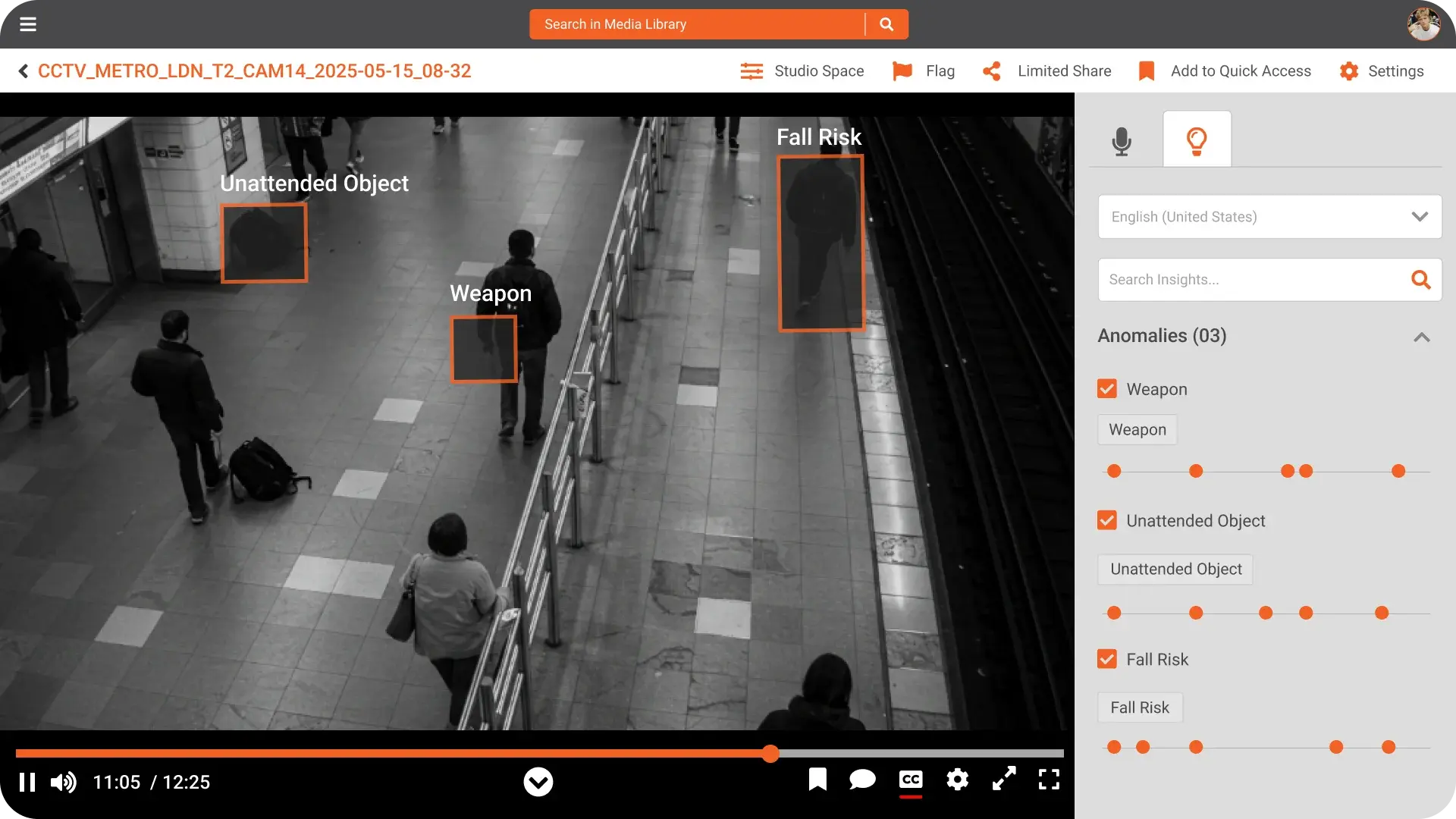
Why CCTV Redaction Matters More Than Ever
Public safety agencies increasingly rely on CCTV surveillance systems to monitor public spaces, investigate incidents, and preserve video evidence. However, surveillance footage often contains personally identifiable information (PII) such as faces, license plates, addresses, and spoken details that must be protected before videos are shared, reviewed, or released.
Manually redacting sensitive information from CCTV video evidence is time-consuming, error-prone, and difficult to scale especially when responding to FOIA requests or meeting strict compliance requirements. As video volumes grow, agencies need leading redaction software for video evidence containing PII to ensure privacy, accuracy, and regulatory compliance.
Modern video redaction software enables public safety organizations to automatically detect, track, and redact sensitive visual and audio information from surveillance footage reducing risk while accelerating investigations and disclosures.
This growing pressure is why public agencies are turning to CCTV redaction software. Redaction is no longer a manual task handled case by case. It is a core part of public safety compliance.
Why Public Safety Agencies Need Leading Redaction Software for CCTV Video Evidence
CCTV surveillance footage plays a critical role in law enforcement, emergency response, and public safety operations. However, video evidence often includes sensitive PII that must be protected to comply with privacy regulations and maintain public trust.
Leading redaction software helps public safety agencies:
-
Protect civilian and victim privacy
-
Comply with FOIA, CJIS, and data protection requirements
-
Reduce legal and reputational risk
-
Accelerate video review and disclosure workflows
-
Maintain evidentiary integrity with frame-accurate redaction
Why CCTV Redaction Is Complex
Redacting surveillance videos is very different from redacting documents or short clips. The challenges are unique and compound quickly.
Multiple People in the Frame
CCTV footage often includes crowds, passersby, and bystanders. Each person may need to be protected throughout the video, even as they move in and out of view.
Long, Continuous Recordings
Surveillance cameras often run for hours. Reviewing and redacting long recordings frame by frame is slow and exhausting when done manually.
Sensitive Locations
Footage may reveal secure entrances, control rooms, or private areas. These details increase the risk of releasing video without proper review.
Because of these factors, surveillance video redaction requires tools designed specifically for motion-heavy, long-form footage.
What to Look for in CCTV Redaction Software
Not all video tools are suitable for surveillance footage. Public safety teams should focus on these capabilities.
Face and Object Detection
The software should reliably detect faces and other sensitive elements across varying lighting conditions and camera angles. Missed detections lead to re-releases and appeals.
Motion Tracking
Once an object is detected, redaction must follow throughout the video. Manual frame-by-frame masking is not sustainable at scale.
Batch Processing
Agencies rarely redact one camera feed at a time. Batch processing allows teams to handle multiple videos together, reducing backlog and turnaround time.
Explore video redaction software
Public Safety Use Cases for CCTV Redaction
CCTV redaction supports a wide range of public safety workflows.
FOIA and Public Records Requests
Surveillance footage is commonly requested under FOIA and public disclosure laws. Redaction ensures transparency without exposing private individuals.
Incident Review
Agencies often share redacted footage internally or with oversight bodies. Accurate redaction protects privacy while supporting accountability.
Evidence Release
In some cases, video is released to the public to support investigations or clarify events. Redaction helps control what is visible without delaying release.
Across these scenarios, public safety video redaction must balance speed, accuracy, and trust.
Manual CCTV Redaction vs Automated Redaction
Many agencies still rely on manual redaction for surveillance footage. The difference becomes clear when volume increases.
Time Comparison
Manual redaction can take hours for a single long video. Automated tools reduce review time by detecting and tracking sensitive elements automatically.
Error Rates
Fatigue and time pressure increase the chance of missed faces or objects. Automation applies detection consistently across the entire recording.
Operational Impact
Manual workflows create backlogs and pull staff away from higher-value work. Automated redaction helps agencies keep up without expanding teams.
This shift is why CCTV-specific redaction tools are becoming the standard.
How PII Redaction Software Protects Privacy in Surveillance Video
CCTV surveillance footage often captures multiple forms of PII, including identifiable individuals, vehicle information, on-screen text, and spoken details. PII redaction software ensures that sensitive information is permanently removed before video evidence is shared internally or released externally.
With AI-powered PII redaction software, public safety agencies can automatically redact:
-
Faces of civilians, witnesses, and minors
-
License plates and vehicle identifiers
-
Addresses, ID numbers, and personal documents
-
Spoken names and sensitive audio content
This approach significantly reduces manual effort while ensuring consistent and compliant redaction outcomes.
Key Features of Leading CCTV Video Redaction Software
When evaluating video redaction software for public safety use cases, agencies should look for solutions that support automation, accuracy, and scalability.
Leading CCTV video redaction software should include:
-
Automated face and license plate redaction
-
AI-powered object detection and continuous tracking
-
Spoken PII redaction from audio tracks
-
Frame-accurate redaction without visual gaps
-
Manual override and review controls
-
Audit trails and compliance reporting
-
Support for large volumes of surveillance footage
These capabilities enable agencies to redact sensitive information efficiently while maintaining compliance and operational effectiveness.
Conclusion
Surveillance video plays a critical role in public safety but releasing it without proper redaction creates real privacy risk.
Generic tools and manual workflows are no longer enough. Purpose-built CCTV redaction software helps agencies process requests faster, reduce errors, and maintain public trust.

FAQ
Frequently Asked Questions
What does CCTV redaction software automatically detect and blur?
AI-powered CCTV redaction software automatically detects and redacts faces, license plates, vehicle identifiers, on-screen text such as addresses and ID numbers, and spoken PII from audio tracks. Detection runs continuously across the full video, even as subjects move through the frame, ensuring no sensitive element is missed before footage is shared or released.
How is automated CCTV redaction faster than manual redaction?
Manual redaction of a single long surveillance recording can take several hours and is prone to errors caused by fatigue. Automated CCTV redaction software detects and tracks sensitive elements across the entire footage without frame-by-frame review, significantly cutting turnaround time and freeing staff for higher-priority work.
Can CCTV redaction software handle footage from multiple cameras at once?
Yes. Leading CCTV redaction tools support batch processing, which allows agencies to upload and redact multiple video files simultaneously. This is critical for public safety agencies managing large volumes of surveillance footage from different camera feeds, especially when responding to FOIA requests or major incident reviews.
What compliance requirements does CCTV redaction help agencies meet?
CCTV redaction software helps public safety agencies comply with FOIA, CJIS, and applicable data protection regulations. It protects civilian and victim privacy, maintains evidentiary integrity, and provides audit trails and compliance reporting, all of which are required when releasing or sharing video evidence internally or publicly.
Is CCTV redaction software suitable for long surveillance recordings?
Yes, and it is specifically designed for them. Unlike general video editing tools, purpose-built CCTV redaction software handles long, continuous recordings with multiple people in frame. AI-powered motion tracking maintains consistent redaction throughout the full footage, regardless of video length or crowd density.
TopicsRedaction
About the author
Hassaan Mazhar is a B2B SaaS content strategist at VIDIZMO specializing in AI redaction, compliance technology, and enterprise content marketing. He builds trust-driven narratives for legal, public sector, and enterprise audiences navigating data privacy and video intelligence challenges.
You may also like
Video Redaction Best Practices: Motion, Frame Rates, Tracking and Failing Safe
I led our video redaction project for a county public safety agency where two people handled every disclosure, and ...
Redacting Dash Cam, Body Cam and Drone Footage From a Moving Camera
A fleet claims manager preparing crash footage for an insurer and defense counsel is doing a different job from a ...
Why Frame-Rate Headers Lie: Redacting Variable Frame Rate Video
A video file keeps time frame by frame, and the frames-per-second figure a player displays is a summary of that timing, ...