Data privacy in the UK has reached a breaking point. The Information Commissioner's Office (ICO) handled over 9,000 personal data breach reports in 2024, and most traced back to human error during document handling, redaction, and disclosure. For councils responding to Freedom of Information Act (FOIA) requests, NHS trusts releasing clinical records, police forces disclosing body-worn camera footage, and law firms preparing court bundles, the margin for error has shrunk to almost nothing.
Manual redaction can't keep up. Black marker pens, highlighter tools, and copy-paste workflows leak personally identifiable information (PII) at a rate regulators and the public no longer tolerate. Fines under the UK GDPR can reach £17.5 million or 4% of global turnover, whichever is higher.
This guide compares the eight redaction software platforms most often shortlisted by UK organisations in 2026. We look at format coverage, AI accuracy, deployment options, and the compliance posture that matters to British regulators. Whether you handle CCTV footage, call recordings, scanned medical records, or PDF contracts, the right tool depends on what you redact and at what scale.
Key Takeaways
- UK organisations face overlapping pressure from UK GDPR, the Data Protection Act 2018, FOIA requests, and NHS information governance rules. Manual redaction can't meet response deadlines at modern volumes.
- The strongest redaction platforms cover video, audio, images, and documents in one workflow. Single-format tools force teams to stitch together brittle pipelines.
- AI-powered automatic detection handles 80-90% of routine PII, freeing human reviewers to focus on edge cases and exemption decisions.
- Deployment flexibility (cloud, on-premises, hybrid) matters for police forces, NHS trusts, and central government departments with data residency obligations.
- A defensible audit trail is the part most teams overlook until an information rights tribunal asks for one.
What Is Redaction Software?
Redaction software detects and permanently obscures sensitive information in documents, images, video, and audio. The goal is to remove PII, protected health information (PHI), financial data, and other confidential details before a file is shared, published, or disclosed under a statutory request.
The category covers two broad approaches. Manual tools give a human reviewer drawing, masking, and pattern-search controls to mark sensitive content for removal. Automatic redaction uses computer vision, optical character recognition (OCR), and natural language processing (NLP) to find faces, license plates, names, addresses, and other PII patterns without human prompting. The strongest platforms blend both modes so reviewers can accept, adjust, or override AI decisions before export.
In a UK context, redaction software has to satisfy more than the visual test. Output must withstand scrutiny under UK GDPR Article 5 (data minimisation), the Freedom of Information Act 2000, the Data Protection Act 2018, and sector-specific guidance from the ICO, NHS Digital, and the College of Policing. That means defensible audit trails, exemption code support, and irreversible redaction. Visual masking that can be removed by reopening the file in a PDF editor does not count.
Why UK Organisations Need Specialist Redaction Tools in 2026
The shift from paper to multimedia evidence has changed the redaction problem. A single subject access request to a police force can now involve hundreds of hours of body-worn video, call recordings, and digital photographs alongside the traditional documents. We have seen forces miss the one-month statutory response window because their workflow was built for paper, not video.
Since the Data Protection and Digital Information Bill progressed in 2024, and the ICO published refreshed guidance on AI and biometric data in 2025, the bar for documenting redaction decisions has risen. Reviewers can't just remove information. They must show why they removed it, who approved the decision, and what exemption applied.
Top 8 Redaction Software in the UK
The platforms below are ranked on the criteria UK buyers raise most often during procurement: format coverage, AI accuracy, deployment flexibility, compliance support, and audit defensibility. Each has a clear sweet spot. The right choice depends on what you actually redact day to day.
1. VIDIZMO Redactor: Best for Multi-Format Workflows at Scale
VIDIZMO Redactor is an AI-powered platform that handles video, audio, images, documents, and PDFs in one workflow. Police forces, government departments, NHS-adjacent organisations, and legal teams across the UK use it to process mixed media at scale.
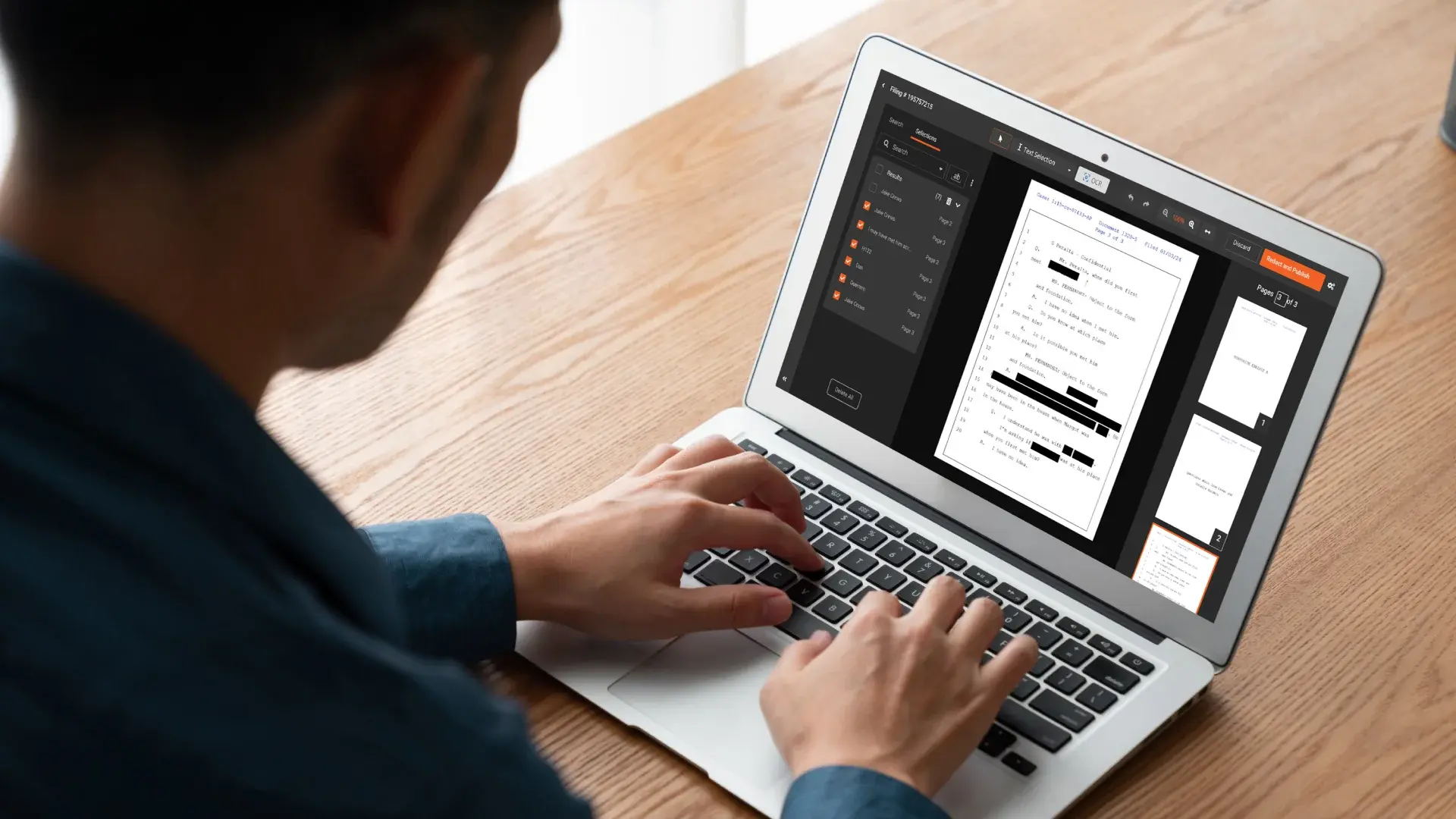
The platform detects faces, license plates, vehicles, screens, weapons, and custom objects in video. In audio, it covers 33+ categories of spoken PII including names, addresses, NHS numbers, National Insurance numbers, and account details. For documents, it handles PDF, DOCX, XLSX, PPTX, and scanned images with OCR, including handwritten text recognition. A configurable confidence threshold (25%-90%) lets reviewers tune the AI for over- or under-redaction depending on the use case.
82 languages supported for transcription with per-language Word Error Rate benchmarks, including English (4.5 WER), Welsh (36.6 WER), Polish (7.2 WER), and Urdu (25.0 WER). Useful for UK multilingual call centres and community-facing services.
Deployment options include UK-hosted SaaS, on-premises, and hybrid. That matters for organisations with data residency obligations under the Data Protection Act 2018. The platform also generates defensible audit trails mapping every redaction to an exemption code, and supports bulk processing tested with two million plus recordings.
Best for: Police forces, councils, NHS trusts, and law firms processing high volumes of mixed media. Start a free Redactor trial to test it on your own files.
2. CaseGuard: Best for Desktop Video Redaction
CaseGuard is a desktop application widely adopted by police departments for body-worn camera footage. It offers automatic face and license plate detection, manual brush tools, and audio bleeping. The desktop-first architecture suits single-analyst workflows but doesn't scale well to multi-user environments or central queueing.
Best for: Smaller police teams or investigators handling video case-by-case on a local workstation.
3. Veritone Redact: Best for Cloud-Native Video Teams
Veritone Redact runs in the cloud and offers automatic detection of faces, license plates, and screens in video, with batch processing for higher volumes. The platform integrates with other Veritone AI services for transcription and analytics. Document and image redaction aren't the core focus.
Best for: Organisations already invested in the Veritone ecosystem who primarily redact video.
4. iDox.ai Redact: Best for Document-Only Legal Workflows
iDox.ai Redact targets the legal market with PDF and Word document redaction, including pattern-based detection for common PII types. The tool is straightforward for solicitors preparing court bundles or disclosure packs. It doesn't handle video, audio, or scanned image redaction at the same depth.
Best for: UK law firms that handle text-based documents and need a focused PDF tool.
5. Adobe Acrobat Pro: Best for Occasional Document Redaction
Adobe Acrobat Pro includes a built-in redaction tool that finds and removes text and metadata from PDFs. It's familiar, widely licensed, and adequate for low-volume work. It is not built for bulk processing, AI-driven detection across mixed media, or audit-grade exemption tracking. For UK FOIA officers handling occasional requests, it's often the starting point before they outgrow it.
Best for: Teams already on Adobe Creative Cloud with low document redaction volumes.
6. Secure Redact: Best for UK-Based Cloud Video Redaction
Secure Redact is a UK-headquartered platform focused on video redaction in the cloud, with face and license plate detection. The UK hosting and GDPR-aligned posture make it attractive to British buyers concerned about data residency. The platform is video-centric, so document and audio workflows need a separate tool.
Best for: UK organisations that want a domestic supplier for video-only redaction.
7. Pimloc Secure Redact: Best for CCTV and Surveillance Footage
Pimloc's Secure Redact (related to but distinct from item 6 in some markets) specialises in CCTV and surveillance video anonymisation. The AI is tuned for typical UK CCTV scenarios such as retail, transport, and public space monitoring. The platform handles video well but is not a general-purpose redaction tool.
Best for: Retailers, transport operators, and local authorities managing CCTV disclosure.
8. Foxit PDF Editor: Best for Cost-Conscious PDF Redaction
Foxit PDF Editor offers redaction features within a broader PDF editing suite. It supports search-and-redact, manual marking, and metadata removal. The tool sits in the same category as Adobe Acrobat Pro, with a different licensing model and feature set. It doesn't extend to video, audio, or AI-driven multi-format detection.
Best for: Organisations standardised on Foxit who want redaction inside their existing PDF tool.
UK Redaction Software Comparison Table
| Platform |
Video |
Audio |
Documents |
Deployment |
Best For |
| VIDIZMO Redactor |
Yes (AI + manual) |
Yes (33+ PII types) |
Yes (OCR + ICR) |
Cloud, on-prem, hybrid |
Multi-format at scale |
| CaseGuard |
Yes |
Limited |
Limited |
Desktop |
Single-analyst video |
| Veritone Redact |
Yes |
Limited |
No |
Cloud |
Cloud video teams |
| iDox.ai Redact |
No |
No |
Yes |
Cloud |
Legal document workflows |
| Adobe Acrobat Pro |
No |
No |
Yes (PDF only) |
Desktop, cloud |
Low-volume PDF work |
| Secure Redact |
Yes |
Limited |
No |
UK cloud |
Domestic video supplier |
| Pimloc Secure Redact |
Yes (CCTV focus) |
No |
No |
Cloud |
CCTV and surveillance |
| Foxit PDF Editor |
No |
No |
Yes (PDF) |
Desktop, cloud |
Foxit-standardised teams |
How to Choose the Right Redaction Software for UK Compliance
The right platform depends on three questions most teams underweight at the start of procurement. First, what media types do you actually redact in a typical month? A team handling 90% PDFs and 10% video has very different needs than one drowning in body-worn camera footage. Second, what does your data residency picture look like? Police forces and central government departments often need UK-hosted or on-premises deployment, while commercial teams can use SaaS. Third, what does your audit defence look like if a redaction decision is challenged at the First-tier Tribunal (Information Rights)?
In practice, we have seen agencies select tools on AI accuracy benchmarks alone, then struggle when the platform can't produce a defensible exemption log six months later. The features that matter most under UK GDPR Article 5 (data minimisation) and FOIA Section 17 (refusal notices) are the boring ones: who redacted what, when, why, and under which exemption. Make those non-negotiable before you weigh anything else.
Why Choose VIDIZMO Redactor
VIDIZMO Redactor is built for the UK organisations handling the widest mix of media: police forces processing body-worn camera footage, NHS-adjacent bodies redacting clinical records, councils responding to FOIA requests, and law firms preparing disclosure bundles. The platform covers video, audio, images, documents, and PDFs in one workflow, which removes the brittle handoffs between single-format tools.
Our deployment data shows the platform handling 255+ media formats without manual transcoding, with bulk processing tested across two million plus recordings in production environments. For UK buyers, the key differentiators are support for country-specific PII patterns (NHS numbers, National Insurance numbers, UK passport numbers), defensible exemption code tracking aligned to FOIA Sections 21-44, and deployment flexibility across UK cloud regions, on-premises, and hybrid.
One thing worth flagging: the platform's transcription engine supports 82 languages with published WER benchmarks. For UK organisations serving multilingual communities, call recordings in Polish, Urdu, Welsh, or Arabic can be transcribed and redacted in the same workflow as English content, rather than routed to specialist translators first.
The Redactor team works with UK customers on data residency, integration with existing case management systems, and audit log requirements specific to British information governance. Contact the Redactor team to discuss your workflow, or start a free Redactor trial.
You May Also Like
Related guides for UK redaction and information governance teams:
- How AI-powered redaction supports FOIA Section 40 (personal information) decisions
- Best practices for redacting NHS clinical records under UK GDPR
- Body-worn camera redaction for UK police forces: workflow and exemption tracking
- Why audit trails matter when redaction decisions reach the Information Rights Tribunal
- Document redaction at scale: OCR, handwriting recognition, and the limits of pattern matching