
by Rida Shakil, Last updated: July 21, 2026
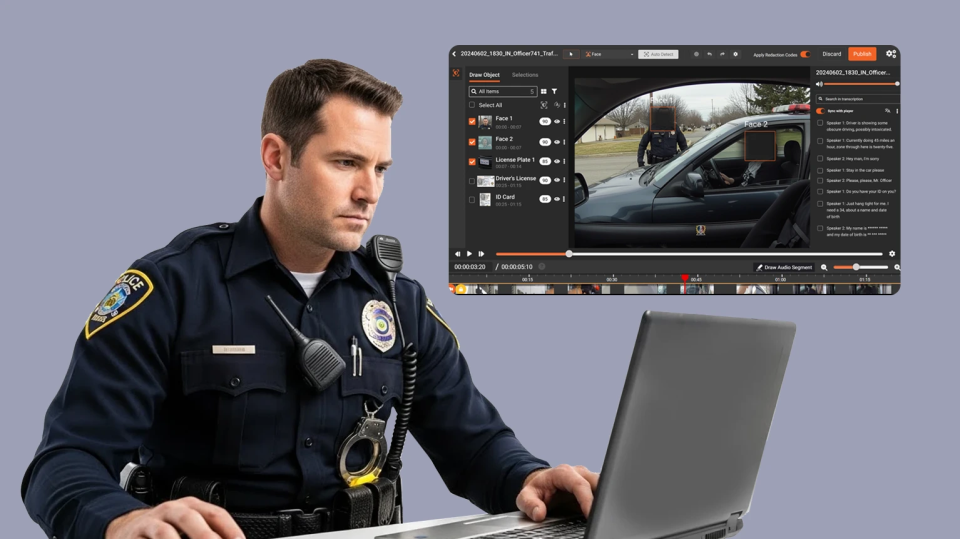
Your department generates hundreds of hours of body-worn camera (BWC) footage every week. While this data is vital for transparency, it is a liability the moment a FOIA request hits your desk.
If your team is struggling with FOIA deadlines, manual redaction backlogs, or inconsistent redaction quality, choosing the right body-worn camera redaction solution is no longer optional; it is critical.
By the end of this guide, you'll have a clear framework to select a body-worn camera redaction solution that saves time, ensures compliance, and scales with your operations.
Quick Diagnostic: Is Your Current Redaction Process Holding You Back?
Check all that apply:
- Redacting body camera footage manually, frame by frame
- Using separate tools for video and audio redaction
- Missing or rushing FOIA and public records deadlines
- Re-reviewing footage multiple times to avoid errors
- Concerned about accidental disclosure of faces, plates, or audio
- No clear audit trail for released footage
If you checked two or more, your current approach is not sustainable.
Why Body-Worn Camera Redaction Is Uniquely Challenging
Body-worn camera footage is not like fixed surveillance video. It includes:
- Constant movement and changing angles
- Poor or inconsistent lighting
- Multiple faces entering and exiting the frame
- Sensitive conversations captured unintentionally
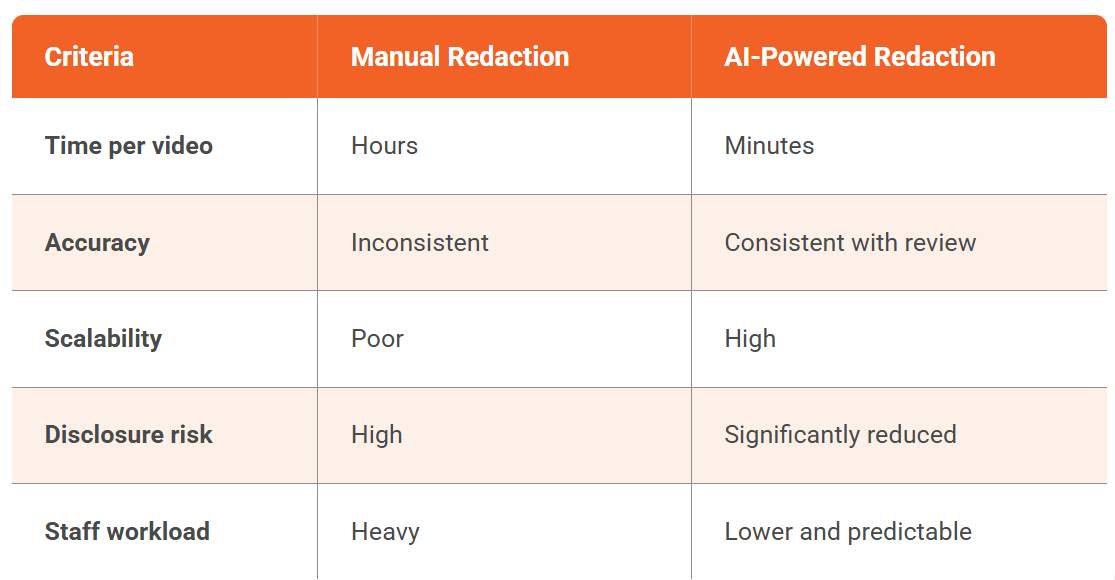
These conditions make manual redaction slow, error-prone, and expensive. This is why agencies are moving toward automated, AI-powered body-worn camera video redaction.
Step-by-Step Guide to Choose the Right Body-Worn Camera Video Redaction Solution
Follow this 5-step process to make a confident choice.
Step 1: Define What a Modern Body-Worn Camera Redaction Solution Must Do
Not all redaction software is built for law enforcement workflows. A viable solution must go beyond basic blurring.
- Automated Video Redaction
The system should automatically detect and redact:
- Faces and bystanders
- License plates and vehicle identifiers
- Screens, documents, and other sensitive objects
This reduces redaction time by up to 90 percent while maintaining consistency.
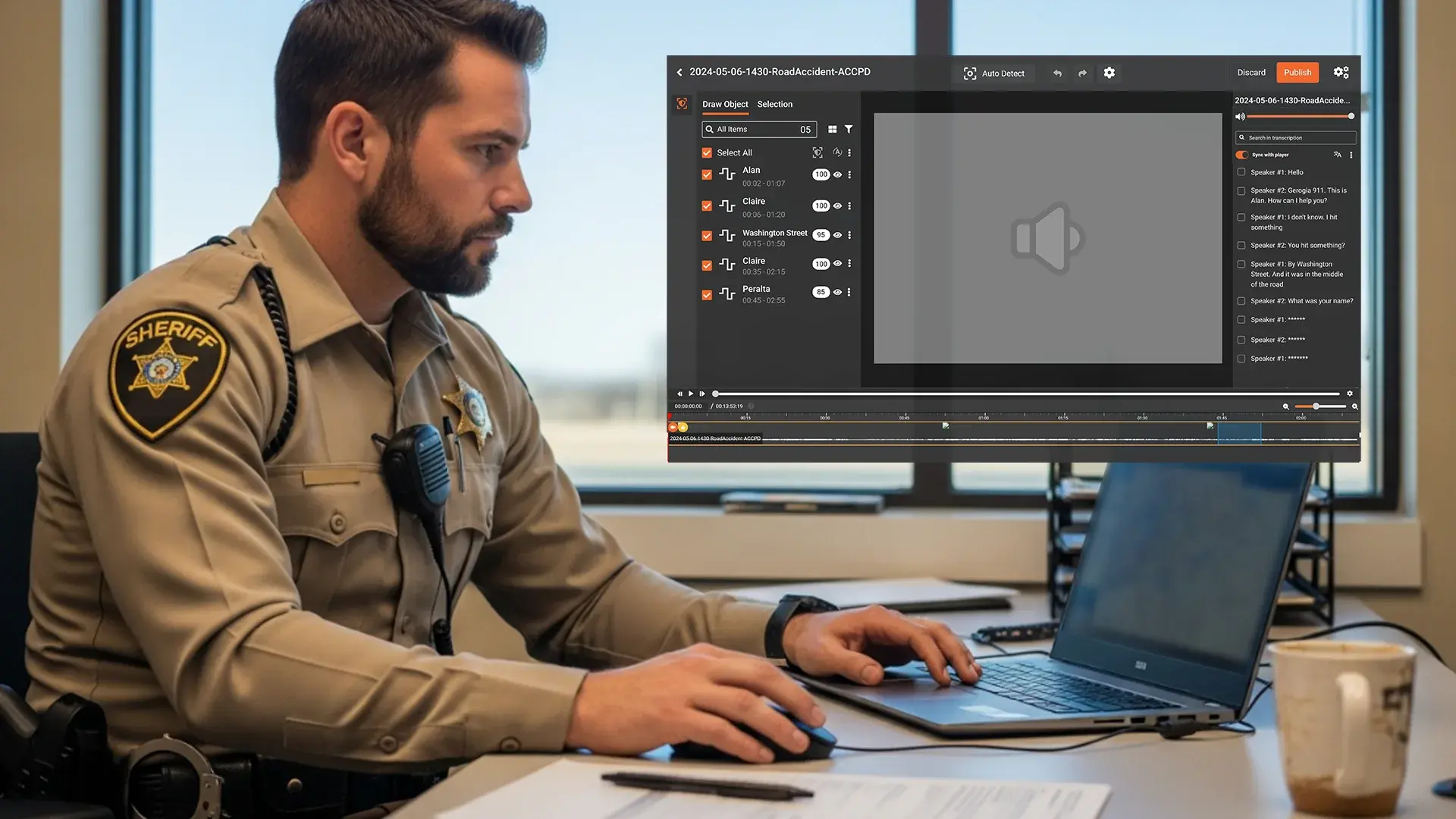
- Audio Redaction for Body-Worn Cameras
Sensitive information is often spoken, not seen.
Your solution should support:
- Keyword-based audio muting
- Speaker-level redaction
- Precise synchronization between audio and video
Ignoring audio redaction is one of the most common and costly mistakes agencies make.
Step 2: Ensure CJIS and FOIA Readiness from Day One
In the legal and regulatory industry, "close enough" isn't an option. Your solution must maintain a digital chain of custody. A body-worn camera redaction solution must support compliance by design.
Look for:
- CJIS-aligned access controls
- Encrypted processing and storage
- Role-based permissions
- Detailed audit logs for every action
- Secure export and controlled sharing
- Flexibility to host data
If a vendor cannot clearly explain how these controls work, that is a risk—not a feature.
Step 3: Evaluate Workflow Fit, Not Just Features
A strong redaction tool should fit naturally into your evidence operations.
Ask:
- Can it handle batch redaction for large FOIA requests?
- Does it support multiple versions of the same video?
- Can reviewers collaborate without duplicating effort?
- Does it integrate with evidence management workflows?
A tool that looks powerful but disrupts your workflow will slow you down, not speed you up.
Manual vs AI-Powered Body-Worn Camera Redaction
How VIDIZMO Redactor Supports Body-Worn Camera Redaction at Scale
VIDIZMO Redactor is designed for law enforcement, police departments, regulated environments, and many other industries, where accuracy, speed, and compliance matter. VIDIZMO Redactor One Solution to Redact Every File Type unifies your redaction workflow in one platform, using AI to automate and speed up video and audio redaction at scale.
With AI-powered video and audio redaction, agencies can:
- Automatically redact faces, license plates, and sensitive audio
- Review and refine AI-generated redactions before release
- Maintain CJIS-aligned security and audit trails
- Process FOIA body camera redaction efficiently
- Reduce staff workload without sacrificing control
Trusted by agencies like the Adams County Sheriff's Office and the Georgia Attorney General, VIDIZMO meets the highest security standards for government use.
Request your personalized VIDIZMO Redactor trial

Case Study: 85% Faster Body-Worn Camera Redaction for a Police Department
Organization: Mid-sized municipal police department
Use Case: FOIA and public records body-worn camera video redaction
The Challenge
Manual redaction took 3–5 hours per video, causing FOIA delays, staff overtime, and a high risk of accidental disclosure—especially in sensitive audio.
The Solution
The department implemented an AI-powered body-worn camera redaction solution with automated face, license plate, and audio redaction, plus human review and CJIS-aligned controls.
The Results
- 85% reduction in redaction time
- Videos redacted in 20–30 minutes instead of hours
- FOIA deadlines consistently met
- Lower staff workload and disclosure risk
Final Takeaway:
Choosing the right body-worn camera redaction solution is not just about speeding up video edits. It is about protecting privacy, meeting legal obligations, and sustaining public trust as transparency demands increase.
Manual and fragmented redaction methods cannot keep pace with today’s body-worn camera programs. Agencies that adopt AI-powered body-worn camera video and audio redaction gain the ability to process footage faster, reduce risk, and maintain consistent standards while keeping humans in control of every release.
The right solution should help your agency:
- Redact body-worn camera footage accurately at scale
- Protect sensitive visual and spoken information
- Meet FOIA and public records requirements confidently
- Maintain CJIS-aligned security, auditability, and control
VIDIZMO Redactor unifies your redaction workflow in one platform, using AI to accelerate video and audio redaction at scale.
Ready to simplify?
Request your personalized VIDIZMO Redactor trial
Not quite there?
Talk to an expert to explore your options and get tailored guidance for your organization

About the Author
Jump to
Top 10 Best Practices for Document Redaction Across Industries in 2026
How Government Agencies Can Safely Redact Sensitive Documents: A 2026 Guide
.webp)

No Comments Yet
Let us know what you think