Hospital systems handle some of the most sensitive data in any industry. From electronic health records and insurance documents to recorded consultations and security footage, even routine operations can expose protected health information (PHI) if not handled carefully. As hospitals increasingly share data with insurers, regulators, legal teams, and research partners, the need to safeguard patient privacy has never been greater.
This is where redaction for hospital systems plays a critical role. Effective redaction allows hospitals to share necessary information while meeting HIPAA requirements and maintaining patient trust without slowing down clinical or administrative workflows.
What Redaction Means in Hospital Systems
Redaction is the process of permanently removing or obscuring sensitive information from files before they are shared or stored. In hospital systems, redaction applies to far more than text-based medical records.
Healthcare redaction commonly includes:
- Patient names, addresses, and identifiers
- Medical record and insurance numbers
- Faces and voices captured in video recordings
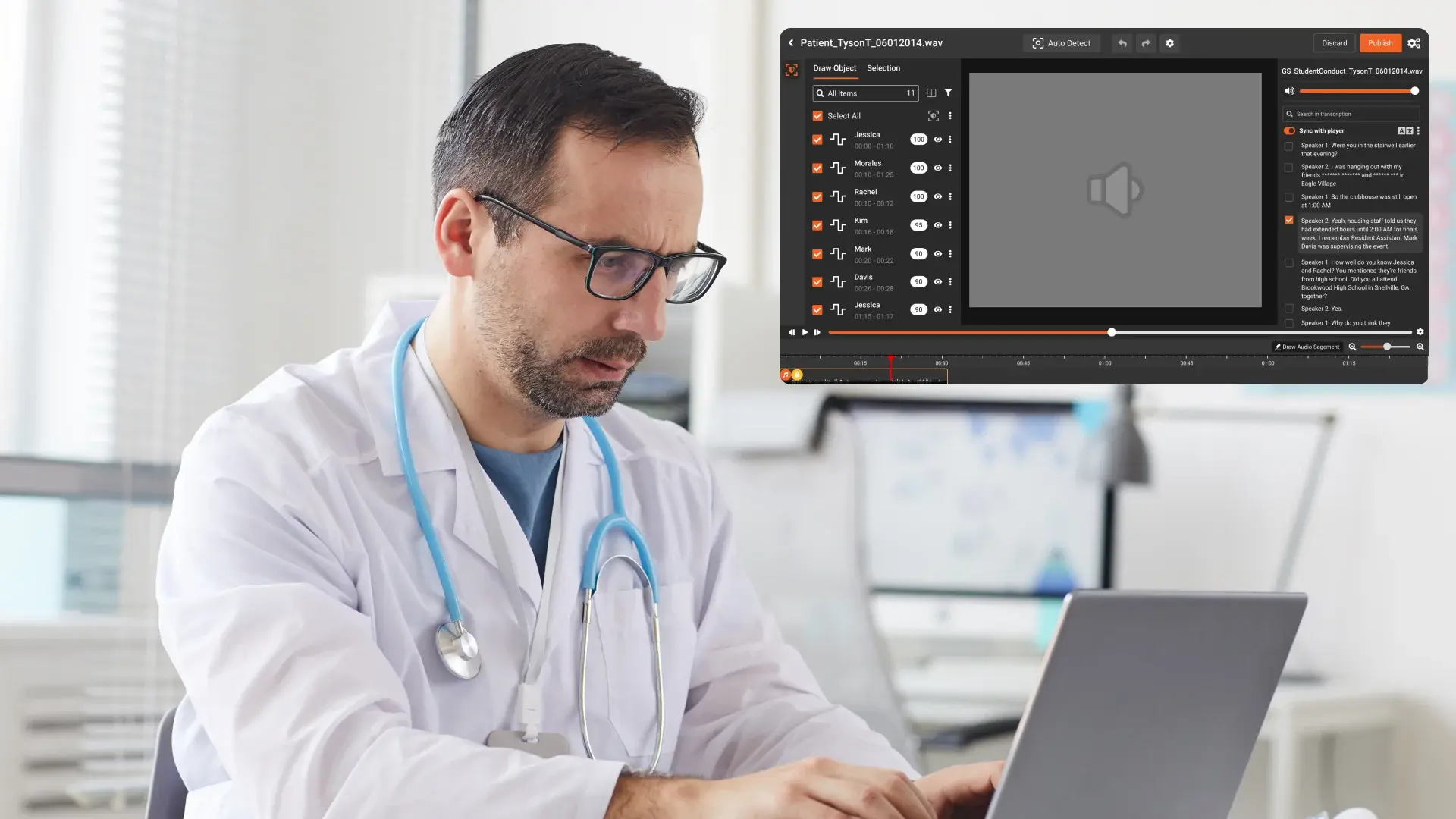
- Spoken PHI in audio files and call recordings
- Sensitive details are visible in diagnostic images and reports
Unlike simple editing, redaction must be irreversible and consistent. Once sensitive information is redacted, it should not be recoverable, even by internal users without authorization.
Why Redaction for Hospital Systems Is Essential for HIPAA Compliance
HIPAA requires hospital systems to protect PHI and limit its disclosure to only what is necessary. Any time information is shared outside its original purpose, whether for billing, audits, legal review, or training, there is a risk of exposing sensitive patient data.
Redaction helps hospital systems:
- Prevent unauthorized disclosure of PHI
- Reduce regulatory and legal risk
- Maintain patient trust
- Safely collaborate with external parties
Without proper redaction, even well-intentioned data sharing can result in compliance violations.
The Growing Need for Redaction Beyond Medical Records
Hospital systems no longer manage only documents and PDFs. Modern healthcare operations generate large volumes of video and audio content that often contain PHI and other sensitive information.
Telehealth consultations, recorded procedures, training sessions, and security footage can all reveal patient identities through faces, voices, screens, or contextual details. These formats introduce new privacy risks that traditional document-only redaction tools cannot address.
This includes:
- Telehealth and virtual consultation recordings
- Training and incident review videos
- Security and surveillance footage
- Audio calls between patients and care teams
As a result, video and audio redaction in healthcare is now just as important as medical record redaction.
Common Redaction Challenges in Hospital Systems
Many hospital systems still rely on manual or fragmented redaction processes that are difficult to scale and maintain. These approaches increase the likelihood of errors and inconsistencies across departments.
Manual Redaction and Human Error
Manually reviewing documents, videos, or audio files is time-consuming and places a heavy burden on staff. At scale, this approach increases the risk of missed identifiers and incomplete redaction.
Inconsistent Redaction Standards
Different departments often follow different redaction practices based on their tools or workflows. This inconsistency makes it difficult to enforce organization-wide compliance standards.
Limited Audit Visibility
Without centralized logs and verification, hospitals may struggle to prove that redaction was performed correctly during audits, investigations, or legal reviews.
What Effective Redaction for Hospital Systems Requires
To be reliable and compliant, redaction in hospital systems must balance strong security controls with operational usability. An effective approach ensures privacy without slowing down essential workflows.
Accurate Identification of PHI
Redaction tools must reliably detect sensitive information across documents, video, and audio. This includes both visible and spoken identifiers that may not be obvious at first glance.
Controlled Automation
Automation reduces manual effort and error, but hospitals still need oversight. The ability to review, validate, and approve redactions ensures accuracy and accountability.
Secure Access and Permissions
Only authorized users should be able to view unredacted content. Role-based access controls help prevent unnecessary exposure of PHI.
Audit-Ready Transparency
Hospitals must be able to demonstrate when redaction occurred, what was redacted, and who approved it to support compliance and governance requirements.
Practical Redaction Use Cases in Hospital Systems
Redaction supports a wide range of everyday healthcare workflows where sensitive information must be shared responsibly.
Common use cases include:
- Sharing medical records with insurance providers while limiting unnecessary PHI
- Responding to legal requests and regulatory audits
- Creating training and educational materials from real-world cases
- Reviewing telehealth consultations without exposing patient identities
- Preparing incident or security footage for internal or external review
In each scenario, redaction allows hospital systems to maintain transparency while protecting patient privacy.
Why a Unified Redaction Platform Matters for Hospital Systems
Using separate tools for documents, video, and audio can create policy gaps, inefficiencies, and compliance risks. A unified redaction platform helps hospital systems apply consistent privacy standards across all data types.
VIDIZMO Redactor supports this unified approach by enabling hospitals to redact documents, video, and audio within a single platform. AI-assisted detection helps identify sensitive information, while human review ensures accuracy and control.
Role-based access controls and detailed audit logs help organizations maintain HIPAA-aligned workflows without disrupting daily operations.
Rather than focusing on speed alone, VIDIZMO Redactor emphasizes accuracy, oversight, and compliance qualities that are essential in healthcare environments.
How to Choose the Right Redaction Solution for Hospital Systems
Selecting the right redaction solution is a strategic decision for hospital systems. The chosen platform must support compliance, security, and long-term scalability.
When evaluating redaction solutions, hospital systems should look for:
- HIPAA-aligned security and encryption
- Support for documents, video, and audio
- Configurable redaction policies
- Transparent audit trails
- Integration with existing healthcare systems
The goal is to establish a sustainable redaction process that protects patient privacy while supporting collaboration and care delivery.
Redaction for Hospital Systems Enables Safe and Responsible Data Sharing
As healthcare data continues to grow in volume and complexity, redaction for hospital systems is no longer optional. It is a foundational requirement for compliance, risk management, and patient trust.
By adopting a unified, healthcare-focused redaction approach, hospital systems can safely share information, meet regulatory obligations, and operate more efficiently. Solutions like VIDIZMO Redactor help organizations achieve this balance by combining automation, control, and compliance into a single, practical redaction workflow.
Start Your Free Trial Today - No Credit Card Needed

FAQ
Frequently Asked Questions
What is redaction for hospital systems?
Redaction for hospital systems refers to the process of permanently removing or obscuring protected health information from documents, video, audio, and images before they are shared or stored. It helps hospitals protect patient privacy while meeting regulatory requirements.
Why is redaction important for HIPAA compliance in hospitals?
HIPAA requires hospitals to limit access to PHI and prevent unauthorized disclosure. Redaction ensures that only the necessary information is shared, reducing the risk of compliance violations, penalties, and data breaches.
What types of healthcare data require redaction?
Hospitals must redact PHI from medical records, insurance documents, telehealth recordings, surveillance footage, training videos, and audio calls that contain patient-identifying information.
Can redaction be automated for hospital systems?
Yes, modern redaction tools use AI to identify sensitive information across documents, video, and audio. Automation improves efficiency, but hospitals should still review and validate redactions for accuracy and compliance.
How does VIDIZMO Redactor support redaction for hospital systems?
VIDIZMO Redactor enables hospitals to redact documents, video, and audio within a single platform. It combines AI-assisted detection with human review, role-based access controls, and audit logs to support HIPAA-aligned redaction workflows.
TopicsRedaction
About the author
Zain Noor is a Product Marketing Executive at VIDIZMO with expertise in AI redaction technology. He focuses on how public safety agencies, government bodies, and commercial organizations adopt and operationalize video intelligence at scale.
You may also like
Video Redaction Best Practices: Motion, Frame Rates, Tracking and Failing Safe
I led our video redaction project for a county public safety agency where two people handled every disclosure, and ...
Redacting Dash Cam, Body Cam and Drone Footage From a Moving Camera
A fleet claims manager preparing crash footage for an insurer and defense counsel is doing a different job from a ...
Why Frame-Rate Headers Lie: Redacting Variable Frame Rate Video
A video file keeps time frame by frame, and the frames-per-second figure a player displays is a summary of that timing, ...