Key Takeaways
- Medical record redaction is essential for protecting patient privacy during healthcare data sharing.
- Proper redaction supports compliance with regulations such as HIPAA and GDPR.
- Manual redaction increases the risk of errors, delays, and inconsistent disclosures.
- Automated medical record redaction improves accuracy, speed, and audit readiness.
- Secure redaction enables defensible sharing for legal, insurance, and research use cases.
- End-to-end platforms like VIDIZMO Redactor help standardize and govern redaction workflows.
Healthcare organizations are under constant pressure to share medical data quickly and securely. Patient records are exchanged with insurers, courts, regulators, researchers, and public health agencies on a daily basis. Each request often comes with strict deadlines and high expectations for accuracy.
At the same time, medical records contain some of the most sensitive data an organization can hold. A single missed identifier such as a patient name, date of birth, or medical record number, can lead to privacy violations, regulatory penalties, and loss of trust.
This is why medical record redaction is a critical step in secure healthcare data sharing. It allows organizations to meet disclosure requirements while ensuring patient privacy remains protected at every stage.
What Is Medical Record Redaction?
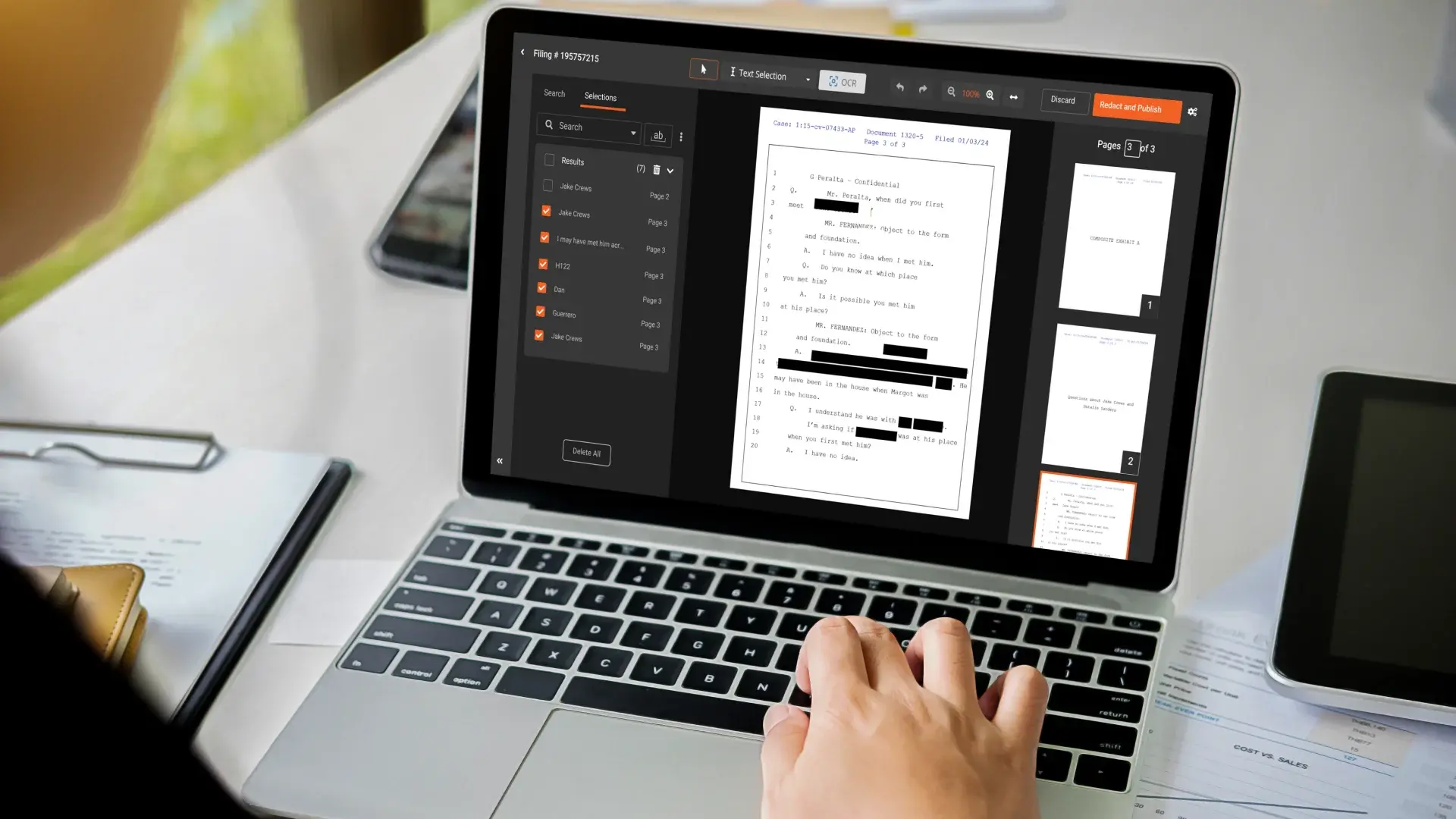
Medical record redaction is the process of permanently removing or obscuring sensitive patient information before medical records are shared externally. This includes personally identifiable information (PII) and protected health information (PHI) that is not required for the intended purpose.
Unlike basic masking or hiding, proper redaction ensures that sensitive information cannot be recovered after sharing. This makes redacted records safe for external use across legal, insurance, and research workflows.
Why Medical Record Redaction Is Essential in Healthcare
Protecting Patient Privacy
Patients trust healthcare organizations with deeply personal information. Medical record redaction ensures that only necessary data is shared, protecting patient confidentiality even when records move outside organizational boundaries.
Without redaction, organizations risk exposing sensitive diagnoses, treatments, or identifiers that were never meant for broad disclosure.
Meeting Regulatory and Compliance Requirements
Healthcare regulations place strict controls on how patient data is disclosed. HIPAA enforces the “minimum necessary” standard, while GDPR requires data minimization and accountability.
Medical record redaction directly supports these obligations by ensuring sensitive data is removed before disclosure. It also helps organizations demonstrate compliance during audits and investigations.
Enabling Secure and Timely Data Sharing
Healthcare data sharing is often time-sensitive. Delays in responding to subpoenas, insurance requests, or public health reporting can create operational and legal challenges.
Medical record redaction allows organizations to share information efficiently without sacrificing security or compliance.
The Operational Reality: Challenges with Manual Medical Record Redaction
High Risk of Human Error
Manual redaction requires staff to review records line by line. Under time pressure, even experienced professionals can miss sensitive identifiers buried in clinical notes.
One overlooked detail can result in a reportable data breach.
Inconsistent Redaction Across Teams
Different teams may interpret redaction rules differently, leading to inconsistent disclosures. This makes it difficult to maintain compliance and defend redaction decisions during audits or legal reviews.
Workflow Bottlenecks for HIM Teams
Health Information Management (HIM) professionals often manage large volumes of release-of-information requests. Manual redaction slows turnaround times, creates backlogs, and increases stress especially when deadlines are tight.
As data volumes grow, these challenges become harder to manage.
How Automated Medical Record Redaction Improves Outcomes
Automated medical record redaction uses predefined rules and intelligent detection to identify and remove sensitive information across documents and data formats.
For HIM and Records Management Teams
Automation reduces repetitive manual work and speeds up release-of-information workflows. Staff can focus on verification and quality control rather than searching for every instance of sensitive data.
This improves turnaround times while reducing errors.
For IT and Security Leaders
Automated redaction ensures consistent policy enforcement across departments and systems. It also supports scalable workflows as data volumes increase.
Platforms such as VIDIZMO Redactor provide centralized controls, audit logs, and secure handling of sensitive data, helping IT teams maintain governance without adding complexity.
For Compliance and Legal Teams
Standardized redaction workflows support defensible disclosures. Organizations can show what data was redacted, when it was done, and under which policy reducing legal exposure and audit risk.
Medical Record Redaction Use Cases in Healthcare
Legal and Subpoena Responses
Courts and legal entities often require medical records, but not all patient information is relevant. Medical record redaction ensures disclosures remain limited, consistent, and defensible.
Insurance and Claims Processing
Insurers require access to specific clinical information. Redaction removes unrelated identifiers while supporting accurate and efficient claims review.
Research and Public Health Reporting
Medical record redaction allows healthcare organizations to share data for research and reporting while protecting patient identities and maintaining compliance.
Solutions like VIDIZMO Redactor help organizations manage these disclosures within a single, governed environment.
Best Practices for Secure Medical Record Redaction
- Define clear redaction policies aligned with regulatory requirements.
- Use automated tools to ensure accuracy and consistency.
- Maintain detailed audit trails for compliance and reporting.
- Regularly review redaction rules as regulations evolve.
- Train staff on secure data sharing workflows.
Why Medical Record Redaction Is a Healthcare Necessity
Medical record redaction is no longer just a compliance task. It is a foundational capability for secure healthcare data sharing in a highly regulated environment.
By replacing manual, inconsistent processes with standardized and automated workflows, healthcare organizations can protect patient privacy, reduce operational burden, and confidently meet regulatory obligations.
End-to-end platforms such as VIDIZMO Redactor support this approach by enabling secure, auditable, and policy-driven redaction, helping organizations share healthcare data responsibly without compromising trust.
Start Your Free Trial Today - No Credit Card Needed

FAQ
Frequently Asked Questions
What is medical record redaction?
Medical record redaction is the permanent removal of sensitive patient information from medical records before they are shared externally.
Why is medical record redaction important in healthcare?
Medical record redaction protects patient privacy and helps healthcare organizations meet regulatory requirements.
What data is removed during medical record redaction?
Medical record redaction removes PHI and PII such as patient names, addresses, and identification numbers.
Is medical record redaction required for HIPAA compliance?
Medical record redaction supports HIPAA’s minimum necessary disclosure standard when sharing patient data.
Can medical record redaction be automated?
Medical record redaction can be automated using rule-based and AI-assisted tools to improve accuracy and efficiency.
How does medical record redaction improve ROI workflows?
Medical record redaction reduces manual effort and speeds up release-of-information processes.
How does VIDIZMO Redactor support medical record redaction?
VIDIZMO Redactor provides secure, automated redaction workflows with policy enforcement and audit-ready controls.
TopicsRedaction
About the author
Zain Noor is a Product Marketing Executive at VIDIZMO with expertise in AI redaction technology. He focuses on how public safety agencies, government bodies, and commercial organizations adopt and operationalize video intelligence at scale.
You may also like

Video Redaction Best Practices: Motion, Frame Rates, Tracking and Failing Safe
I led our video redaction project for a county public safety agency where two people handled every disclosure, and ...
Redacting Dash Cam, Body Cam and Drone Footage From a Moving Camera
A fleet claims manager preparing crash footage for an insurer and defense counsel is doing a different job from a ...

Why Frame-Rate Headers Lie: Redacting Variable Frame Rate Video
A video file keeps time frame by frame, and the frames-per-second figure a player displays is a summary of that timing, ...