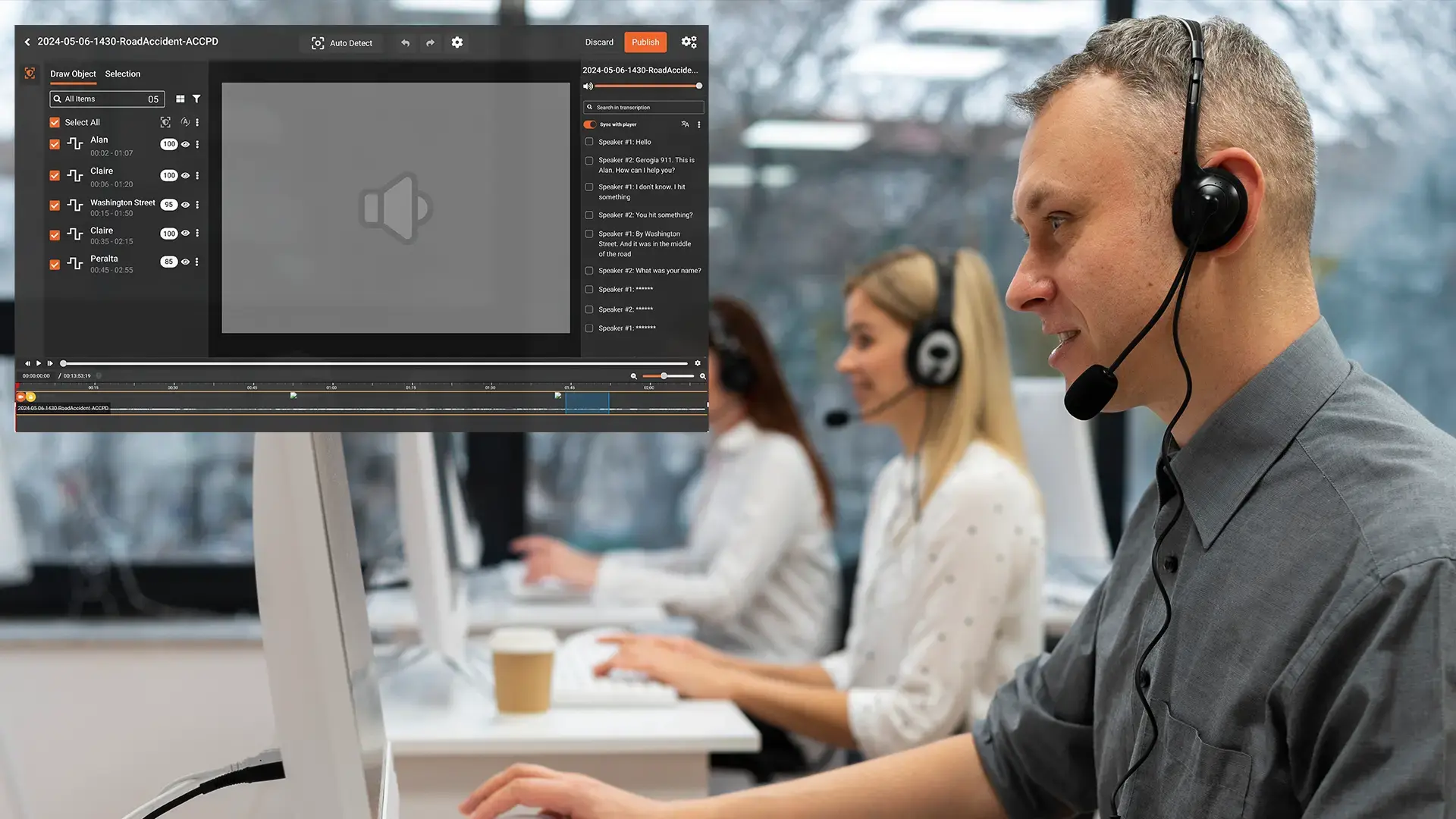
Why Spoken PII Redaction Has Become a Scale Problem
Audio recordings are now a core part of many compliance and disclosure workflows.
Calls, interviews, recorded meetings, and hearings often contain spoken personally identifiable information (PII). Names, addresses, phone numbers, and other identifiers are routinely said out loud during conversations.
For a small number of recordings, teams can listen manually and redact what they hear. At scale, that approach breaks down.
Long recordings, tight deadlines, and limited staff make manual review slow and risky. This is why agencies and organizations are increasingly moving toward spoken PII redaction at scale.
This guide focuses on spoken PII redaction, not transcription tools or basic audio editing. The goal is to protect sensitive information consistently, without losing control.
What Is Spoken PII in Audio Recordings?
Spoken PII refers to sensitive information that is said aloud during an audio recording.
Common examples include:
- Personal names
- Home or business addresses
- Phone numbers
- Identification references
Spoken PII is different from background noise or metadata. It cannot be handled with simple audio muting or keyword search alone.
Effective audio PII redaction requires speech-aware detection that understands how sensitive information is spoken in real conversations.
Why Spoken PII Redaction Is Difficult to Scale
Redacting spoken PII is straightforward in theory. In practice, it is one of the hardest redaction problems to scale.
Long Audio Recordings
Calls and interviews can run for hours. Listening end-to-end for every file is time-consuming.
Variability in Speech
People speak differently. Accents, pacing, interruptions, and audio quality all vary. This makes manual listening inconsistent.
Reviewer Fatigue
Listening closely for sensitive details is mentally demanding. Fatigue increases the risk of missed names or numbers.
Tight Deadlines
Disclosure, compliance, and investigative workflows often have fixed timelines. Delays create risk.
What works for a few recordings fails completely when volume increases.
When Organizations Need Automated Spoken PII Redaction
Organizations usually reach a clear tipping point.
Automated spoken PII redaction becomes necessary when:
- Large volumes of calls are recorded daily
- Audio must be released publicly or shared externally
- Investigations or compliance reviews require fast turnaround
- Staff cannot keep up with manual listening
At this stage, the challenge is no longer effort. It is control and consistency.
Many teams recognize this moment when they say, “We can’t review all of this manually anymore.”
What to Look for in Spoken PII Redaction at Scale
Not all tools handle spoken PII well. High-volume workflows require specific capabilities.
Speech-Based Detection (Not Just Transcription)
The system must detect spoken names, numbers, and identifiers directly from speech.
Context matters. A phone number spoken casually must still be detected accurately.
Precision Redaction Controls
Only sensitive segments should be muted or masked. The rest of the audio should remain intact and understandable.
This preserves context while protecting privacy.
Human Review and Verification
Automation should prepare redactions, not finalize them blindly.
Reviewers must be able to:
- Listen to flagged segments
- Adjust redactions
- Approve output before release
Auditability and Defensibility
Every redaction should be logged. Teams need records showing:
- What was redacted
- When it was redacted
- Why it was redacted
Re-processing audio must also be possible when requirements change.
Explore audio and video redaction workflows designed for scale
How Spoken PII Redaction Fits into Unattended Redaction Workflows
Spoken PII redaction often operates as part of unattended redaction workflows.
In these workflows:
- Automation handles detection across large audio sets
- Redaction is applied consistently
- Humans review and approve results
Unattended does not mean uncontrolled. It means the system can process volume without constant guidance.
This approach reduces backlogs, improves consistency, and allows teams to keep pace with demand.
Common Audio Use Cases for Spoken PII Redaction
Spoken PII redaction applies across many real-world scenarios.
Emergency Call Recordings
Calls often include names, addresses, and phone numbers spoken quickly under stress.
Interviews and Witness Statements
Sensitive identifiers are frequently shared during questioning.
Recorded Meetings and Hearings
Participants may reference private individuals or locations.
Compliance and Investigative Audio
Audio is often reviewed and released alongside video and documents.
In these cases, redacting names, addresses, and phone numbers in audio must be accurate and repeatable.
How Teams Use VIDIZMO REDACTOR for Spoken PII Redaction
Organizations handling large volumes of audio need redaction workflows that are automated, reviewable, and defensible.
VIDIZMO REDACTOR is used as an example of how spoken PII redaction can be implemented responsibly.
Teams use it to:
- Automatically detect spoken sensitive information
- Apply precise muting to PII segments
- Review and adjust redactions before release
- Generate audit logs for compliance and appeals
This approach supports large-scale audio redaction without removing human oversight.
See how unattended redaction workflows support audio and video at scale.
Common Misconceptions About Audio Redaction
Several concerns come up frequently.
“Speech recognition is too unreliable.”
Modern speech-aware systems are designed for detection with human review, not blind release.
“Automation removes human control.”
Review and approval remain central to the process.
“Manual listening is safer.”
At scale, fatigue and inconsistency make manual review riskier.
When implemented correctly, automation increases control rather than reducing it.
Conclusion
Spoken PII redaction is not a transcription problem. It is a risk and scale problem.
As audio volumes grow, manual workflows cannot keep up safely. Automated spoken PII redaction enables consistency, defensibility, and control across large audio datasets.
Purpose-built platforms make it possible to protect sensitive information without slowing down compliance and disclosure workflows.

FAQ
Frequently Asked Questions
Can automated spoken PII redaction be trusted without human review?
Yes, but automation should prepare redactions, not finalize them. Purpose-built tools like VIDIZMO REDACTOR flag sensitive segments for human reviewers to listen to, adjust, and approve before any audio is released. This keeps compliance teams in control while handling volume that manual listening cannot.
What types of spoken PII are detected in audio recordings?
Automated systems are built to detect names, phone numbers, home and business addresses, and identification references spoken during calls, interviews, and hearings. Detection is speech-aware, meaning it handles natural conversation, accents, and varied pacing, not just clean or scripted audio.
How is spoken PII redaction different from transcription-based redaction?
Transcription tools convert speech to text, then flag keywords. Spoken PII redaction works directly on the audio signal to detect and mute sensitive segments with precision. This matters because transcription errors can cause PII to pass through undetected, while speech-aware redaction focuses on the actual spoken output.
What makes manual audio redaction too risky at scale?
At high volume, manual listening introduces reviewer fatigue, inconsistent detection, and missed identifiers. Long recordings compound the problem. When teams can no longer review every file end-to-end within compliance deadlines, manual workflows become a liability rather than a safeguard.
TopicsAudio Redaction
About the author
Hassaan Mazhar is a B2B SaaS content strategist at VIDIZMO specializing in AI redaction, compliance technology, and enterprise content marketing. He builds trust-driven narratives for legal, public sector, and enterprise audiences navigating data privacy and video intelligence challenges.
You may also like
Video Redaction Best Practices: Motion, Frame Rates, Tracking and Failing Safe
I led our video redaction project for a county public safety agency where two people handled every disclosure, and ...
Redacting Dash Cam, Body Cam and Drone Footage From a Moving Camera
A fleet claims manager preparing crash footage for an insurer and defense counsel is doing a different job from a ...
Why Frame-Rate Headers Lie: Redacting Variable Frame Rate Video
A video file keeps time frame by frame, and the frames-per-second figure a player displays is a summary of that timing, ...