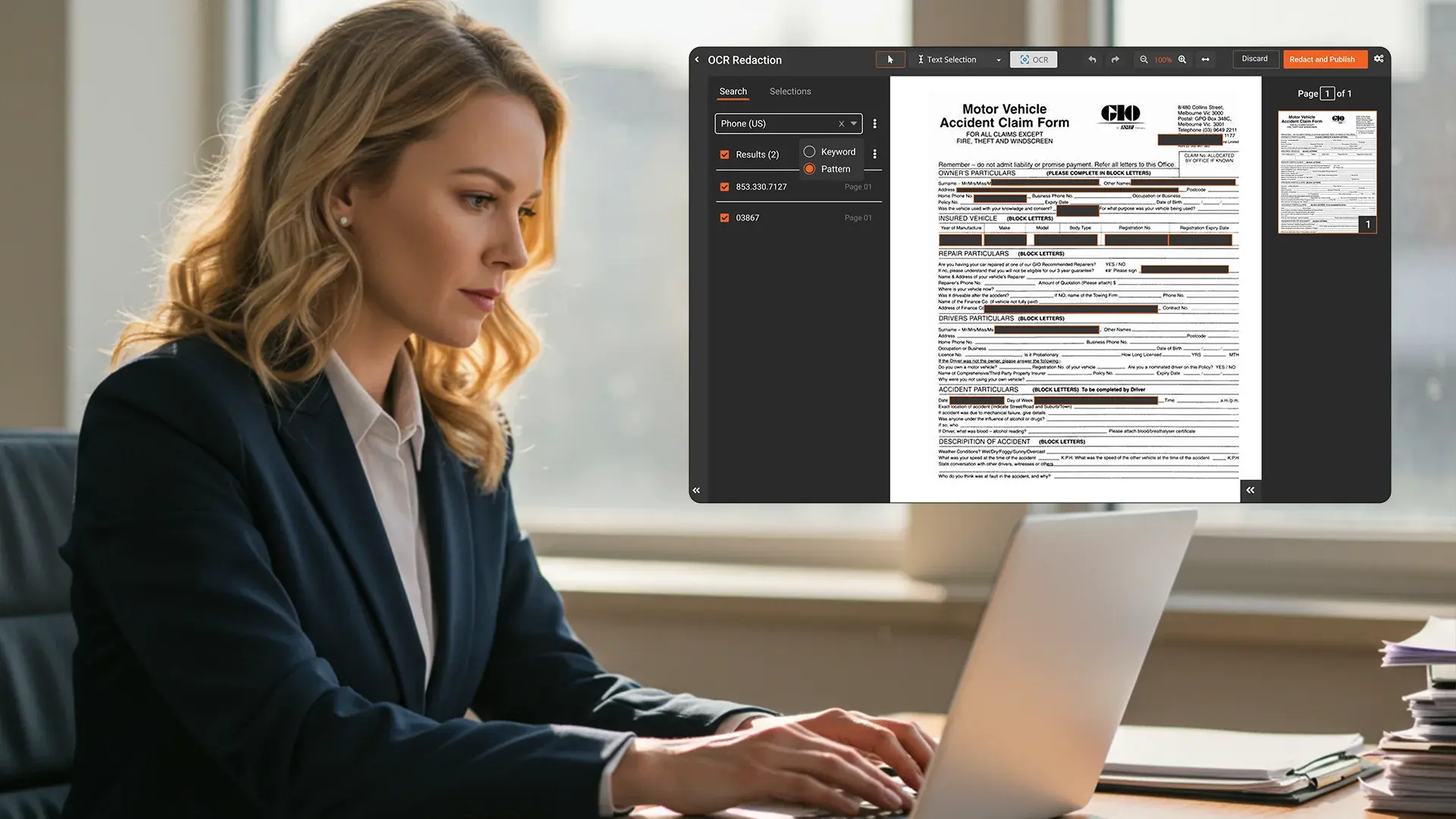
Document redaction looks simple on the surface, but small mistakes can carry serious consequences. For organizations handling sensitive information, one missed detail is often all it takes to trigger a data exposure or compliance failure. To address this issue, automated AI-powered redaction tools like VIDIZMO Redactor are available to protect your organization’s reputation.
Key Takeaways:
Before you dive in, here are the key takeaways for document redaction best practices
-
Know exactly what to protect. Clearly define sensitive data according to laws and your organization’s needs.
-
Redact early. Do it at the beginning of the process, never as a last-minute fix.
-
Stop doing manual redaction in high-volume or high-risk situations. It is slow, tiring, and very error-prone.
-
Use automated and AI redaction tools. They are much faster, more consistent, and far more accurate at scale.
-
Always double-check. Never release without proper verification to ensure no hidden text or missed items remain.
-
Delete all content, including visible text, metadata, hidden layers, comments, and tracked changes.
-
Keep a full audit trail. Record who did what, when, and why. This is very important for compliance and legal defense.
-
Control access strictly. Only authorized people should see unredacted documents or perform redaction.
-
Use the same rules everywhere. Apply one standard policy and the same approved tools across all departments.
- Keep updating your process. Regularly review and adjust rules as laws, risks, and tools change.
Most data exposure incidents don’t occur because organizations fail to prioritize security. They happen because document redaction breaks down in practice, due to a name being missed, metadata being left behind, or ineffective manual processes under pressure.
For government agencies, legal teams, financial institutions, healthcare providers, educational institutions, and public service organizations, document redaction sits at the intersection of compliance, privacy, and operational risk. When it’s done right, it protects people and institutions. When it’s done poorly, the consequences are immediate and often public.
This guide walks through document redaction best practices based on real regulatory requirements and operational realities—not generic advice.
What Is Document Redaction?
Document redaction is the process of permanently removing sensitive or confidential information from a document before it is shared, published, or disclosed.
Unlike masking or hiding text visually, proper redaction ensures:
- The underlying data cannot be recovered
- Metadata is sanitized
- Compliance requirements are met
Merely obscuring text visually is not sufficient. Proper redaction eliminates the data entirely.
What Information Should Be Redacted from Documents?
While requirements vary by industry, commonly redacted data includes:
- Personally Identifiable Information (PII)
- Financial details (account numbers, tax IDs)
- Protected Health Information (PHI)
- Legal privilege or case-sensitive data
- Student records
- Classified or restricted government data
The key principle: If disclosure creates legal, financial, or reputational risk, it must be redacted.
Top 10 Document Redaction Best Practices
1. Identify Sensitive Data Before Redaction Begins
Redaction errors often begin before redaction even starts. Organizations should clearly define what constitutes sensitive information based on regulatory, legal, and operational requirements.
Effective redaction demands a deep awareness of what must be protected and why. This understanding is essential to making consistent redaction decisions and preventing critical data points from being overlooked.
2. Redact Documents Early in the Workflow
Document Redaction should occur before documents are shared or published, not as a last-minute step.
Late-stage redaction increases the risk of:
- Overlooking sensitive fields
- Version control errors
- Accidental disclosures
3. Avoid Manual Redaction for High-Risk or High-Volume Use Cases
While manual redaction can be effective for a limited number of documents, it quickly becomes impractical as the volume increases and proves unsustainable over time.
Manual redaction is:
- Time-intensive
- Difficult to scale
- Highly prone to human error
For regulated industries, manual redaction remains one of the most common causes of data exposure incidents.
4. Use Automated or AI-Based Document Redaction
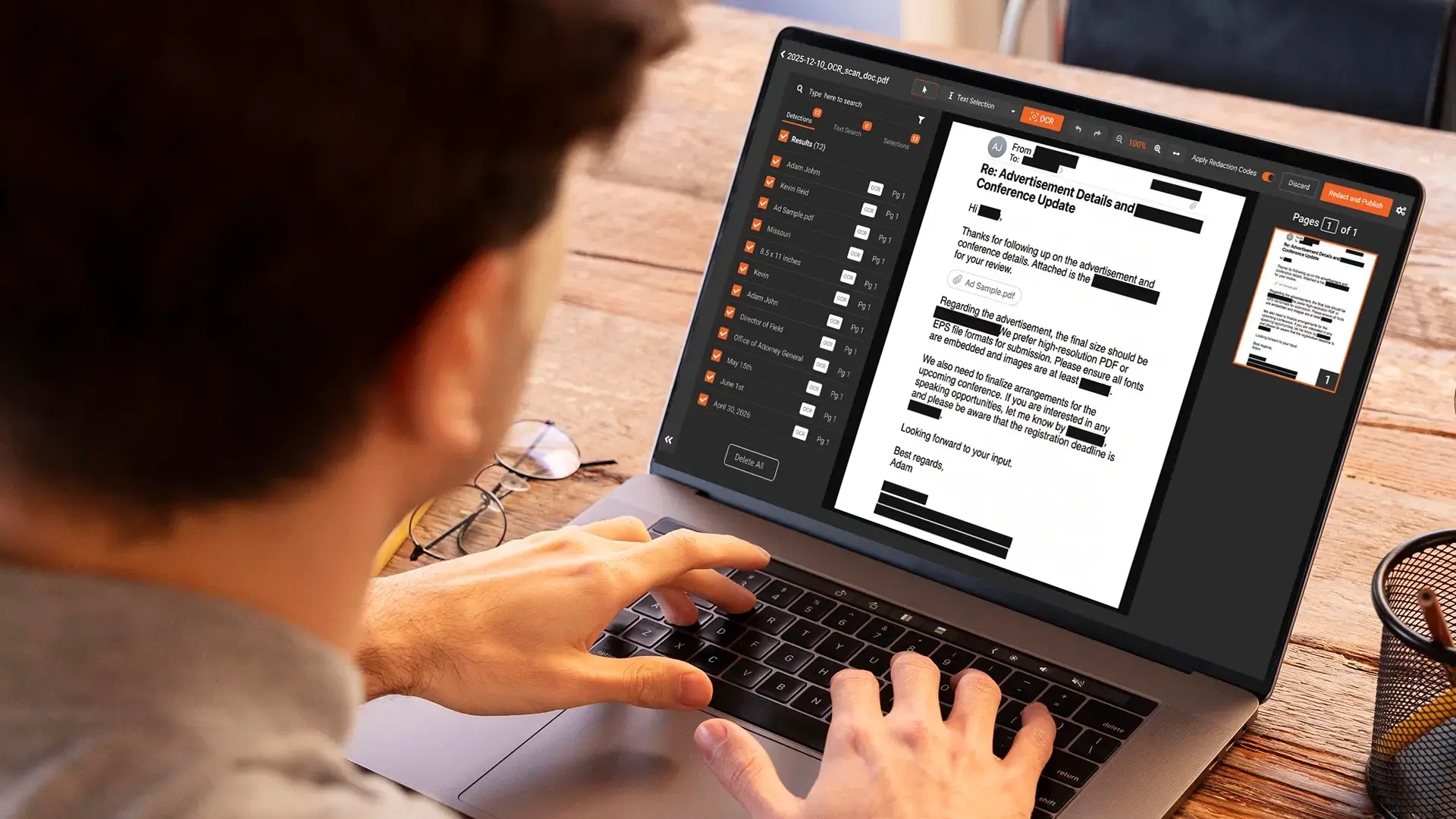
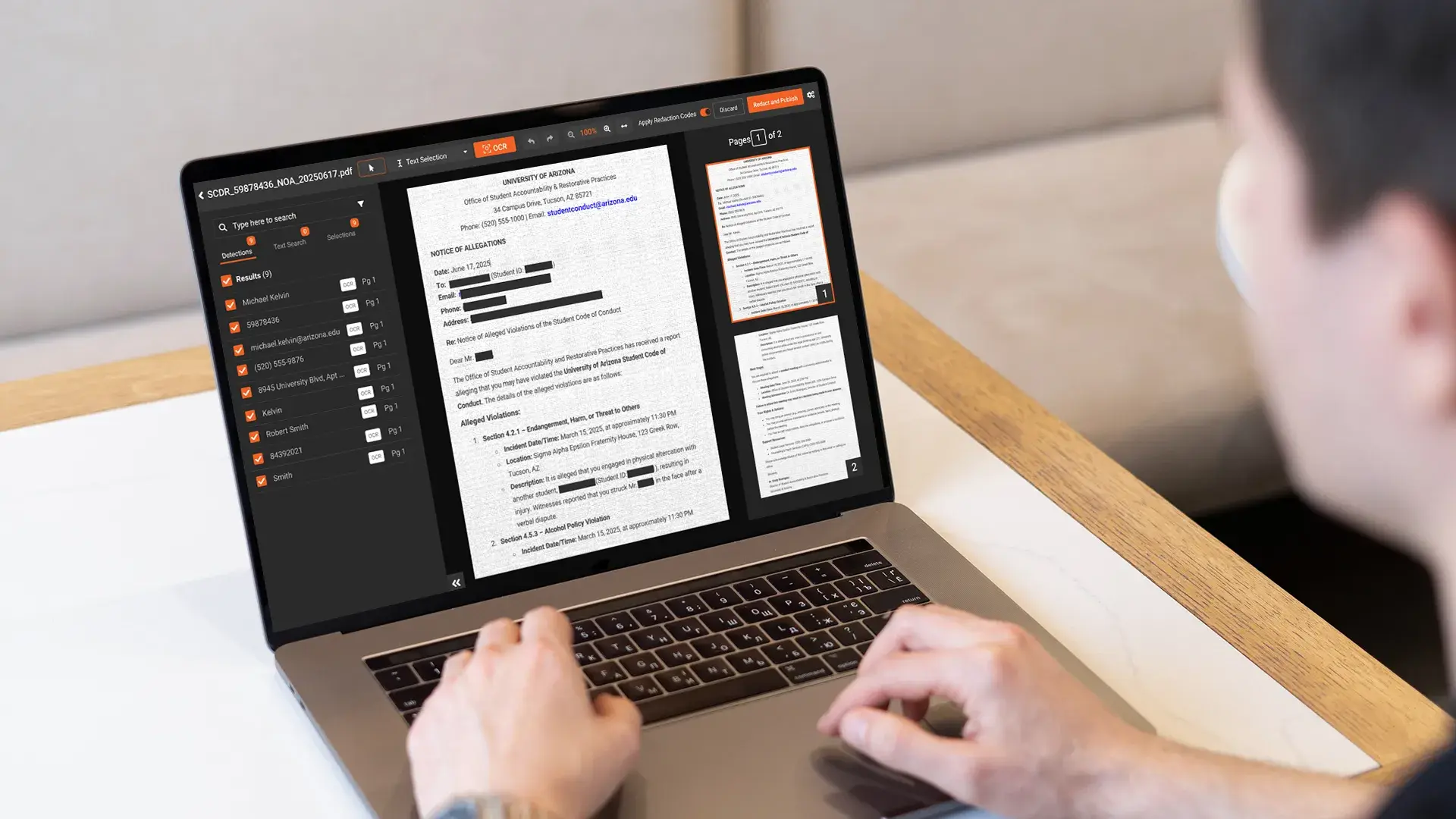
Automated redaction tools can consistently identify and remove sensitive information more effectively than manual methods, especially across large document sets. These tools utilize AI to recognize and eliminate:
- Names and personal identifiers
- Financial information and medical data
- Legal and compliance markers
Automation or the use of AI-based document redaction tools improves accuracy, consistency, and efficiency, especially when processing large volumes of documents. VIDIZMO AI Redactor, all-in-one-platform is the best for the work of document redaction.
5. Verify Redactions Before Document Release
Automation does not eliminate the need for review. Verification is a safeguard, not a formality. Verification ensures that:
Best practices include:
- Reviewing redacted outputs
- Ensuring no underlying text remains
- Confirming document integrity post-redaction
6. Remove Metadata and Hidden Content
Many redaction failures happen when only visible text is removed, which is a critical oversight. One of the most significant risks is leaving behind:
- Metadata
- OCR layers
- Comments or tracked changes
Effective redaction removes everything that could expose sensitive information, not just what appears on the page.
7. Maintain a Complete Audit Trail
For government, legal, and financial organizations, redaction must be provable and auditable. Audit logs that record actions, users, and timestamps are essential for compliance reviews, court proceedings, and internal accountability.
An effective redaction process logs:
- Who performed the redaction
- What data was removed
- When and why it occurred
Auditability is critical for compliance reviews and legal challenges.
8. Control Who Can Access and Redact Documents
Not everyone should be able to view unredacted documents or perform redaction.
Role-based access ensures:
- Sensitive data is limited to authorized users
- Accountability is maintained
- Insider risk is reduced
9. Standardize Redaction Policies Across Departments
When different departments follow different redaction methods, compliance gaps appear.
Organizations should enforce:
- Centralized redaction policies
- Approved tools and workflows
- Consistent enforcement across teams
10. Review and Update Redaction Rules Regularly
Regulatory requirements evolve, and so does sensitive data.
Periodic reviews ensure:
- New data types are covered
- Compliance standards are met
- Redaction accuracy remains high
Manual vs Automated Document Redaction

For most regulated organizations, automation is no longer optional; it’s a risk-reduction measure.
How Modern AI Redaction Tools Like VIDIZMO AI Redactor Improve Accuracy
Advanced AI-powered redaction tools with the facility to redact all content on one platform, like VIDIZMO Redactor, are designed for organizations that operate under strict regulatory and compliance obligations.
VIDIZMO Redactor helps organizations:
- Automatically detect sensitive information using AI. AI handles most work.
- Redacts thousands of files at once (e.g., FOIA batches, call recordings, evidence sets).
- Detects and removes spoken sensitive info while generating transcripts.
- Maintain full audit logs for compliance
- Apply consistent redaction rules at scale
- Reduce manual effort without sacrificing control
- It is browser-based and easy-to-use interface.
It is particularly suited for government agencies, legal teams, financial institutions, healthcare providers, and educational organizations managing high volumes of sensitive documents.


Industry-Specific Document Redaction Considerations
Government Public Sector
- FOIA compliance
- Classified and restricted information
- Transparency without compromising security
Legal Sector
- Attorney-client privilege
- Court filings and discovery
- Case confidentiality
Financial Institutions
- PCI-DSS compliance
- Customer financial data
- Regulatory audits and reporting
Healthcare Organizations
- HIPAA and patient privacy
- Medical records sharing
- Data minimization requirements
Educational Institutions
- FERPA compliance
- Student and faculty records
- Administrative documentation
Each industry requires context-aware redaction, not one-size-fits-all approaches.
Common Document Redaction Mistakes to Avoid
- Using visual black boxes without removing underlying data
- Ignoring metadata and OCR layers
- Relying entirely on manual redaction
- Applying inconsistent redaction standards
- Skipping final verification
These mistakes are frequently responsible for preventable data breaches.
Conclusion
Document redaction is a critical control for protecting sensitive information and meeting regulatory obligations. In regulated industries, manual and inconsistent approaches create unnecessary risk and rarely hold up under scrutiny.
Organizations that combine clear policies, verification, and auditability with modern AI redaction tools like VIDIZMO Redactor are far better positioned to prevent data exposure and maintain compliance. When handled correctly, document redaction becomes a reliable safeguard rather than a last-minute risk.
FAQ
Frequently Asked Questions
1. Can redacted information be recovered?
If redaction is done incorrectly, yes. Proper redaction permanently removes the data.
2. Is document redaction legally required?
In many industries, yes—especially under GDPR, HIPAA, FOIA, FERPA, and PCI-DSS.
3. Is automated document redaction reliable?
Yes, when paired with verification and audit controls.
4. What file types can be redacted?
Modern tools support PDFs, Word documents, scanned files, audio files, video files and other common formats.
TopicsDocument Redaction
About the author
Rida Shakil is a Content Specialist at VIDIZMO focused on AI-powered redaction, data privacy, and secure digital transformation. Her work helps compliance teams, legal professionals, and government organizations navigate the complexities of protecting sensitive information across media and documents.
You may also like

What Privacy Laws Require You to Redact From AI Training Data
The data you train an AI on is regulated the same way as any other copy of that data. If it holds personal information, ...
How to Redact Your Data Before Training or Customizing AI
Using your own data to train or customize an AI is different from feeding a document into a chatbot. When you train, ...
EOB and Claim Form Redaction: A Practical Guide for Billing Teams
Generic PHI redaction guidance does not account for the way billing documents are structured. EOBs often bundle ...