
by Hassaan Mazhar, Last updated: April 1, 2026

As digital evidence volumes continue to rise, many law enforcement agencies reach the same conclusion: manual redaction alone is no longer sustainable. Video from body-worn cameras, surveillance footage, interview recordings, and digital files must all be reviewed carefully before release, often under tight public records and court deadlines.
Redaction software can help, but not all tools are built for law enforcement realities. Choosing the wrong solution can introduce new risks, inefficiencies, and compliance challenges. Knowing what to look for is essential.
Start With Law Enforcement Workflows, Not Feature Lists
Before evaluating software, agencies should first consider how redaction actually happens in their day-to-day operations.
Most law enforcement redaction involves:
- Body-worn camera footage
- In-car and fixed surveillance video
- Interview and interrogation audio
- Evidence released through public records requests
- Files prepared for prosecutors and courts
Redaction software should support these workflows end-to-end, not require agencies to change how evidence is collected, reviewed, or disclosed.
Human Oversight Is Non-Negotiable
Automation can improve efficiency, but law enforcement agencies cannot rely on AI alone.
Any redaction software considered for policing should support a human-in-the-loop model, where:
- AI assists by identifying sensitive elements
- Reviewers validate and adjust redactions
- Final decisions always remain with authorized personnel
This approach preserves accountability and ensures redaction decisions can be explained, defended, and trusted if reviewed later.
Tools that promise “fully automatic redaction” without meaningful review controls should be evaluated carefully.
Accuracy Matters: Consistency Matters Even More
Redaction errors are not just technical mistakes; they are operational and legal risks.
When comparing redaction software, agencies should evaluate:
- Whether sensitive elements are detected consistently across files
- How the system performs on long or complex footage
- How easy it is to correct or refine detections
Consistency is critical because evidence is often reviewed by multiple stakeholders. Redaction outcomes should not vary based on who processed the file or when it was processed.
Explore how Automated Redaction can streamline your workflow.
Auditability and Defensibility Should Be Built In
Redaction decisions are part of the evidentiary record. Agencies must be able to demonstrate:
- What was redacted
- When the redaction occurred
- Who reviewed or approved it
- How decisions were made
Redaction software should provide:
- Clear audit logs
- Redaction reports
- Traceable actions tied to user roles
Without these safeguards, agencies may struggle to defend their process during audits, court proceedings, or public scrutiny.
How Some Law Enforcement Agencies Are Addressing Redaction Challenges
To manage growing evidence volumes without increasing manual workload, many agencies are beginning to adopt AI-assisted redaction platforms designed specifically for regulated environments.
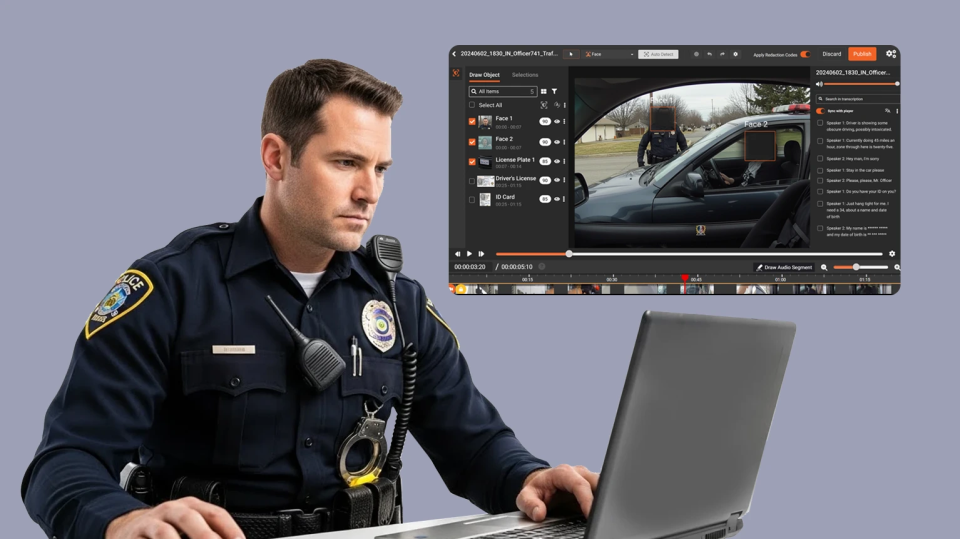
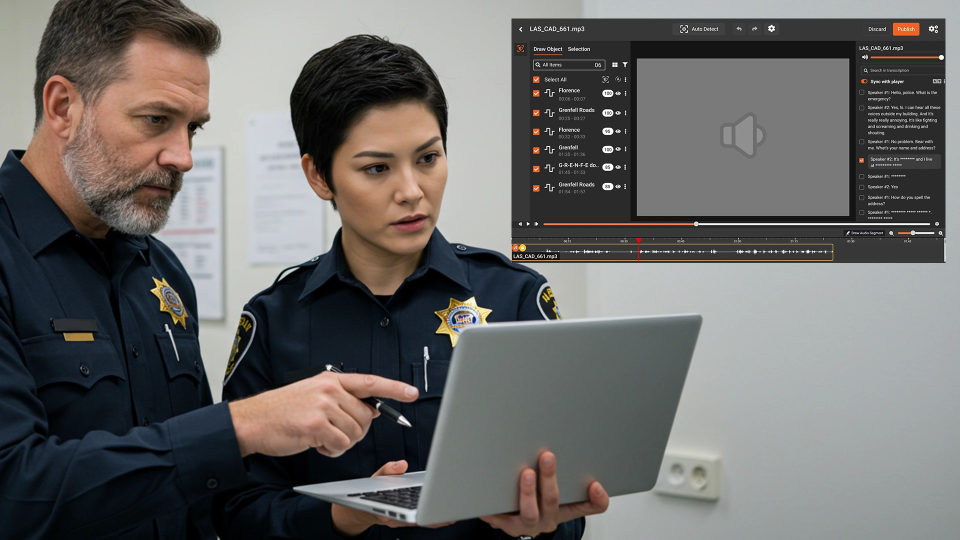
VIDIZMO REDACTOR is an example of a redaction platform built to support law enforcement workflows, combining automated detection of sensitive content in video, audio, and documents with full human review and auditability. Agencies use it to reduce repetitive manual effort while maintaining control, consistency, and oversight throughout the redaction process.
Rather than replacing judgment, VIDIZMO REDACTOR is designed to assist reviewers, helping agencies scale redaction operations as digital evidence continues to grow.
Deployment and Data Control Are Just as Important as Features
Law enforcement agencies operate under strict privacy, security, and compliance requirements. For many, where and how data is processed matter as much as functionality.
When evaluating redaction software, agencies should ask:
- Is on-premises deployment available?
- How is access controlled and logged?
- Where is evidence stored and processed?
- Is agency data isolated from AI model training?
Agencies should never have to trade control for convenience.
Scalability Matters More Than Solving Today’s Backlog
Redaction demands rarely decrease over time. Body-worn camera programs expand, surveillance coverage increases, and public records requests grow.
Effective redaction software should:
- Handle increasing evidence volumes reliably
- Support batch or automated workflows where appropriate
- Reduce manual effort without sacrificing oversight
The goal is not just to clear today’s backlog, it’s to prevent the next one.
Learn more about the Hidden Cost of Manual Redaction faced by public safety companies.
Beware of One-Size-Fits-All Redaction Services
Some agencies rely on external redaction services to manage workload. While this can provide short-term relief, it often introduces:
- Longer turnaround times
- Chain-of-custody concerns
- Ongoing operational costs
- Reduced visibility into the redaction process
Redaction software that enables agencies to keep workflows in-house while improving efficiency often offers greater long-term control.
Ask the Right Questions Before Making a Decision
When evaluating redaction software, law enforcement agencies should ask:
- Does this tool support human review and accountability?
- Can every redaction decision be audited and defended?
- Does it handle real-world evidence types and complexity?
- Will it scale as evidence volumes grow?
Clear answers to these questions matter more than long feature checklists.
Take the Next Step
Redaction software is not just a technical purchase — it is an operational decision that affects privacy, transparency, and public trust.
If your agency is evaluating how to modernize redaction workflows, the next step is often seeing how AI-assisted redaction performs with real evidence.

About the Author
Jump to
.webp)
The Hidden Cost of Manual Redaction in Law Enforcement
How to Choose the Right Body-Worn Camera Redaction Solution

No Comments Yet
Let us know what you think