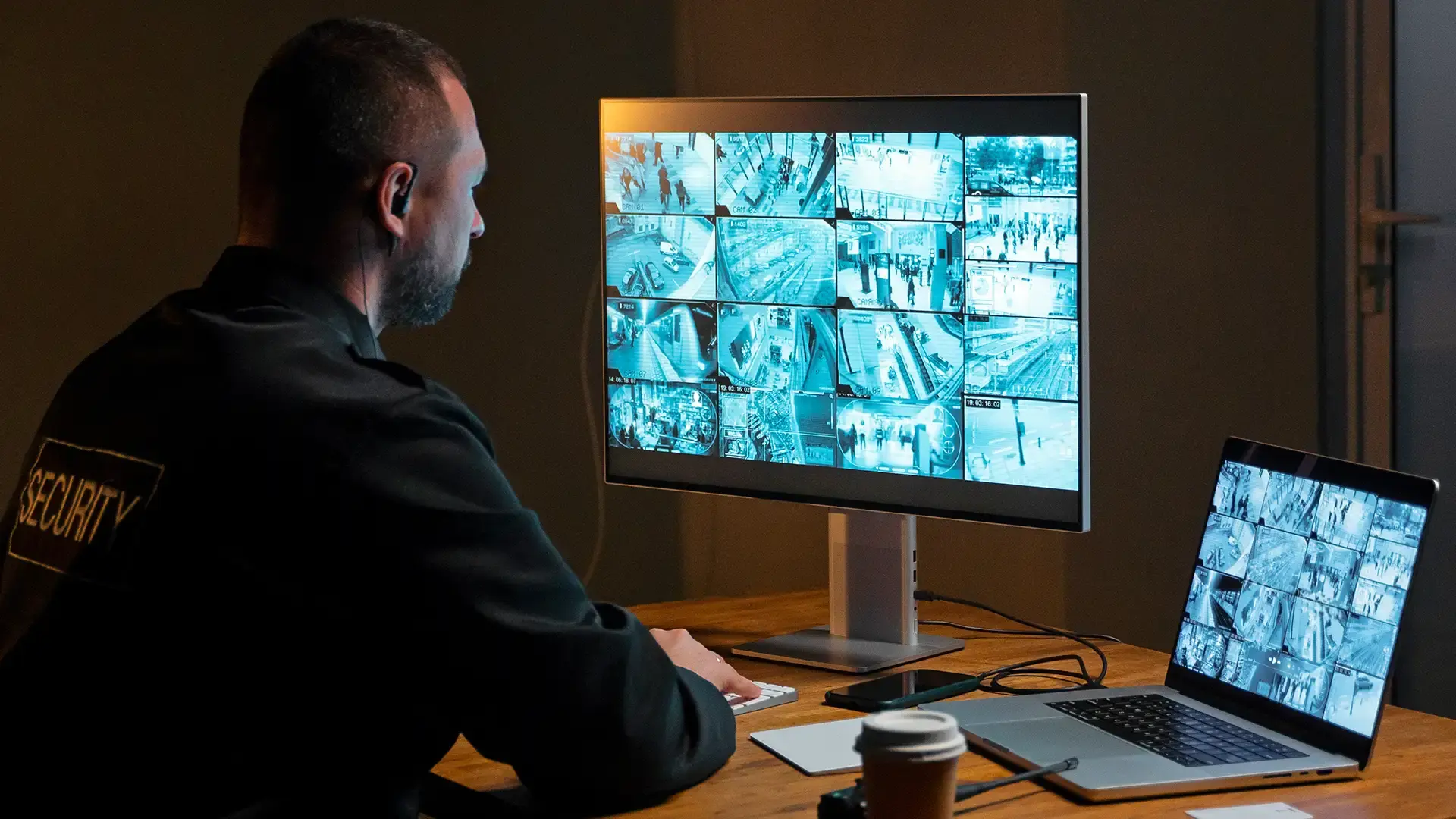
Government buildings run continuous multi-camera surveillance. City halls, public schools, DMV offices, and courthouses capture hundreds of hours of footage every day, footage that includes employees, visitors, contractors, and anyone passing through a lobby or hallway.
Most of the time, that footage sits in storage and never needs to be shared. But when an audit request lands, a FOIA submission comes in, or an incident goes to legal review, that footage has to leave the building, and federal, state, and local laws are explicit about what must be removed before it does.
CCTV redaction for government buildings is not optional. It is a legal requirement, and institutions that treat it as an afterthought are accumulating compliance exposure every time they delay or skip the process.
Why Government Buildings Face Unique Redaction Challenges
Private-sector surveillance footage is largely internal. Government surveillance footage is different. It is subject to public records laws, frequently requested under FOIA or state open-records statutes, and often involved in administrative or legal proceedings that require documented handling.
The challenge is not just volume, though volume is significant. A mid-size city office with ten cameras running eight hours a day generates roughly 600 hours of footage per week. The challenge is that each release requires individual review and targeted redaction of specific privacy-sensitive elements, and the redaction has to be defensible. If a record is released with unredacted faces of minors, bystanders, or undercover personnel, the agency is liable. If a record is released with a redaction that cannot be traced back to a specific legal exemption, the redaction can be challenged.
Generic video tools, consumer editors and enterprise video platforms alike, are not built for this workflow. They lack the AI detection capabilities, the exemption code management, the audit trail logging, and the deployment flexibility that government environments require. Purpose-built video redaction software addresses each of these gaps directly.
What Triggers a Redaction Requirement
Three categories of events most commonly require government facilities to redact and release CCTV footage.
Public Records and FOIA Requests. The Freedom of Information Act (federal) and its state equivalents, CPRA in California, APRA in New Jersey, Chapter 119 in Florida, and dozens of others, give citizens the right to request government records. Video footage qualifies. When a member of the public, a journalist, or an attorney submits a request for surveillance footage, the agency typically has a statutory response window (often 10 business days at the federal level, varying by state). The footage must be reviewed, PII redacted, and exemptions applied and documented before release. For a closer look at how agencies handle this end to end, see our guide to FOIA redaction software.
Internal Audits and Inspector General Reviews. Government buildings are subject to internal audits, IG investigations, and third-party compliance reviews. When footage is subpoenaed or requested as part of an audit, the same redaction requirements apply. Individuals not relevant to the investigation must have their identities protected, and the redaction process must be logged.
Incident Reporting and Legal Proceedings. When an incident occurs on government property, a slip-and-fall, a security breach, a personnel dispute, the footage becomes potential evidence. Sharing it with legal counsel, insurance carriers, or courts requires removing PII for all uninvolved parties while preserving the evidentiary integrity of the relevant content.
What to Redact: Faces, Badges, Restricted Areas, License Plates
Government CCTV footage typically requires redaction of several categories of sensitive content.
-
Faces. Bystanders, visitors, employees not party to the incident, undercover personnel, and minors must all be redacted. AI-powered detection can identify and track faces across frames, including partial views and faces at an angle.
-
Badges and ID cards. Employee badge numbers, visitor IDs, and credential information are PII. These appear clearly in most overhead CCTV footage and must be redacted when present.
-
License plates. Parking areas, building entrances, and loading docks capture vehicles. License plates are directly linkable to individuals and must be redacted in most public records releases.
-
Restricted area signage and markings. Footage from secure areas may inadvertently capture access code panels, security system interfaces, or room labels that should not be disclosed.
-
Screens and displays. Computer monitors, digital displays, and kiosk screens visible in footage may display PII belonging to third parties.
-
Sensitive documents. Paper documents visible on desks or counters in lobby footage may contain names, case numbers, or other protected information.
An AI-powered redaction platform handles all of these categories automatically, applying detection models across every frame and flagging detections for human review before finalization. The same capability extends to still frames and evidence photos through image redaction software when CCTV stills are included in a records release.
Compliance Considerations: FOIA, GDPR, and Local Public Records Laws
Compliance requirements for government CCTV redaction operate at three levels.
Federal (US)
The Freedom of Information Act creates the framework for federal agency footage release. FOIA Exemptions 1 through 9 define the categories of information that may be withheld, including national security information (Exemption 1), internal personnel rules (Exemption 2), and personal privacy (Exemption 6). Every redaction applied to a FOIA-responsive record should be mapped to the applicable exemption and documented in the case file. Purpose-built redaction software supports this through exemption code annotations, where each redaction carries a code indicating the legal basis.
State and Local
Every US state has its own public records statute, and many municipalities have additional requirements. These laws vary in response timelines, exemption categories, and penalty structures. A government building's compliance obligation is the intersection of all applicable layers, federal, state, and local.
International
Government facilities in EU member states, the UK, Canada, and Australia operate under GDPR, UK GDPR, PIPEDA, and Privacy Act frameworks respectively. These impose affirmative obligations to protect personal data, including footage of identifiable individuals. GDPR Article 5 requires that personal data be processed lawfully, fairly, and transparently. Releasing unredacted footage without a legal basis constitutes a breach.
Sector-Specific
Public schools and universities handling footage of students must also comply with FERPA. Institutions looking at student privacy obligations in a broader records context can refer to our coverage of education redaction software for FERPA compliance. Healthcare-adjacent government facilities may carry HIPAA obligations for footage captured near patient areas.
On-Premises vs. Cloud Deployment for Government Environments
Data residency is a significant factor in government CCTV redaction decisions. Footage captured in government buildings is often classified as government-controlled information, and many agencies are prohibited, either by policy or by statute, from transmitting it to external cloud environments without specific authorization.
This creates a practical fork in deployment options.
-
On-Premises Deployment keeps all processing within the agency's own infrastructure. No footage leaves the building's network perimeter. This is the default requirement for many federal agencies and state law enforcement bodies operating under CJIS, FIPS 140-3, and FedRAMP High mandates.
-
Government Cloud Deployment uses FedRAMP-authorized cloud environments that meet federal security standards. This option provides cloud scalability with the compliance posture required for sensitive government data.
-
SaaS / Commercial Cloud is appropriate for lower-sensitivity government environments where footage does not contain classified or CJIS-regulated content, and where the agency's data governance policy permits third-party cloud processing.
The right choice depends on the agency's data classification requirements, IT infrastructure, and the sensitivity of the footage being processed. Purpose-built redaction platforms support all three models from a single codebase, so agencies are not locked into a deployment approach that does not fit their environment.
How VIDIZMO Redactor Fits This Workflow
VIDIZMO Redactor is an AI-powered redaction platform that handles video, audio, images, and documents in a single workflow, covering every media type government CCTV operations produce. It automatically detects and tracks faces, license plates, persons, screens, and custom objects across frames, with configurable confidence thresholds from 25% to 90%. Proprietary H.264 CCTV container formats are detected and rewrapped to standard MP4 automatically, removing the need for manual pre-processing.
Every redaction carries an exemption code annotation, Exemption 6 for personal privacy, Exemption 7 for law enforcement, and others, providing documented legal defensibility for each decision. Every file action, upload, review, redaction, and export, is logged with user ID, IP address, and timestamp in a tamper-proof audit trail available for legal review. RBAC, SSO, MFA, and SCIM provisioning enforce access controls at the system level.
For volume, Redactor's batch processing handles multiple recordings simultaneously and has been tested at over two million recordings at scale. Agencies with sustained high-volume FOIA workloads can extend this further with fully automated pipelines. Deployment options cover on-premises, FedRAMP-authorized government cloud, and SaaS, matching each agency's data residency and compliance requirements.
The Cost of Doing This Manually
Manual CCTV redaction using video editors or frame-by-frame review can take 4 to 8 analyst hours for every hour of footage reviewed. For a government facility receiving regular FOIA requests covering multi-hour recordings from multiple cameras, that translates into hundreds of analyst hours per year on a single type of compliance activity.
That is staff time that cannot be spent on building security operations, visitor management, or incident response. And it is time that compounds as request volumes grow, which they consistently do as public awareness of FOIA rights increases and advocacy organizations submit bulk requests.
AI-powered redaction does not eliminate human review. It automates the detection layer, the most time-intensive part, so that analysts spend their time on quality review and exemption code application rather than frame-by-frame identification of faces and license plates. For organizations evaluating whether to handle this in-house or through a managed service, our redaction services buyer's guide covers the full range of options.
Getting Started
Government facilities evaluating CCTV redaction software should look for platforms that support proprietary CCTV formats without manual pre-processing, provide FOIA exemption code annotation natively, offer on-premises and government cloud deployment options, maintain tamper-proof chain of custody audit logs, and include configurable confidence thresholds and human review workflows.
VIDIZMO Redactor addresses all of these requirements. If your facility is managing CCTV redaction manually, or is evaluating whether your current tooling meets the compliance bar for public records releases, a structured review of your redaction workflow is a practical first step.
Ready to see how it works for your facility? Request a demo of VIDIZMO Redactor or schedule a FOIA compliance consultation with a redaction specialist.

FAQ
Frequently Asked Questions
What is CCTV redaction and why is it required for government buildings?
CCTV redaction is the process of obscuring faces, license plates, and other identifying information from surveillance footage before it is shared or released. Government buildings are legally required to redact footage when responding to FOIA requests, internal audits, or legal proceedings to protect the privacy of bystanders, employees, and other uninvolved individuals.
What information must be redacted from government surveillance footage?
Government CCTV footage typically requires redaction of faces, employee badges, license plates, restricted area signage, visible screens and displays, and any documents captured on camera. The specific requirements depend on the applicable federal, state, or local public records law governing the release.
Which laws require government agencies to redact surveillance video?
At the federal level, FOIA and its nine exemptions govern what must be withheld before release. State equivalents such as CPRA, APRA, and Chapter 119 apply at the local level. International frameworks including GDPR apply to government facilities in the EU and UK. Public schools must also comply with FERPA for footage involving students.
Can government agencies use cloud software to redact CCTV footage?
It depends on the agency's data classification requirements. Many federal and law enforcement agencies require on-premises processing under CJIS and FedRAMP High mandates. Others may use FedRAMP-authorized government cloud environments. Lower-sensitivity agencies may use SaaS deployment where their data governance policy permits it.
How long does it take to redact government surveillance footage?
Manual redaction typically takes 4 to 8 analyst hours per hour of footage. AI-powered redaction software automates the detection layer and reduces processing time by up to 85 to 90%, allowing analysts to focus on review and exemption code application rather than frame-by-frame identification.
What is a FOIA exemption code in video redaction?
A FOIA exemption code is an annotation attached to each redaction indicating the legal basis for withholding that information. For example, Exemption 6 covers personal privacy and Exemption 7 covers law enforcement records. Documenting these codes in the redaction file creates a defensible record if the redaction is challenged.
TopicsRedactionVideo Redaction

About the author
Ali Rind is a Product Marketing Executive at VIDIZMO, where he focuses on digital evidence management, AI redaction, and enterprise video technology. He closely follows how law enforcement agencies, public safety organizations, and government bodies manage and act on video evidence, translating those insights into clear, practical content. Ali writes across Digital Evidence Management System, Redactor, and Intelligence Hub products, covering everything from compliance challenges to real-world deployment across federal, state, and commercial markets.
You may also like
Video Redaction Best Practices: Motion, Frame Rates, Tracking and Failing Safe
I led our video redaction project for a county public safety agency where two people handled every disclosure, and ...
Redacting Dash Cam, Body Cam and Drone Footage From a Moving Camera
A fleet claims manager preparing crash footage for an insurer and defense counsel is doing a different job from a ...
Why Frame-Rate Headers Lie: Redacting Variable Frame Rate Video
A video file keeps time frame by frame, and the frames-per-second figure a player displays is a summary of that timing, ...