
TL;DR. NY FOIL and federal FOIA share a common presumption of openness but differ on timelines, exemptions, appeal processes, and what has changed post-2020. Government legal teams that treat FOIL like FOIA make predictable mistakes. This guide covers the structural differences, the §50-a repeal impact, and where AI-powered redaction helps standardize compliance.
New York government legal teams often inherit FOIA-trained staff or reference FOIA case law when interpreting FOIL. The two laws look similar from a distance and differ materially in the details. Treating FOIL like FOIA leads to missed deadlines, wrongly applied exemptions, and defensibility gaps when a FOIL appeal is filed.
This is a practical compliance guide, not a legal opinion piece. It covers what is structurally different between FOIL and FOIA, what changed in New York after the 2020 repeal of Civil Rights Law §50-a, which records most commonly land at county government, and how automated redaction helps teams operate under both frameworks.
Key Structural Differences Between NY FOIL and Federal FOIA
Who each applies to
FOIA (5 U.S.C. §552) applies to federal executive branch agencies. It does not reach state or local government, Congress, or federal courts. NY FOIL (Public Officers Law Article 6, §§84-90) applies to New York state and local government agencies including counties, municipalities, school districts, and public authorities. County law departments almost never operate under FOIA; they operate under FOIL.
Response timelines
FOIA requires an agency to issue a determination within 20 working days of receipt, with a 10-day extension available in unusual circumstances. FOIL requires an agency to acknowledge a request within 5 business days and to respond within 20 business days or provide a reasonable time estimate. The operating cadence is different. FOIL's 5-day acknowledgment clock starts immediately on receipt and catches agencies without a tracking system.
Exemption categories
FOIA has nine exemptions under 5 U.S.C. §552(b). FOIL has exemption categories under Public Officers Law §87(2) covering specific statutory exemptions, unwarranted invasion of personal privacy, interference with law enforcement investigations, endangerment of life or safety, inter- and intra-agency materials, certain examination materials, information subject to state or federal confidentiality, computer access codes and security data, and trade secrets. The categories are similar in theme but phrased differently, interpreted under different case law, and reach different specific content in practice.
Appeal processes
FOIA appeals run inside the federal agency, then to federal district court. FOIL appeals run to the agency head or designee as a records access appeals officer within 10 business days (under §89(4)(a)), then to state court through an Article 78 proceeding. The initial appeal window is shorter on FOIL, and the procedural specifics (what must be in the appeal, how the agency must respond) are set by state regulation.
Attorney's fees
Both laws provide for attorney's fees in limited circumstances. Under FOIL §89(4)(c), fees are available when the requester prevails in substantial part and the agency had no reasonable basis for denial, or when the agency failed to respond within statutory time limits. The FOIA provision is structured differently under 5 U.S.C. §552(a)(4)(E). Both are triggered by agency failures, not by routine denials that happen to lose on appeal.
What Changed After the 2020 Repeal of Civil Rights Law §50-a
For decades, Civil Rights Law §50-a made personnel records used to evaluate performance toward continued employment or promotion for police officers, firefighters, and correction officers confidential. A §50-a exemption was routinely invoked to withhold disciplinary records, complaints, and internal affairs files from FOIL responses.
On June 12, 2020, the New York legislature repealed §50-a in full (Chapter 96 of the Laws of 2020). The repeal was immediate. Records previously shielded by §50-a became subject to the standard FOIL analysis.
Post-repeal, FOIL responses for law enforcement disciplinary records apply the personal privacy exemption under §87(2)(b) and the statutory exemptions (if any) under §87(2)(a) rather than a blanket §50-a bar. The analysis is record-by-record: a sustained disciplinary finding with an officer's name is generally releasable subject to redaction of unrelated personal information; an unsubstantiated complaint may require a different balance; records reaching ongoing investigations may still be with holdable under the law enforcement exemption under §87(2)(e).
The operational consequence for government legal teams was significant. A body of records that had been routinely denied in full suddenly required full substantive review and redaction. The records did not disappear; they shifted from a "withhold" workflow to a "redact and release" workflow. Teams that had built processes around a §50-a denial letter had to build processes for redacting disciplinary records, which are typically mixed-format (scanned paper, newer PDFs, emails, interview transcripts).
Records County Governments Most Commonly Receive FOIL Requests For
Five record categories dominate FOIL request volume at county government.
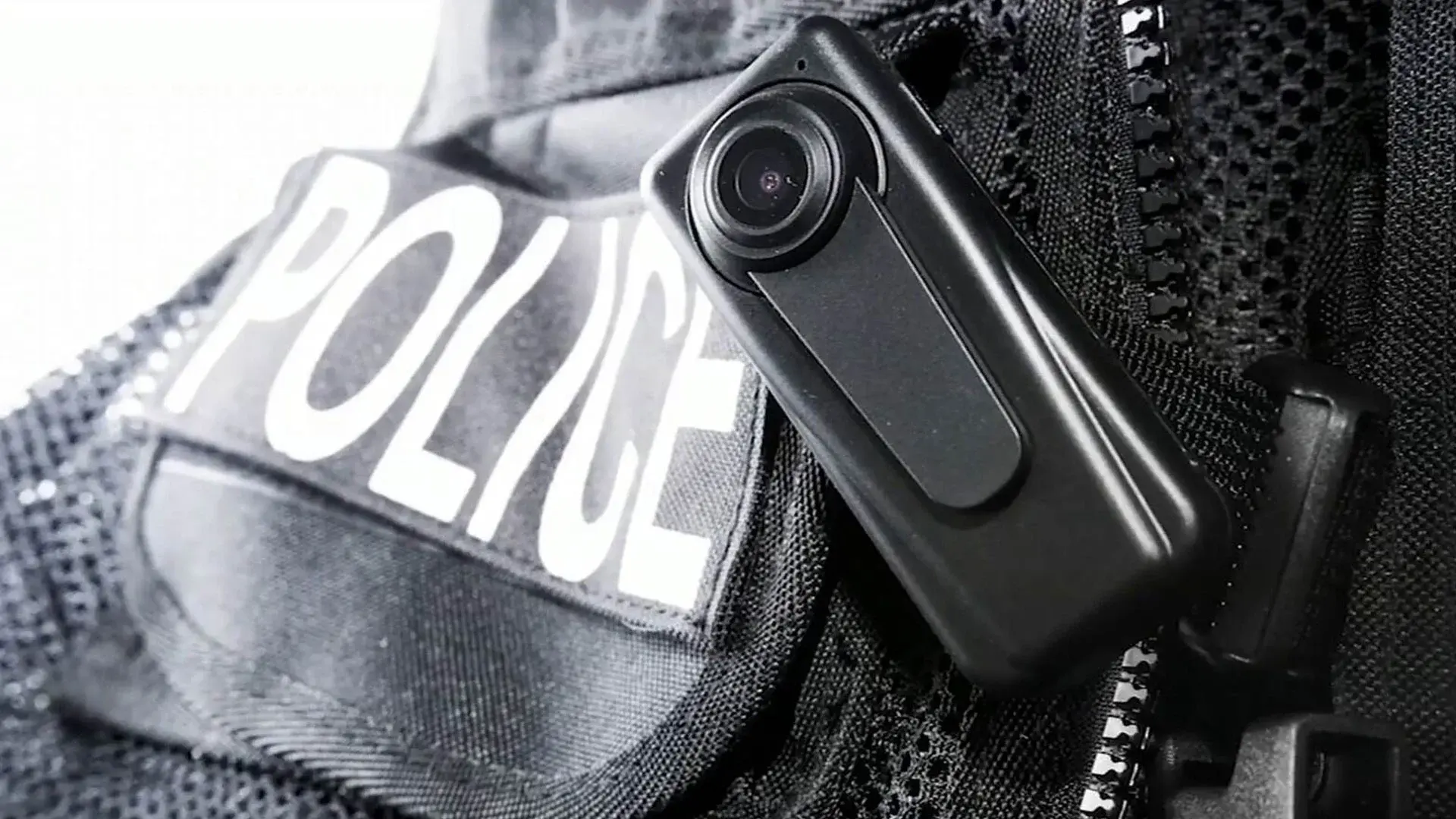
Body-worn camera footage
Post-§50-a, BWC footage receives more requests tied to disciplinary and conduct concerns in addition to the baseline public interest in specific incidents. The redaction workload is visual (faces, license plates, bystanders, juveniles) and audio (names, addresses, medical information spoken on recording).
Police reports and incident reports
Standard public records requests for specific incidents. Redaction covers victim identifying information (especially in sexual offense and family violence cases), juvenile information, confidential informant identifiers, and uninvolved bystander information.
Disciplinary and internal affairs files
The largest post-§50-a growth area. Scanned paper records, PDF exports from investigation systems, transcripts of interviews, and attached emails. Redaction covers unrelated personal information of the officer, third-party witnesses, and uninvolved complaint subjects.
Case records and investigation files
Requests tied to closed criminal investigations, civil actions against the county, and public integrity matters. Redaction covers active investigation carve-outs, confidential source material, and HIPAA-protected medical content in jail or hospital records.
Administrative and operational records
Budgets, contracts, correspondence, board meeting materials. Redaction is narrower but still covers vendor personal information, personnel file references, and any embedded Social Security or bank account numbers in historical records.
How Redaction Requirements Differ by Record Type Under NY FOIL
The specific redaction obligations shift by record type because the applicable exemption framework shifts.
For BWC and dashcam video, the primary exemptions are personal privacy for bystanders, juveniles, and victims; law enforcement for active investigation carve-outs; and statutory exemptions where applicable. Audio tracks carry the same analysis applied to spoken identifiers.
For written investigation files, personal privacy is the primary exemption, with statutory exemptions reaching sealed criminal history, juvenile delinquency records, and protective services material. The reviewer works through the file against a layered checklist: what is exempt under statute, what is exempt under the privacy balance, what is releasable.
For disciplinary records post-§50-a, the underlying conduct and outcome are presumptively releasable subject to personal privacy redaction of unrelated information. This is not the same as pre-repeal blanket withholding, and the reviewer workflow differs from an investigative file workflow because the privacy analysis is narrower.
Mixing these workflows under a single manual process is where inconsistency shows up. For the full document-level view of this problem, see how government agencies can safely redact sensitive documents at scale and document redaction for government.
Common Redaction Mistakes When Treating FOIL Like FOIA
Four patterns recur when FOIA-trained staff operate under FOIL without adjustment.
Missing the 5-day acknowledgment clock
FOIA's 20-working-day window becomes the operating cadence in the staff member's mind, and the FOIL 5-business-day acknowledgment requirement goes unmet. The requester files an appeal on the grounds of constructive denial for failure to acknowledge, which is a procedurally clean basis.
Applying FOIA exemption numbering to FOIL
FOIA's nine-exemption numbering (b)(1) through (b)(9) does not map cleanly to FOIL's §87(2) categories. A denial letter that cites "Exemption 6" for personal privacy is citing the wrong statute and is procedurally defective on its face. Correct denials cite §87(2)(b) and the specific privacy analysis.
Carrying over pre-§50-a denial language
Pre-repeal templates that cited §50-a continued to circulate in some agencies after the repeal. Using them produces denials with no legal basis. Disciplinary records now require current exemption analysis.
Over-withholding under the law enforcement exemption
§87(2)(e) covers records that would interfere with an active investigation. Applying it to closed matters, administrative disciplinary outcomes, or records that do not touch an active investigation produces denials that do not survive appeal.
How AI-Powered Redaction Helps Standardize Compliance
AI-powered redaction platforms address the operational failures that create legal exposure under both FOIL and FOIA.
Consistent entity detection
The platform detects names, Social Security numbers, addresses, dates of birth, medical identifiers, financial account numbers, and other PII across documents and media consistently. The reviewer applies policy; the platform handles detection.
Multi-format coverage
A single platform handles document (PDF, DOCX, scanned), audio, and video redaction. BWC footage, disciplinary investigation transcripts, scanned internal affairs files, and email threads move through one workflow rather than separate tools. See automated FOIA redaction software for public records for the operational detail.
Audit trails
Every redaction action is logged with user ID, timestamp, and action type, stored in tamper-proof storage. When an Article 78 proceeding asks how the agency handled a specific response, the audit artifact is the evidence.
Bulk processing
Multi-file responses are processed in batches rather than file by file. Post-§50-a workloads tend to be larger per response than pre-repeal workloads; bulk processing absorbs the increase.
For additional context on how agencies clear accumulated backlogs under these conditions, see FOIA redaction: how managed services clear agency backlogs.
Know the Law, Redact with Confidence
The structural differences between NY FOIL and federal FOIA are not academic. They show up in deadlines, in exemption analysis, in appeal procedure, and in what case law the team should reference. Post-§50-a, the FOIL workload at county government has grown and shifted shape. Teams that update their tooling and templates to match move through the volume without losing defensibility.
For the platform-level view, start with FOIA redaction software for video, audio, and documents. For the document-specific angle, see document redaction tool: how to protect PII and how FOIA redaction software helps government agencies.
FOIL volumes are rising and post-§50-a workloads are not shrinking. See how VIDIZMO Redactor helps government legal teams redact, audit, and release records with confidence. Request a Demo

FAQ
Frequently Asked Questions
What is the difference between NY FOIL and federal FOIA?
FOIA applies to federal executive branch agencies under 5 U.S.C. §552. NY FOIL applies to New York state and local government agencies under Public Officers Law §§84-90. Both presume openness and permit categorical exemptions, but response timelines, exemption numbering, appeal processes, and underlying case law are distinct. County law departments operate under FOIL, not FOIA.
How many days does New York give agencies to respond to a FOIL request?
New York agencies must acknowledge a FOIL request within 5 business days of receipt. The full response is required within 20 business days, or the agency must provide a reasonable estimate with a date certain. Failure to meet these timelines constitutes a constructive denial the requester can appeal. The Committee on Open Government publishes guidance on what constitutes a reasonable extension.
What records are exempt from disclosure under NY FOIL?
Public Officers Law §87(2) enumerates exemption categories including records exempt by statute, unwarranted invasion of personal privacy, records that would interfere with active law enforcement investigations, deliberative inter-agency materials, examination materials, computer security data, and trade secrets. Each exemption is interpreted narrowly and requires record-specific analysis rather than blanket application.
What did the repeal of Civil Rights Law §50-a change for redaction?
The 2020 repeal removed the blanket confidentiality previously applied to police, fire, and correction officer personnel records. Post-repeal, those records are subject to standard FOIL analysis: presumptively open, redacted for personal privacy or law enforcement exemption content. Agencies moved from withhold-in-full responses to redact-and-release workflows, materially increasing volume and complexity for this record category.
Do county governments fall under federal FOIA?
No. Federal FOIA applies only to federal executive branch agencies. County governments in New York fall under NY FOIL. In other states, local government falls under the equivalent state public records law. Requesters occasionally file FOIA requests with county agencies in error; the correct response is to redirect to FOIL with information on the proper request process.
What PII must be redacted from records released under NY FOIL?
Common categories include Social Security numbers, dates of birth, home addresses for protected classes, medical information, financial account numbers, names and identifying information of minors, victims of certain offenses, and confidential informants. The exact list depends on the record type and applicable statutory confidentiality frameworks including HIPAA, family court law, and state social services law.
Can automated redaction software handle both FOIL and FOIA compliance?
Yes. Automated redaction platforms operate on entity detection rather than statute-specific rules. The platform surfaces detected entities; the reviewer applies the applicable exemption framework during approval. Agencies operating under multiple frameworks can use a single platform with statute-parameterized rule sets per workflow, with audit artifacts usable under any applicable framework.
TopicsRedactionCompliance

About the author
Ali Rind is a Product Marketing Executive at VIDIZMO, where he focuses on digital evidence management, AI redaction, and enterprise video technology. He closely follows how law enforcement agencies, public safety organizations, and government bodies manage and act on video evidence, translating those insights into clear, practical content. Ali writes across Digital Evidence Management System, Redactor, and Intelligence Hub products, covering everything from compliance challenges to real-world deployment across federal, state, and commercial markets.
You may also like

Video Redaction Best Practices: Motion, Frame Rates, Tracking and Failing Safe
I led our video redaction project for a county public safety agency where two people handled every disclosure, and ...
Redacting Dash Cam, Body Cam and Drone Footage From a Moving Camera
A fleet claims manager preparing crash footage for an insurer and defense counsel is doing a different job from a ...

Why Frame-Rate Headers Lie: Redacting Variable Frame Rate Video
A video file keeps time frame by frame, and the frames-per-second figure a player displays is a summary of that timing, ...